Japanese
English
- 有料閲覧
PPV購入案内
1,320円 (1,200円+税10%) こちらは、51ページから62ページの文献です。購入には医書.jp本会員登録が必要です。
会員登録完了後に改めて上記「購入サイトへ」を選択してください。
または「購入サイトへ」選択後に「購入ログイン」、「新規会員登録」の順に進んでください。
会員登録について詳しくはをご確認ください。
- Abstract 文献概要
- 1ページ目 Look Inside
- 参考文献 Reference
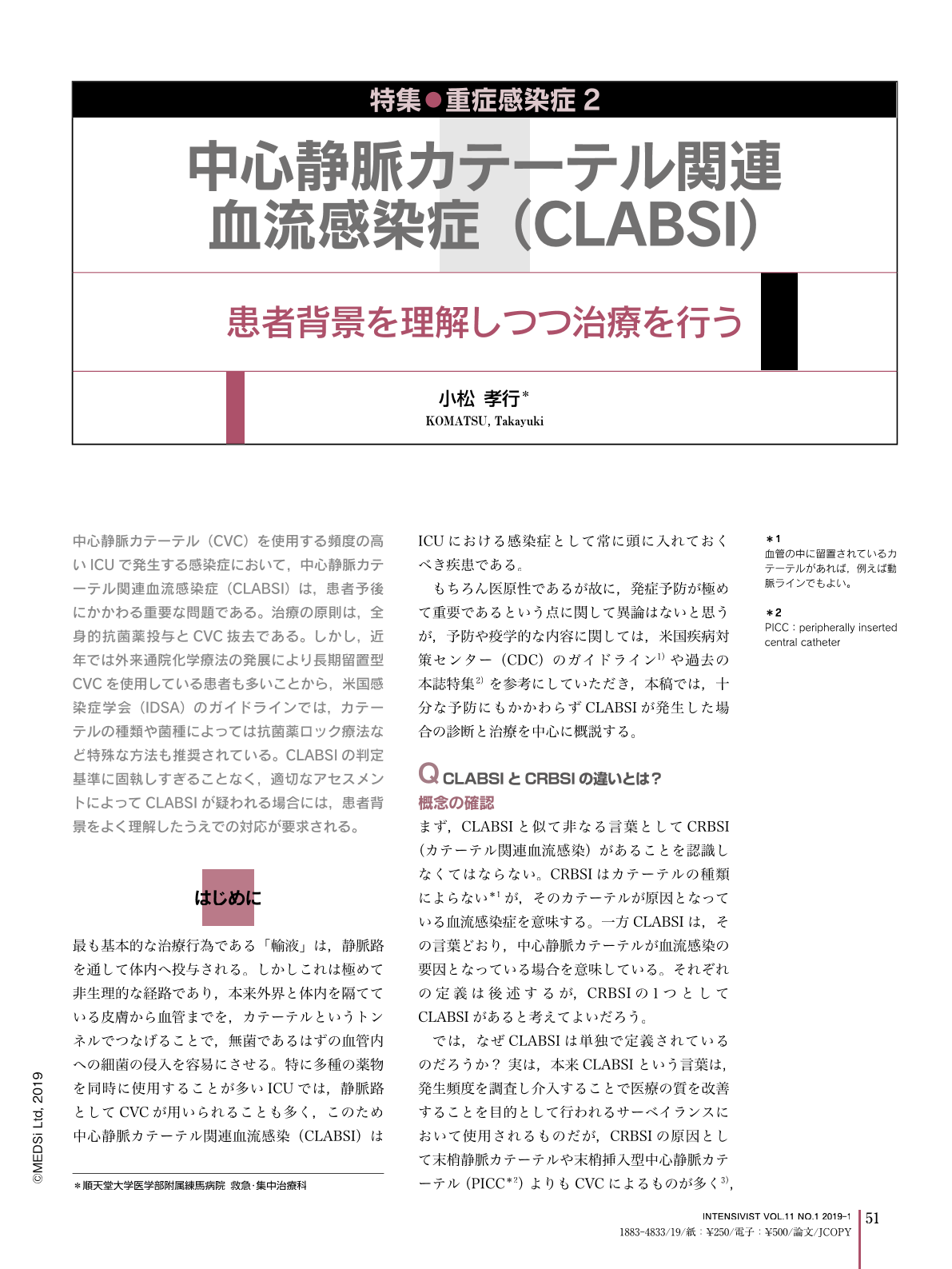
中心静脈カテーテル(CVC)を使用する頻度の高いICUで発生する感染症において,中心静脈カテーテル関連血流感染症(CLABSI)は,患者予後にかかわる重要な問題である。治療の原則は,全身的抗菌薬投与とCVC抜去である。しかし,近年では外来通院化学療法の発展により長期留置型CVCを使用している患者も多いことから,米国感染症学会(IDSA)のガイドラインでは,カテーテルの種類や菌種によっては抗菌薬ロック療法など特殊な方法も推奨されている。CLABSIの判定基準に固執しすぎることなく,適切なアセスメントによってCLABSIが疑われる場合には,患者背景をよく理解したうえでの対応が要求される。
In the intensive care unit, where there are many indications for using a central venous catheter (CVC), central line associated blood stream infections (CLABSI) are an important group of infections in critically ill patients. The principles of treatment of CLABSI include administration of systemic antibiotics and CVC removal. In addition, the clinical practice guidelines of the Infectious Disease Society of America describe special treatments, such as antibiotic lock therapy. These may be recommended depending on the type of catheter and bacterial species because many patients use not only short-term CVCs but also long-term CVCs. If CLABSI is strongly suspected based on appropriate assessment without tight adherence to the criteria, we should choose an appropriate treatment based on a deep understanding of the patient's background.
Copyright © 2019, MEDICAL SCIENCES INTERNATIONAL, LTD. All rights reserved.