Japanese
English
- 有料閲覧
PPV購入案内
1,320円 (1,200円+税10%) こちらは、715ページから727ページの文献です。購入には医書.jp本会員登録が必要です。
会員登録完了後に改めて上記「購入サイトへ」を選択してください。
または「購入サイトへ」選択後に「購入ログイン」、「新規会員登録」の順に進んでください。
会員登録について詳しくはをご確認ください。
- Abstract 文献概要
- 1ページ目 Look Inside
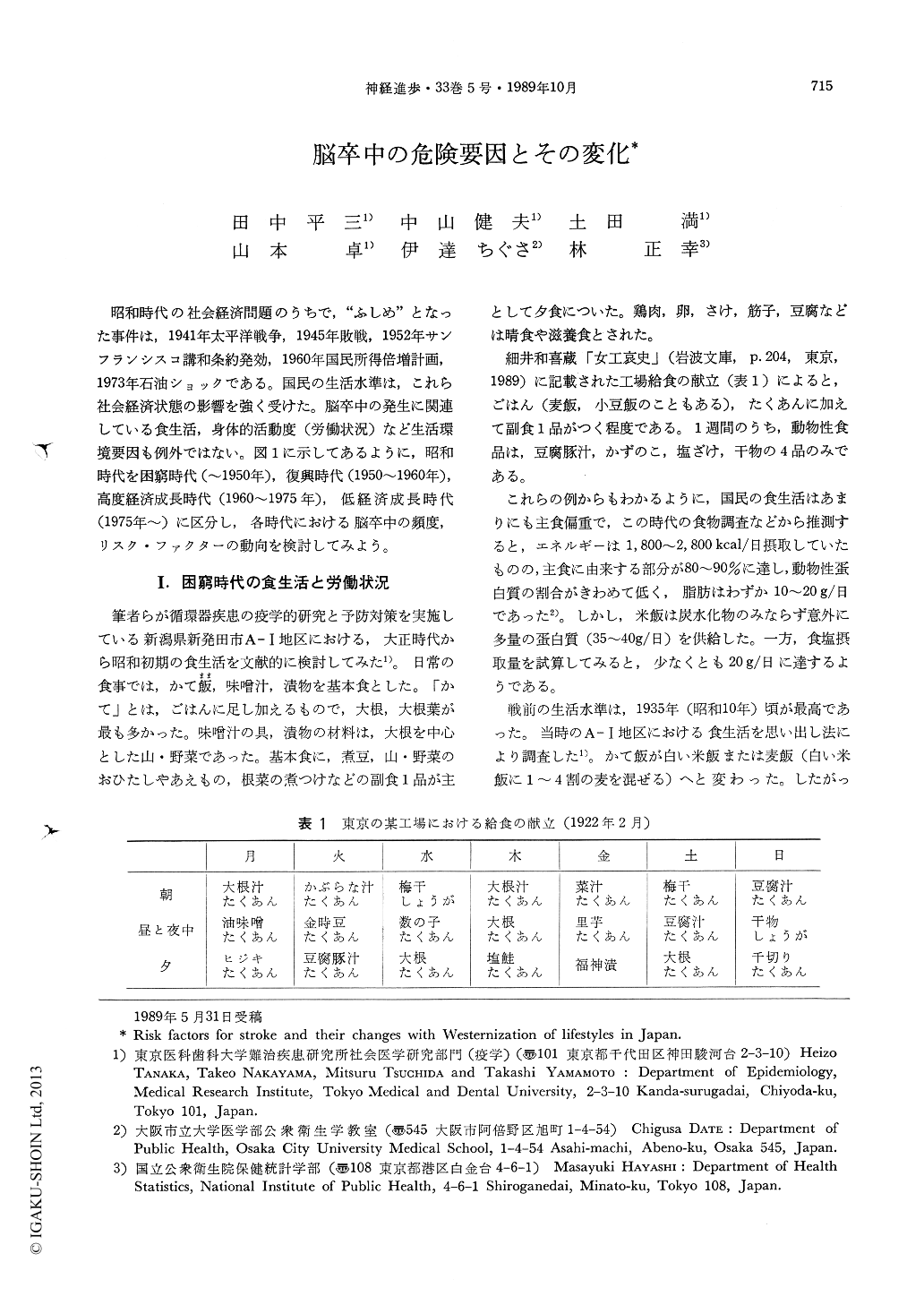
昭和時代の社会経済問題のうちで,"ふしめ"となった事件は,1941年太平洋戦争,1945年敗戦,1952年サンフランシスコ講和条約発効,1960年国民所得倍増計画,1973年石油ショックである。国民の生活水準は,これら社会経済状態の影響を強く受けた。脳卒中の発生に関連している食生活,身体的活動度(労働状況)など生活環境要因も例外ではない。図1に示してあるように,昭和時代を困窮時代(〜1950年),復興時代(1950〜1960年),高度経済成長時代(1960〜1975年),低経済成長時代(1975年〜)に区分し,各時代における脳卒中の頻度,リスク・ファクターの動向を検討してみよう。
From a social and economic standpoint, Japan's 20th century can be divided into four periods: privation (~1950), reconstruction (1950~1960), high economic growth (1960~1975), and low economic growth (1975~). A birth cohort analysis indicated that the experience with the period of privation was closely associated with death rate from cerebrovascular disease. The people who experienced the period adhered to the traditional Japanese habits characterized by unbalanced diets (extremely high in salt and carbohydrate, and low in animal protein and fat).
Copyright © 1989, Igaku-Shoin Ltd. All rights reserved.