Japanese
English
- 有料閲覧
PPV購入案内
1,320円 (1,200円+税10%) こちらは、374ページから379ページの文献です。購入には医書.jp本会員登録が必要です。
会員登録完了後に改めて上記「購入サイトへ」を選択してください。
または「購入サイトへ」選択後に「購入ログイン」、「新規会員登録」の順に進んでください。
会員登録について詳しくはをご確認ください。
- Abstract 文献概要
- 1ページ目 Look Inside
- 参考文献 Reference
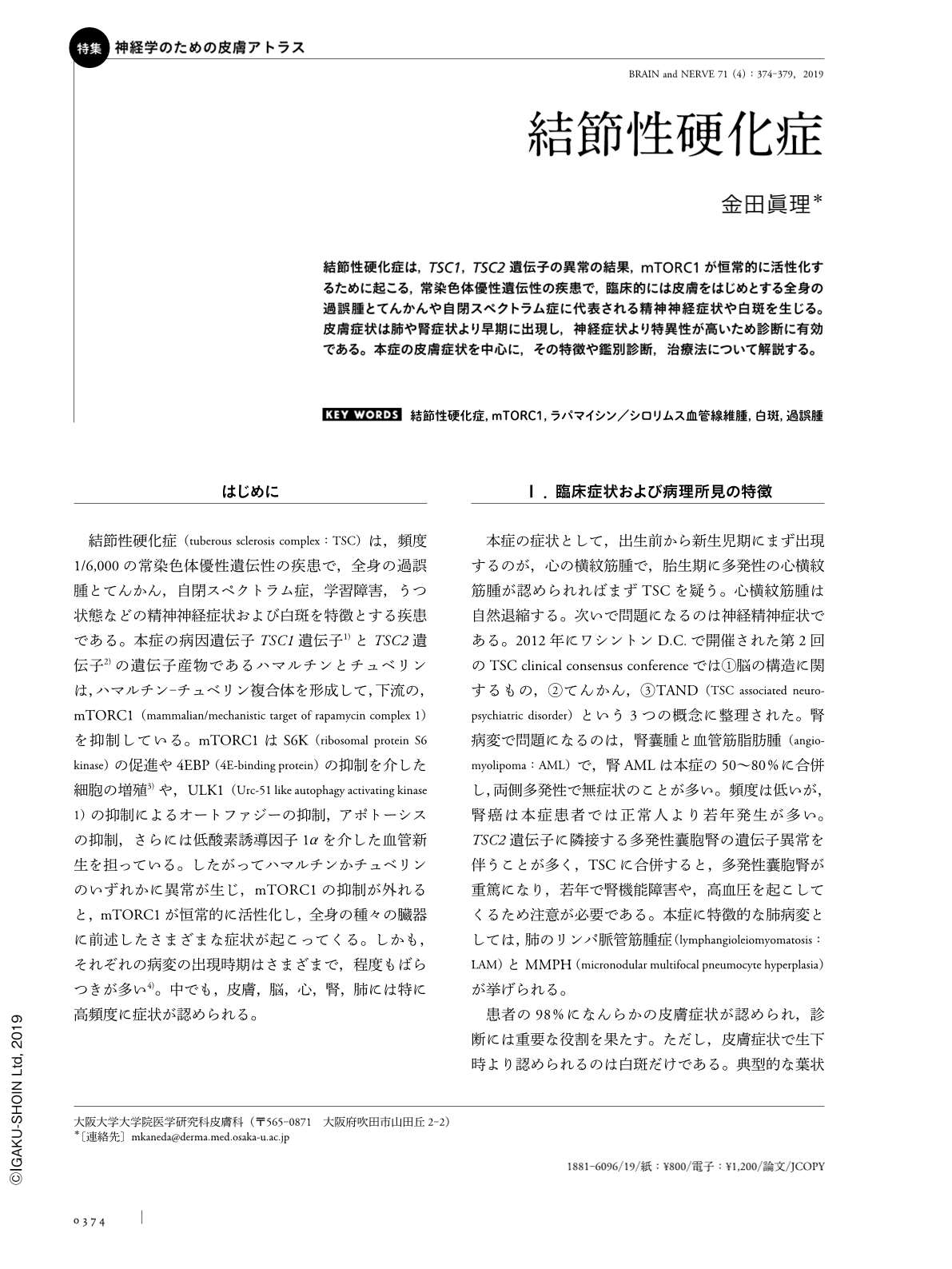
結節性硬化症は,TSC1,TSC2遺伝子の異常の結果,mTORC1が恒常的に活性化するために起こる,常染色体優性遺伝性の疾患で,臨床的には皮膚をはじめとする全身の過誤腫とてんかんや自閉スペクトラム症に代表される精神神経症状や白斑を生じる。皮膚症状は肺や腎症状より早期に出現し,神経症状より特異性が高いため診断に有効である。本症の皮膚症状を中心に,その特徴や鑑別診断,治療法について解説する。
Abstract
Tuberous sclerosis complex (TSC) is an autosomal dominant inherited disorders that is characterized by the systemic hamartomas, along with epilepsy, cognitive impairment and hypopigmented macules. It is caused by genetic mutations in either TSC1 or TSC2 gene which encodes hamartin and tuberin, respectively. As the hamartin-tuberin-complex downregulates the mechanistic/mammalian target of the rapamycin complex1 (mTORC1), dysfunction in either hamartin or tuberin induces the constitutive activation of mTORC1. In fact, almost all the symptoms in TSC are derived from the activation of mTORC1. Therefore, mTORC1 inhibitors improves all the symptoms, including skin lesions and neural symptoms. Among the many symptoms, skin lesions appear earlier than renal or pulmonary lesions and are more specific than neuronal symptoms. Therefore, skin lesions are useful for the diagnosis of TSC. This chapter focuses on the features of skin lesions and mechanistic their potential role in differential diagnosis and therapy including the therapeutic use of mTORC1 inhibitors.
Copyright © 2019, Igaku-Shoin Ltd. All rights reserved.