Japanese
English
- 有料閲覧
PPV購入案内
1,320円 (1,200円+税10%) こちらは、187ページから189ページの文献です。購入には医書.jp本会員登録が必要です。
会員登録完了後に改めて上記「購入サイトへ」を選択してください。
または「購入サイトへ」選択後に「購入ログイン」、「新規会員登録」の順に進んでください。
会員登録について詳しくはをご確認ください。
- Abstract 文献概要
- 1ページ目 Look Inside
- 参考文献 Reference
はじめに
遺伝性痙性対麻痺(hereditary spastic paraplegia: HSP)は,緩徐進行性の痙性対麻痺を主徴とする遺伝性神経変性疾患群であり,HSPの原因遺伝子座は現在のところ30種類同定されている。われわれは,新規のspastin遺伝子変異を伴った家族歴のないSPG4症例を経験したので,その臨床像の詳細について報告する。なお,本症例の遺伝子変異については,別報1)を参照されたい。
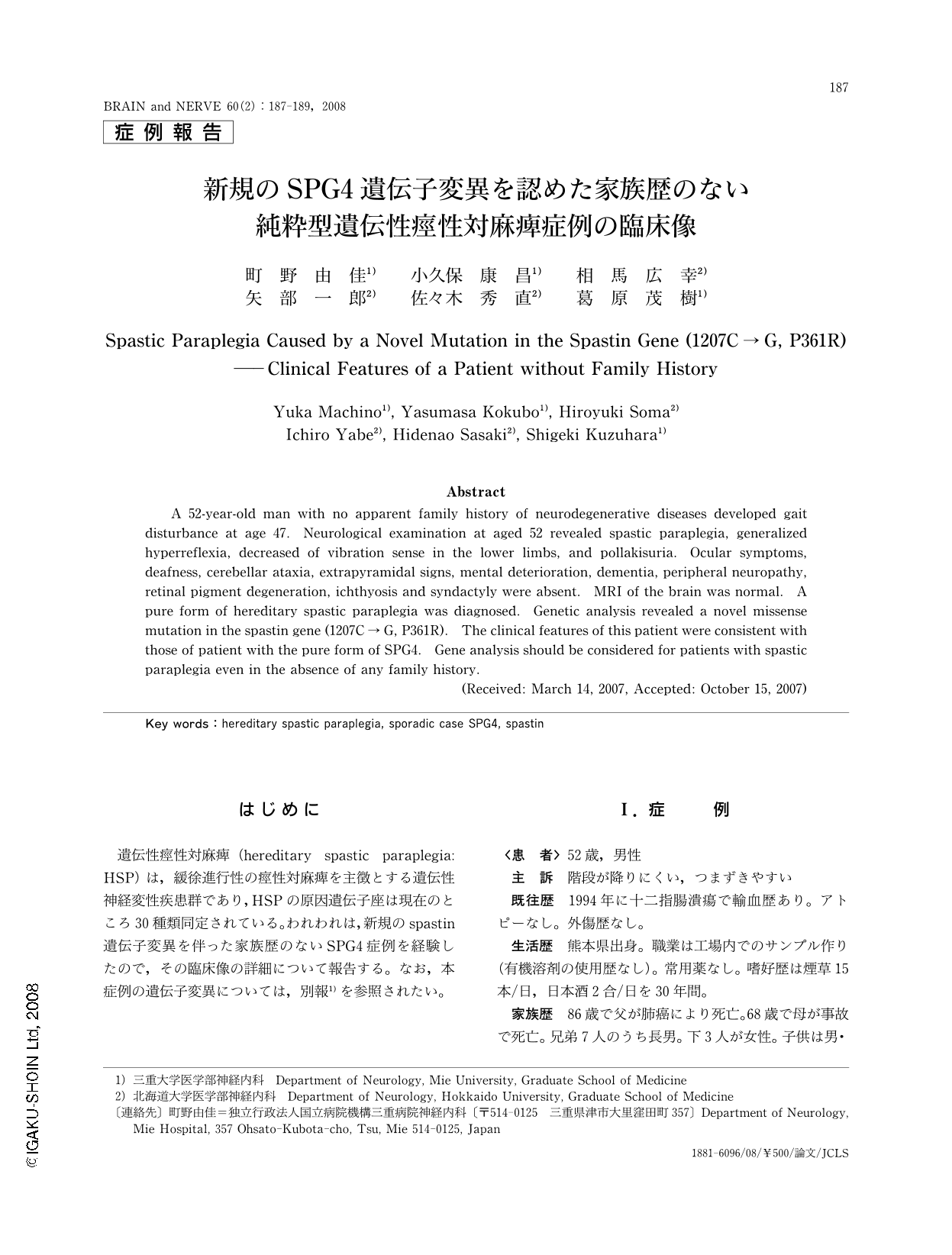
Abstract
A 52-year-old man with no apparent family history of neurodegenerative diseases developed gait disturbance at age 47. Neurological examination at aged 52 revealed spastic paraplegia, generalized hyperreflexia, decreased of vibration sense in the lower limbs, and pollakisuria. Ocular symptoms, deafness, cerebellar ataxia, extrapyramidal signs, mental deterioration, dementia, peripheral neuropathy, retinal pigment degeneration, ichthyosis and syndactyly were absent. MRI of the brain was normal. A pure form of hereditary spastic paraplegia was diagnosed. Genetic analysis revealed a novel missense mutation in the spastin gene (1207C→G, P361R). The clinical features of this patient were consistent with those of patient with the pure form of SPG4. Gene analysis should be considered for patients with spastic paraplegia even in the absence of any family history.
Copyright © 2008, Igaku-Shoin Ltd. All rights reserved.