Japanese
English
- 有料閲覧
PPV購入案内
1,320円 (1,200円+税10%) こちらは、681ページから685ページの文献です。購入には医書.jp本会員登録が必要です。
会員登録完了後に改めて上記「購入サイトへ」を選択してください。
または「購入サイトへ」選択後に「購入ログイン」、「新規会員登録」の順に進んでください。
会員登録について詳しくはをご確認ください。
- Abstract 文献概要
- 1ページ目 Look Inside
- 参考文献 Reference
はじめに
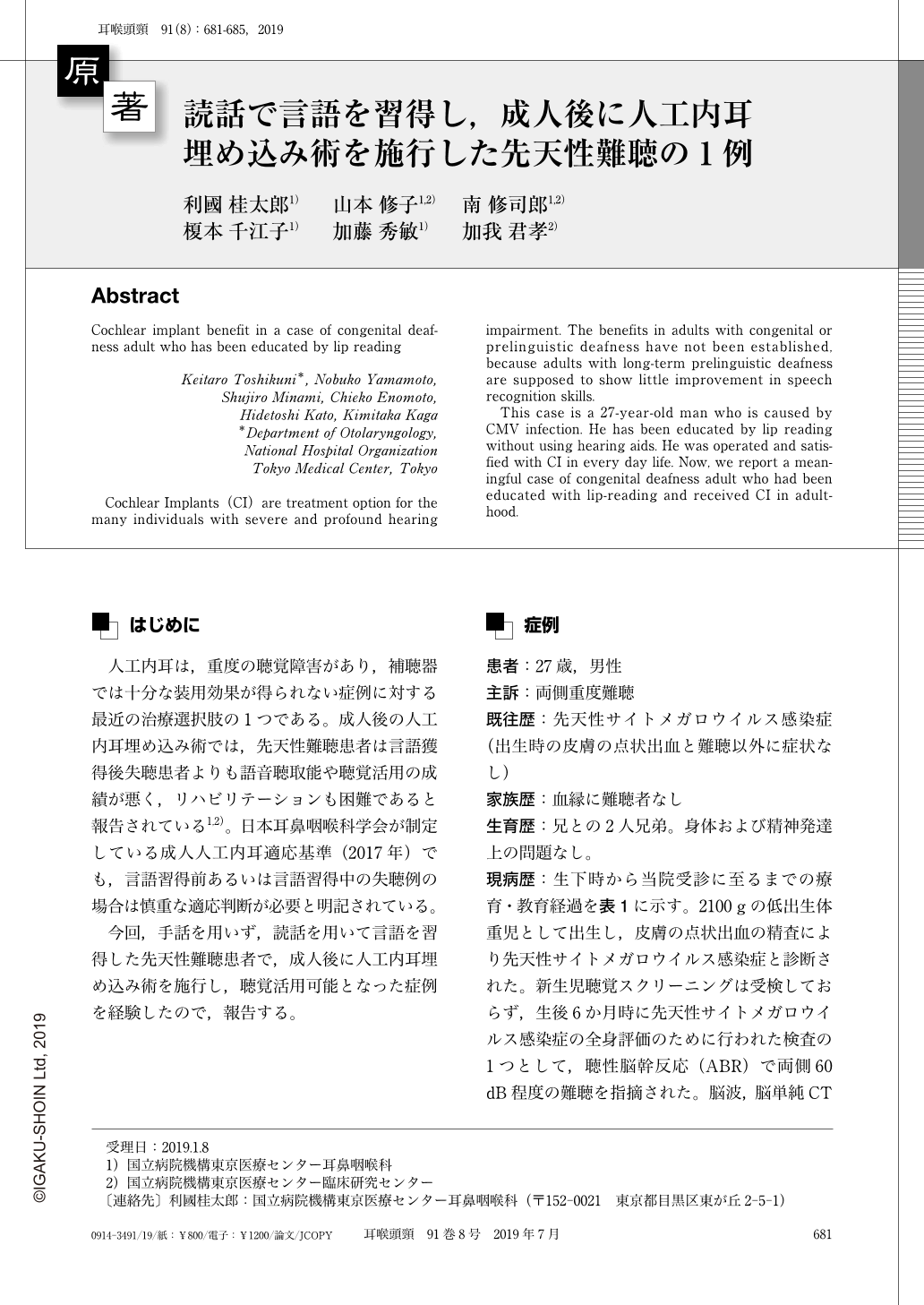
人工内耳は,重度の聴覚障害があり,補聴器では十分な装用効果が得られない症例に対する最近の治療選択肢の1つである。成人後の人工内耳埋め込み術では,先天性難聴患者は言語獲得後失聴患者よりも語音聴取能や聴覚活用の成績が悪く,リハビリテーションも困難であると報告されている1,2)。日本耳鼻咽喉科学会が制定している成人人工内耳適応基準(2017年)でも,言語習得前あるいは言語習得中の失聴例の場合は慎重な適応判断が必要と明記されている。
今回,手話を用いず,読話を用いて言語を習得した先天性難聴患者で,成人後に人工内耳埋め込み術を施行し,聴覚活用可能となった症例を経験したので,報告する。
Cochlear Implants(CI)are treatment option for the many individuals with severe and profound hearing impairment. The benefits in adults with congenital or prelinguistic deafness have not been established, because adults with long-term prelinguistic deafness are supposed to show little improvement in speech recognition skills.
This case is a 27-year-old man who is caused by CMV infection. He has been educated by lip reading without using hearing aids. He was operated and satisfied with CI in every day life. Now, we report a meaningful case of congenital deafness adult who had been educated with lip-reading and received CI in adulthood.
Copyright © 2019, Igaku-Shoin Ltd. All rights reserved.