Japanese
English
- 有料閲覧
PPV購入案内
1,320円 (1,200円+税10%) こちらは、291ページから293ページの文献です。購入には医書.jp本会員登録が必要です。
会員登録完了後に改めて上記「購入サイトへ」を選択してください。
または「購入サイトへ」選択後に「購入ログイン」、「新規会員登録」の順に進んでください。
会員登録について詳しくはをご確認ください。
- Abstract 文献概要
- 1ページ目 Look Inside
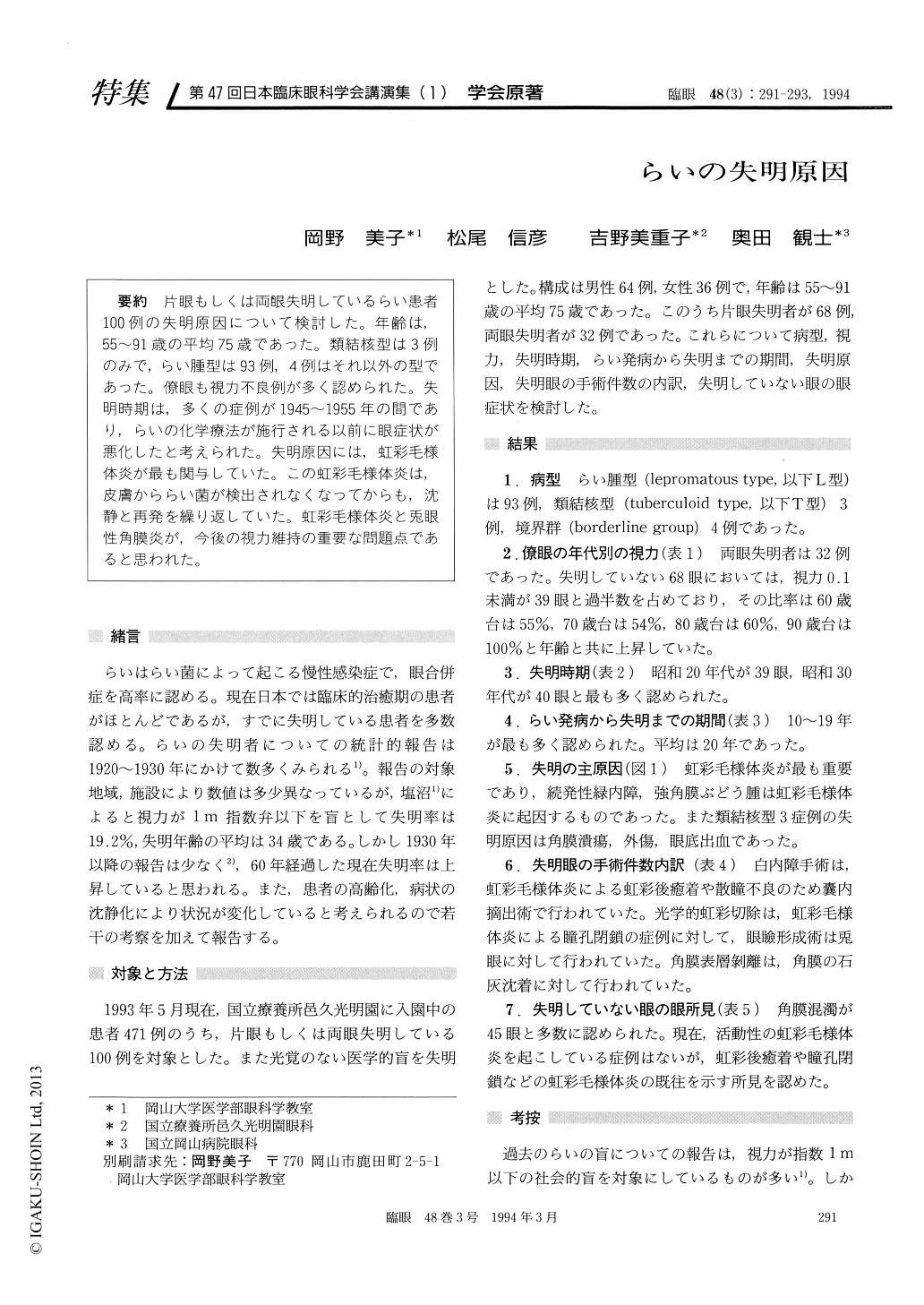
片眼もしくは両眼失明しているらい患者100例の失明原因について検討した。年齢は,55〜91歳の平均75歳であった。類結核型は3例のみで,らい腫型は93例,4例はそれ以外の型であった。僚眼も視力不良例が多く認められた。失明時期は,多くの症例が1945〜1955年の間であり,らいの化学療法が施行される以前に眼症状が悪化したと考えられた。失明原因には,虹彩毛様体炎が最も関与していた。この虹彩毛様体炎は,皮膚かららい菌が検出されなくなってからも,沈静と再発を繰り返していた。虹彩毛様体炎と兎眼性角膜炎が,今後の視力維持の重要な問題点であると思われた。
We reviewed the clinical features in 100 leprosy patients who became blind in one or both eyes. The ages ranged from 55 to 91, average 75 years. The series comprised 93 cases with lepromatous leprosy, 3 with tuberculoid leprosy and 4 with other types. Inthe majority of unilateral cases, the fellow eye also showed low visual acuity. During the period from 1945 to 55 when chemotherapy was not available, all the cases had lost their vision. Iridocyclitis was the most frequent cause of blindness. The iridocy-clitis tended to recur even when Mycobacterium leprae became negative in the skin. Treatments for iridocyclitis and exposure keratitis due to lagophth-almos appeared to be crucial in preserving the vision in leprosy patients.
Copyright © 1994, Igaku-Shoin Ltd. All rights reserved.