Japanese
English
- 有料閲覧
PPV購入案内
1,320円 (1,200円+税10%) こちらは、635ページから644ページの文献です。購入には医書.jp本会員登録が必要です。
会員登録完了後に改めて上記「購入サイトへ」を選択してください。
または「購入サイトへ」選択後に「購入ログイン」、「新規会員登録」の順に進んでください。
会員登録について詳しくはをご確認ください。
- Abstract 文献概要
- 1ページ目 Look Inside
- 参考文献 Reference
- サイト内被引用 Cited by
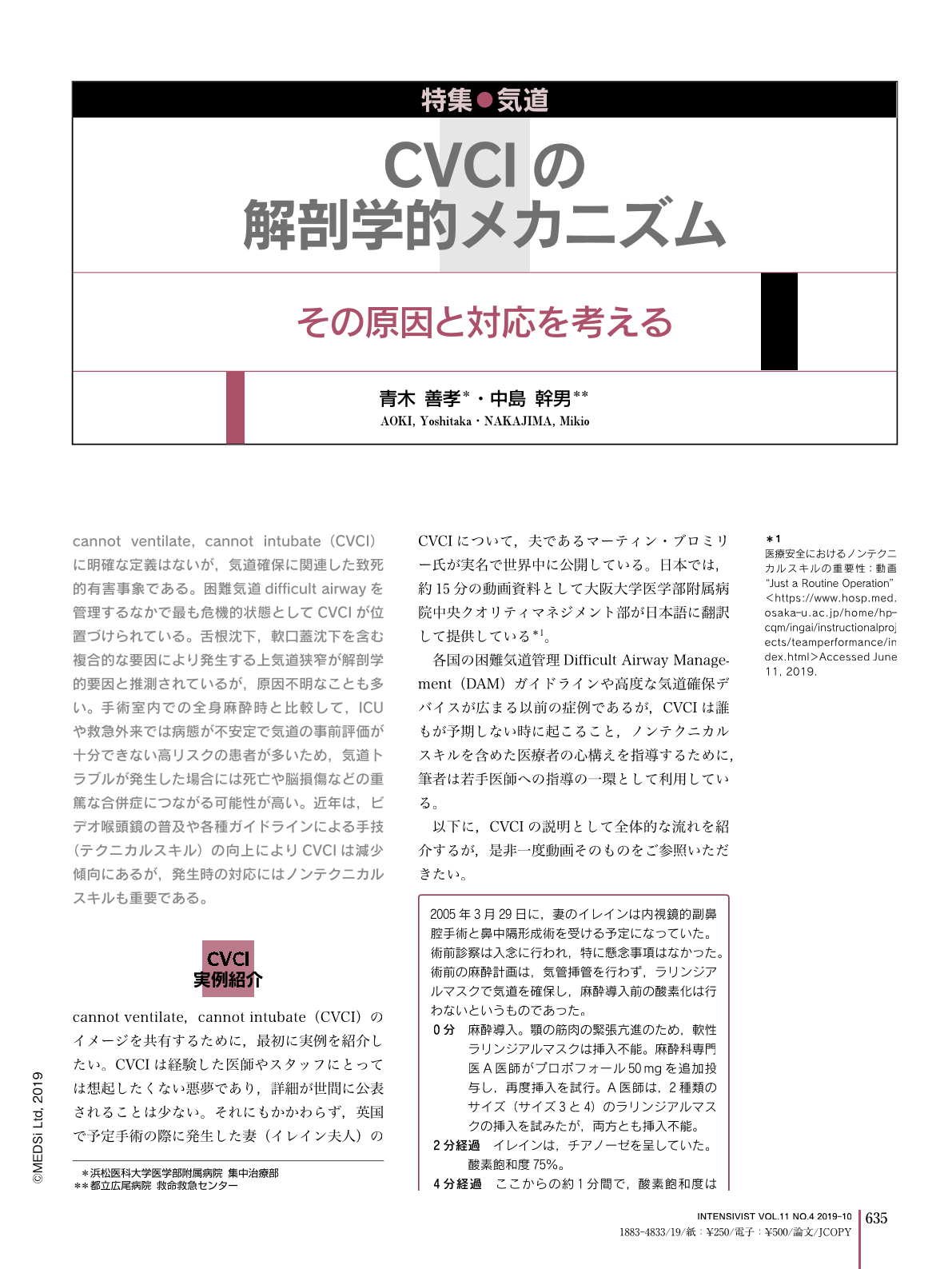
cannot ventilate,cannot intubate(CVCI)に明確な定義はないが,気道確保に関連した致死的有害事象である。困難気道difficult airwayを管理するなかで最も危機的状態としてCVCIが位置づけられている。舌根沈下,軟口蓋沈下を含む複合的な要因により発生する上気道狭窄が解剖学的要因と推測されているが,原因不明なことも多い。手術室内での全身麻酔時と比較して,ICUや救急外来では病態が不安定で気道の事前評価が十分できない高リスクの患者が多いため,気道トラブルが発生した場合には死亡や脳損傷などの重篤な合併症につながる可能性が高い。近年は,ビデオ喉頭鏡の普及や各種ガイドラインによる手技(テクニカルスキル)の向上によりCVCIは減少傾向にあるが,発生時の対応にはノンテクニカルスキルも重要である。
Cannot ventilate, cannot intubate (CVCI) is a fatal adverse event related to airway management. However, there is no strict definition of CVCI. Similar to difficulties with mask ventilation, the main anatomical mechanism of CVCI is presumed to be upper airway narrowing, caused by multiple factors including sinking of the tongue base and soft palate. CVCI also occurs during airway procedures such as tracheal intubation even in patients with normal anatomy. Compared with patients undergoing general anesthesia for elective surgeries, patients in the ICU may have lower oxygen reserve and more airway difficulties, which may result in serious complications such as death and brain damage. Currently, the frequency of CVCI is decreasing because of improved technical skills including those with video laryngoscopes, and relevant clinical practice guidelines. Non-technical skills are also important for management when CVCI occurs.
Copyright © 2019, MEDICAL SCIENCES INTERNATIONAL, LTD. All rights reserved.