Japanese
English
- 有料閲覧
PPV購入案内
1,320円 (1,200円+税10%) こちらは、966ページから974ページの文献です。購入には医書.jp本会員登録が必要です。
会員登録完了後に改めて上記「購入サイトへ」を選択してください。
または「購入サイトへ」選択後に「購入ログイン」、「新規会員登録」の順に進んでください。
会員登録について詳しくはをご確認ください。
- Abstract 文献概要
- 1ページ目 Look Inside
はじめに
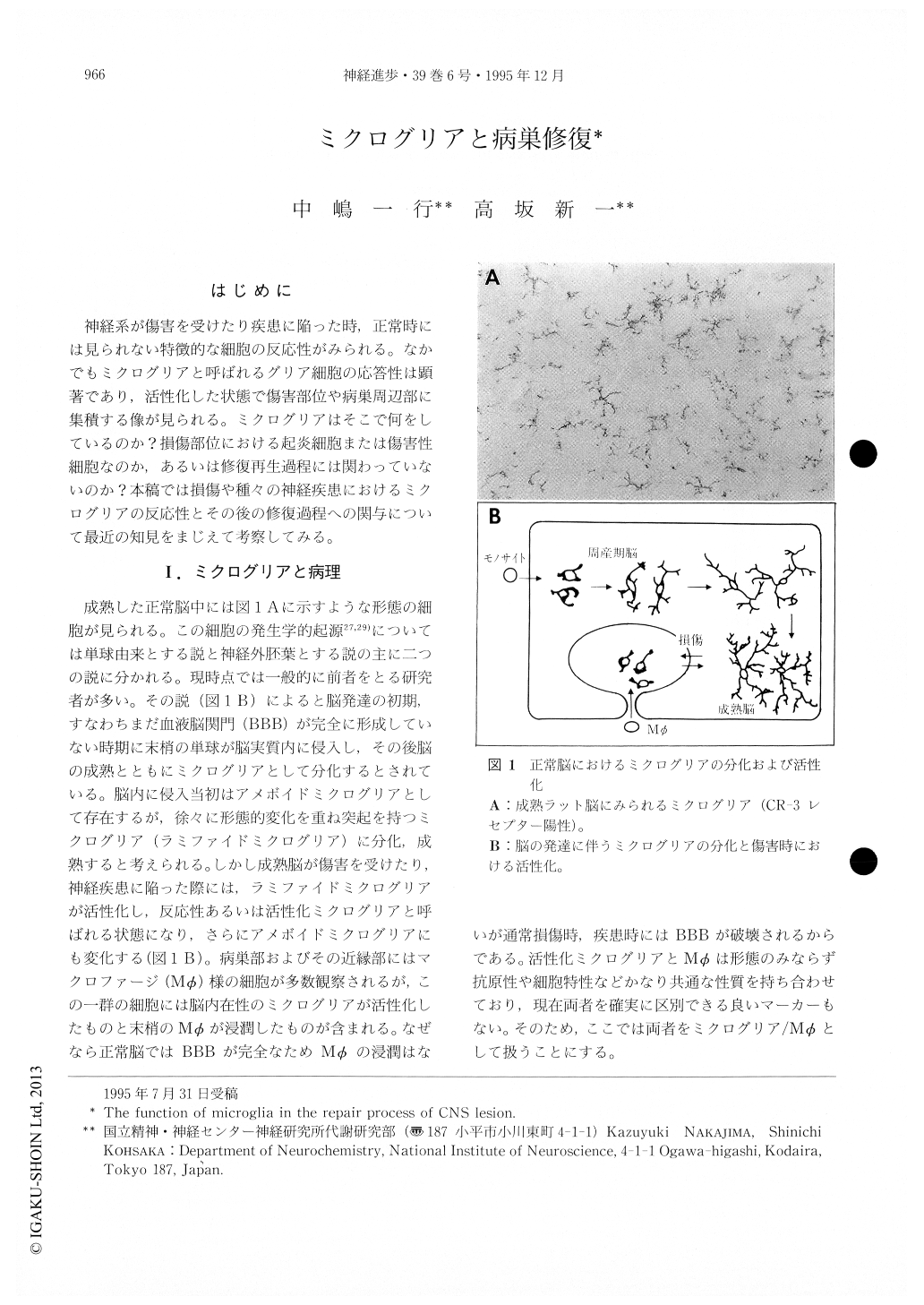
神経系が傷害を受けたり疾患に陥った時,正常時には見られない特徴的な細胞の反応性がみられる。なかでもミクログリアと呼ばれるグリア細胞の応答性は顕著であり,活性化した状態で傷害部位や病巣周辺部に集積する像が見られる。ミクログリアはそこで何をしているのか?損傷部位における起炎細胞または傷害性細胞なのか,あるいは修復再生過程には関わっていないのか?本稿では損傷や種々の神経疾患におけるミクログリアの反応性とその後の修復過程への関与について最近の知見をまじえて考察してみる。
It is generally believed that ramified microglia is transformed from ameboid microglia along with brain development. However, once brain is injured in adult brain, ramified microglia is turned to activated or reactive microglia, and proliferate and accumulate at the injured sites. This type of microglia is usually observed in the brains of Alzheimer disease, AIDS dementia complex, multiple sclerosis and ischemia. Such reactive microglia are considered to be related to the inflammation or tissue damage bacause the cells have a potency of producing low molecular cytotoxic materials such as superoxide, NO and TNF.
Copyright © 1995, Igaku-Shoin Ltd. All rights reserved.