Japanese
English
- 有料閲覧
PPV購入案内
1,320円 (1,200円+税10%) こちらは、771ページから780ページの文献です。購入には医書.jp本会員登録が必要です。
会員登録完了後に改めて上記「購入サイトへ」を選択してください。
または「購入サイトへ」選択後に「購入ログイン」、「新規会員登録」の順に進んでください。
会員登録について詳しくはをご確認ください。
- Abstract 文献概要
- 1ページ目 Look Inside
- 参考文献 Reference
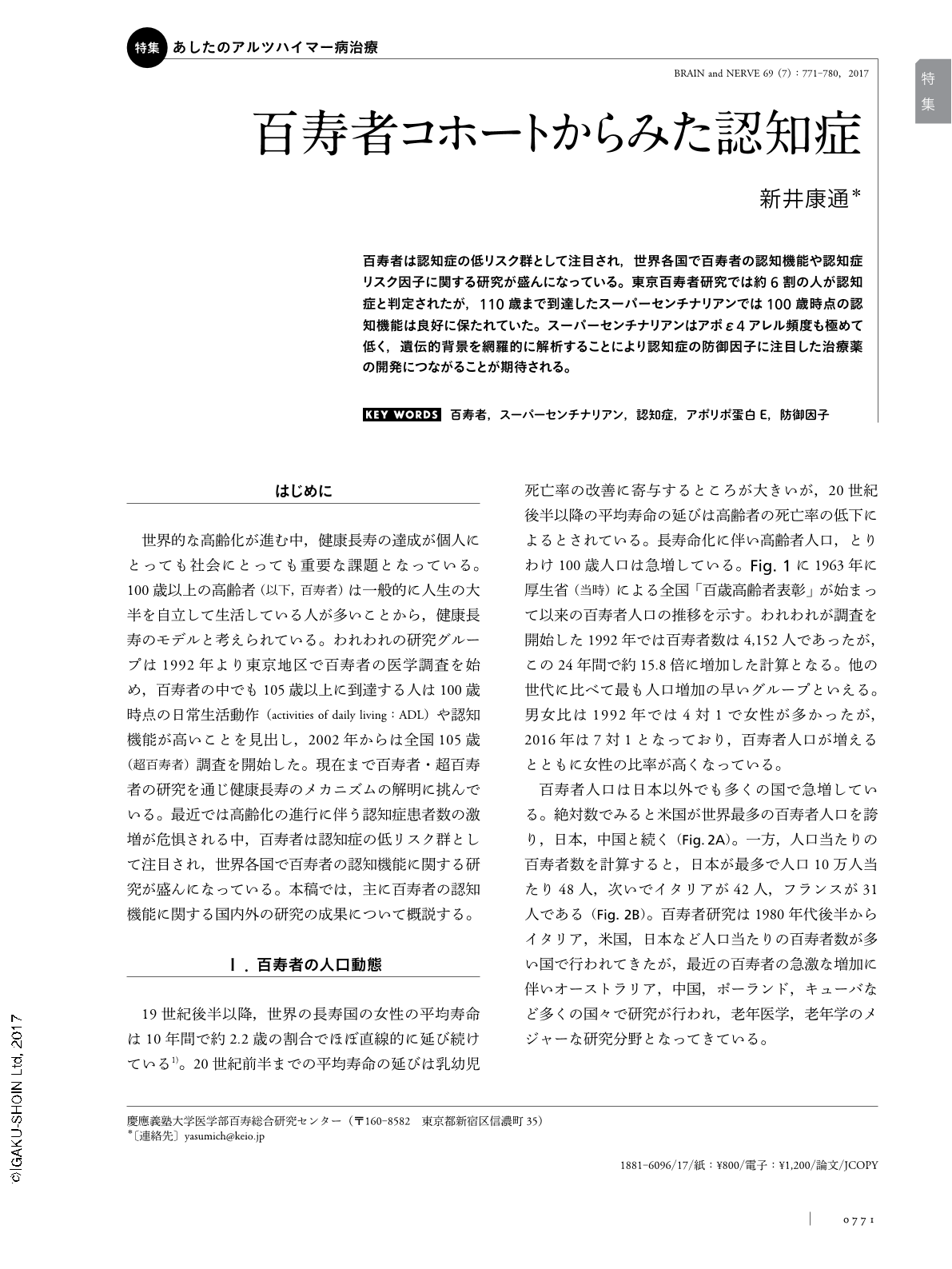
百寿者は認知症の低リスク群として注目され,世界各国で百寿者の認知機能や認知症リスク因子に関する研究が盛んになっている。東京百寿者研究では約6割の人が認知症と判定されたが,110歳まで到達したスーパーセンチナリアンでは100歳時点の認知機能は良好に保たれていた。スーパーセンチナリアンはアポε4アレル頻度も極めて低く,遺伝的背景を網羅的に解析することにより認知症の防御因子に注目した治療薬の開発につながることが期待される。
Abstract
Centenarians are less susceptible to the diseases, functional losses and dependencies related to old age than the general public, and are therefore regarded as model cases of successful aging. For this reason, an important focus of the study of centenarians is their relative resilience to age-related cognitive decline or dementia. In the Tokyo Centenarian Study, we found approximately 60% of centenarians to have dementia; however, supercentenarians (those people living at least 110 years) maintained normal cognitive function at 100 years of age. Our preliminary data also demonstrated extremely low frequencies of the apolipoprotein E4 allele in supercentenarians. Moreover, postmortem brain samples from supercentenarians demonstrated relatively mild age-related neuropathological findings. Therefore, a more extensive investigation of supercentenarian populations might provide insight into successful brain aging.
Copyright © 2017, Igaku-Shoin Ltd. All rights reserved.