Japanese
English
- 有料閲覧
PPV購入案内
1,320円 (1,200円+税10%) こちらは、789ページから798ページの文献です。購入には医書.jp本会員登録が必要です。
会員登録完了後に改めて上記「購入サイトへ」を選択してください。
または「購入サイトへ」選択後に「購入ログイン」、「新規会員登録」の順に進んでください。
会員登録について詳しくはをご確認ください。
- Abstract 文献概要
- 1ページ目 Look Inside
- 参考文献 Reference
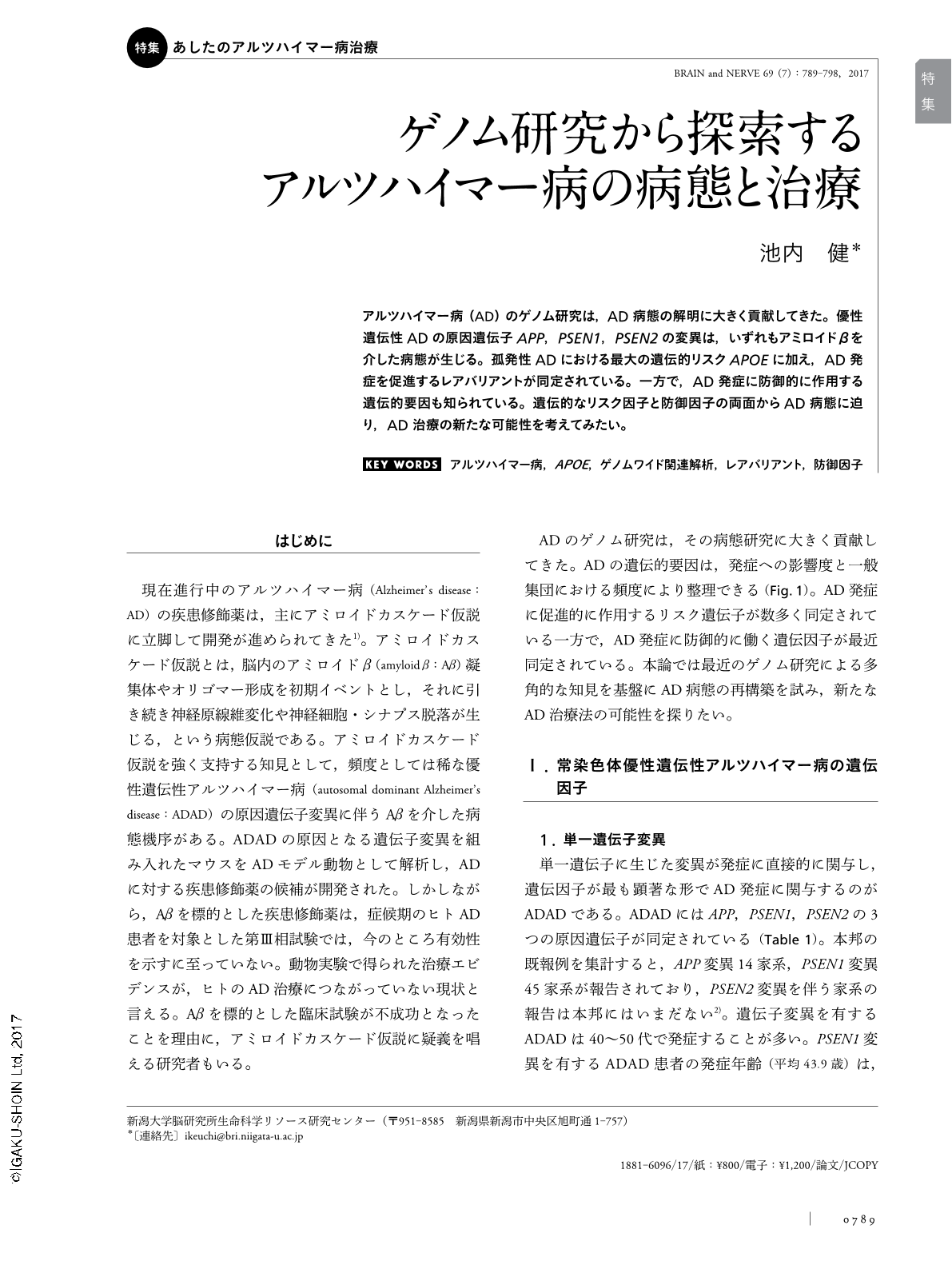
アルツハイマー病(AD)のゲノム研究は,AD病態の解明に大きく貢献してきた。優性遺伝性ADの原因遺伝子APP,PSEN1,PSEN2の変異は,いずれもアミロイドβを介した病態が生じる。孤発性ADにおける最大の遺伝的リスクAPOEに加え,AD発症を促進するレアバリアントが同定されている。一方で,AD発症に防御的に作用する遺伝的要因も知られている。遺伝的なリスク因子と防御因子の両面からAD病態に迫り,AD治療の新たな可能性を考えてみたい。
Abstract
Cutting-edge genomics technologies have substantially improved our understanding of the pathogenesis of Alzheimer's disease (AD). The identification of mutations in APP, PSEN1, and PSEN2 causative for autosomal dominant AD (ADAD) has provided the basis of the "amyloid cascade" hypothesis of the pathogenetic mechanism of AD. While a number of therapeutic candidates targeting amyloid-β were developed using genetically engineered mouse models of ADAD, none have proven successful in mitigating the symptoms of AD in phase III clinical trials. Thus, we must reconsider the modification of AD pathogenesis by targets within the amyloid cascade, and explore new targets for AD therapy. This review provides a comprehensive summary of the recent genetic studies of AD from this perspective, and discusses prospective and emerging therapeutic interventions for patients with AD.
Copyright © 2017, Igaku-Shoin Ltd. All rights reserved.