Japanese
English
- 有料閲覧
PPV購入案内
1,320円 (1,200円+税10%) こちらは、27ページから31ページの文献です。購入には医書.jp本会員登録が必要です。
会員登録完了後に改めて上記「購入サイトへ」を選択してください。
または「購入サイトへ」選択後に「購入ログイン」、「新規会員登録」の順に進んでください。
会員登録について詳しくはをご確認ください。
- Abstract 文献概要
- 1ページ目 Look Inside
- 参考文献 Reference
- サイト内被引用 Cited by
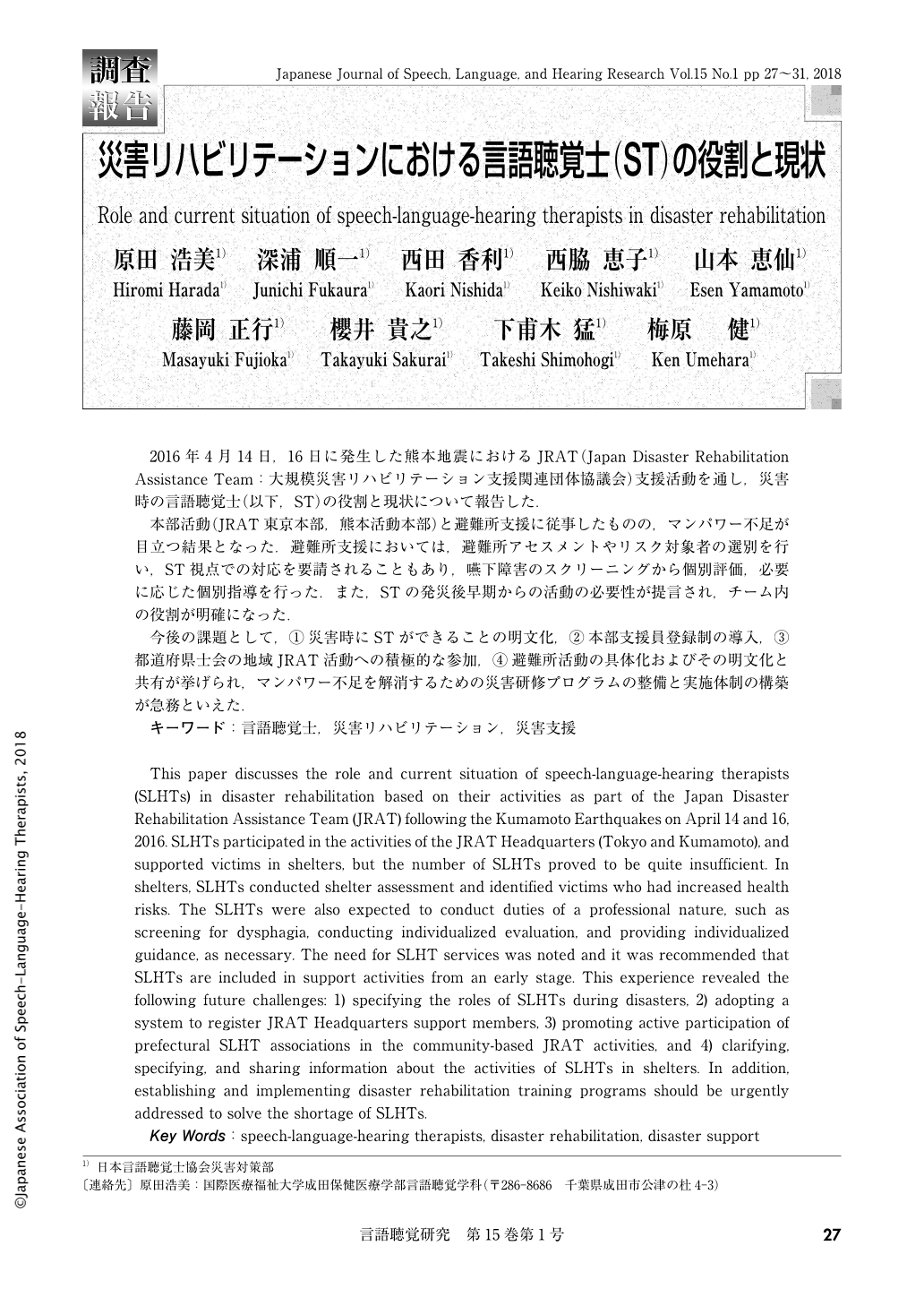
2016年4月14日,16日に発生した熊本地震におけるJRAT(Japan Disaster Rehabilitation Assistance Team:大規模災害リハビリテーション支援関連団体協議会)支援活動を通し,災害時の言語聴覚士(以下,ST)の役割と現状について報告した.
本部活動(JRAT東京本部,熊本活動本部)と避難所支援に従事したものの,マンパワー不足が目立つ結果となった.避難所支援においては,避難所アセスメントやリスク対象者の選別を行い,ST視点での対応を要請されることもあり,嚥下障害のスクリーニングから個別評価,必要に応じた個別指導を行った.また,STの発災後早期からの活動の必要性が提言され,チーム内の役割が明確になった.
今後の課題として,①災害時にSTができることの明文化,②本部支援員登録制の導入,③都道府県士会の地域JRAT活動への積極的な参加,④避難所活動の具体化およびその明文化と共有が挙げられ,マンパワー不足を解消するための災害研修プログラムの整備と実施体制の構築が急務といえた.
This paper discusses the role and current situation of speech-language-hearing therapists (SLHTs) in disaster rehabilitation based on their activities as part of the Japan Disaster Rehabilitation Assistance Team (JRAT) following the Kumamoto Earthquakes on April 14 and 16, 2016. SLHTs participated in the activities of the JRAT Headquarters (Tokyo and Kumamoto), and supported victims in shelters, but the number of SLHTs proved to be quite insufficient. In shelters, SLHTs conducted shelter assessment and identified victims who had increased health risks. The SLHTs were also expected to conduct duties of a professional nature, such as screening for dysphagia, conducting individualized evaluation, and providing individualized guidance, as necessary. The need for SLHT services was noted and it was recommended that SLHTs are included in support activities from an early stage. This experience revealed the following future challenges: 1) specifying the roles of SLHTs during disasters, 2) adopting a system to register JRAT Headquarters support members, 3) promoting active participation of prefectural SLHT associations in the community-based JRAT activities, and 4) clarifying, specifying, and sharing information about the activities of SLHTs in shelters. In addition, establishing and implementing disaster rehabilitation training programs should be urgently addressed to solve the shortage of SLHTs.
Copyright © 2018, Japanese Association of Speech-Language-Hearing Therapists. All rights reserved.