Japanese
English
- 有料閲覧
PPV購入案内
1,320円 (1,200円+税10%) こちらは、153ページから165ページの文献です。購入には医書.jp本会員登録が必要です。
会員登録完了後に改めて上記「購入サイトへ」を選択してください。
または「購入サイトへ」選択後に「購入ログイン」、「新規会員登録」の順に進んでください。
会員登録について詳しくはをご確認ください。
- Abstract 文献概要
- 1ページ目 Look Inside
- サイト内被引用 Cited by
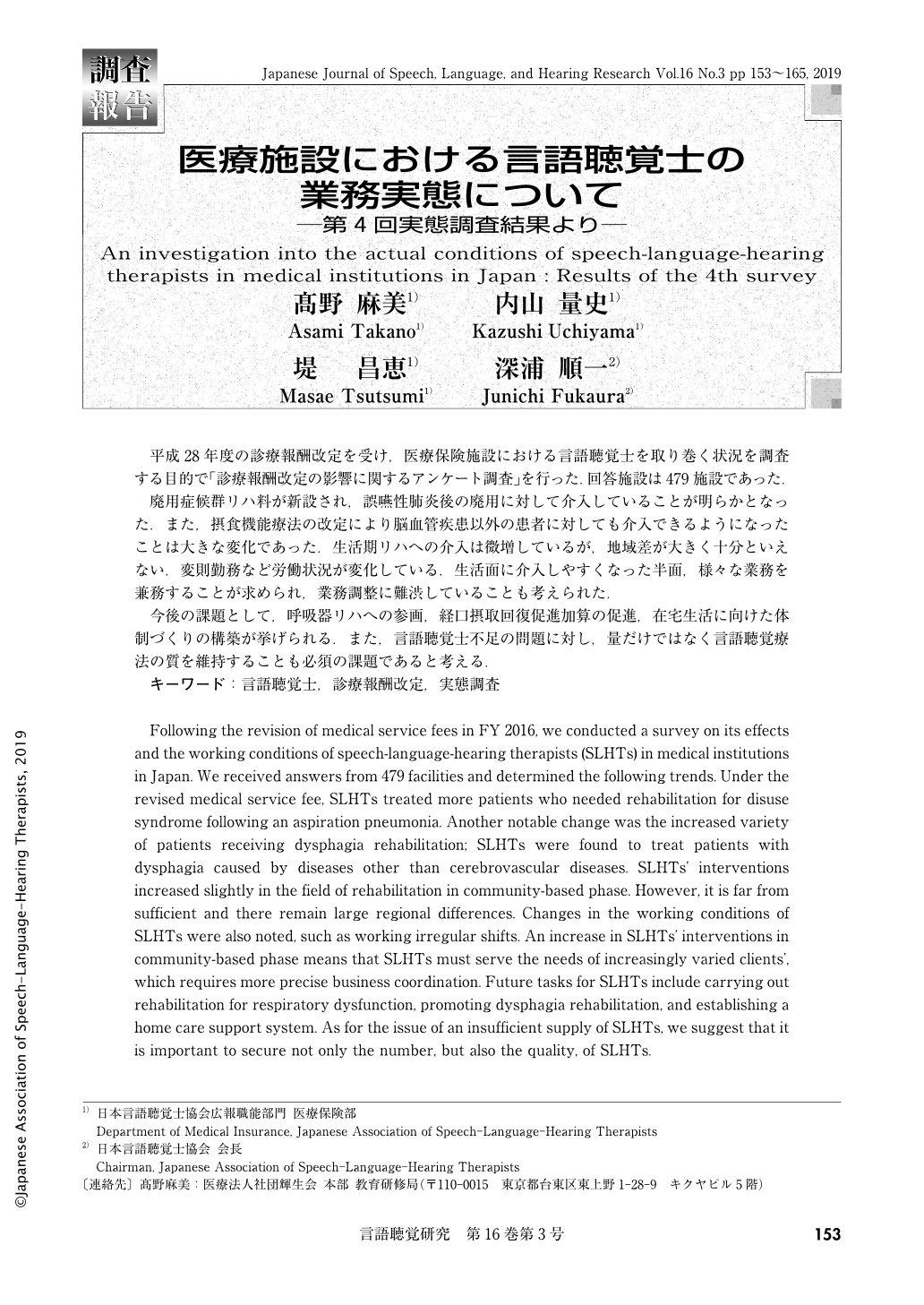
平成28年度の診療報酬改定を受け,医療保険施設における言語聴覚士を取り巻く状況を調査する目的で「診療報酬改定の影響に関するアンケート調査」を行った.回答施設は479施設であった.
廃用症候群リハ料が新設され,誤嚥性肺炎後の廃用に対して介入していることが明らかとなった.また,摂食機能療法の改定により脳血管疾患以外の患者に対しても介入できるようになったことは大きな変化であった.生活期リハへの介入は微増しているが,地域差が大きく十分といえない.変則勤務など労働状況が変化している.生活面に介入しやすくなった半面,様々な業務を兼務することが求められ,業務調整に難渋していることも考えられた.
今後の課題として,呼吸器リハへの参画,経口摂取回復促進加算の促進,在宅生活に向けた体制づくりの構築が挙げられる.また,言語聴覚士不足の問題に対し,量だけではなく言語聴覚療法の質を維持することも必須の課題であると考える.
Following the revision of medical service fees in FY 2016, we conducted a survey on its effects and the working conditions of speech-language-hearing therapists(SLHTs) in medical institutions in Japan. We received answers from 479 facilities and determined the following trends. Under the revised medical service fee, SLHTs treated more patients who needed rehabilitation for disuse syndrome following an aspiration pneumonia. Another notable change was the increased variety of patients receiving dysphagia rehabilitation; SLHTs were found to treat patients with dysphagia caused by diseases other than cerebrovascular diseases. SLHTs' interventions increased slightly in the field of rehabilitation in community-based phase. However, it is far from sufficient and there remain large regional differences. Changes in the working conditions of SLHTs were also noted, such as working irregular shifts. An increase in SLHTs' interventions in community-based phase means that SLHTs must serve the needs of increasingly varied clients', which requires more precise business coordination. Future tasks for SLHTs include carrying out rehabilitation for respiratory dysfunction, promoting dysphagia rehabilitation, and establishing a home care support system. As for the issue of an insufficient supply of SLHTs, we suggest that it is important to secure not only the number, but also the quality, of SLHTs.
Copyright © 2019, Japanese Association of Speech-Language-Hearing Therapists. All rights reserved.