Japanese
English
- 有料閲覧
PPV購入案内
1,320円 (1,200円+税10%) こちらは、32ページから37ページの文献です。購入には医書.jp本会員登録が必要です。
会員登録完了後に改めて上記「購入サイトへ」を選択してください。
または「購入サイトへ」選択後に「購入ログイン」、「新規会員登録」の順に進んでください。
会員登録について詳しくはをご確認ください。
- Abstract 文献概要
- 1ページ目 Look Inside
- サイト内被引用 Cited by
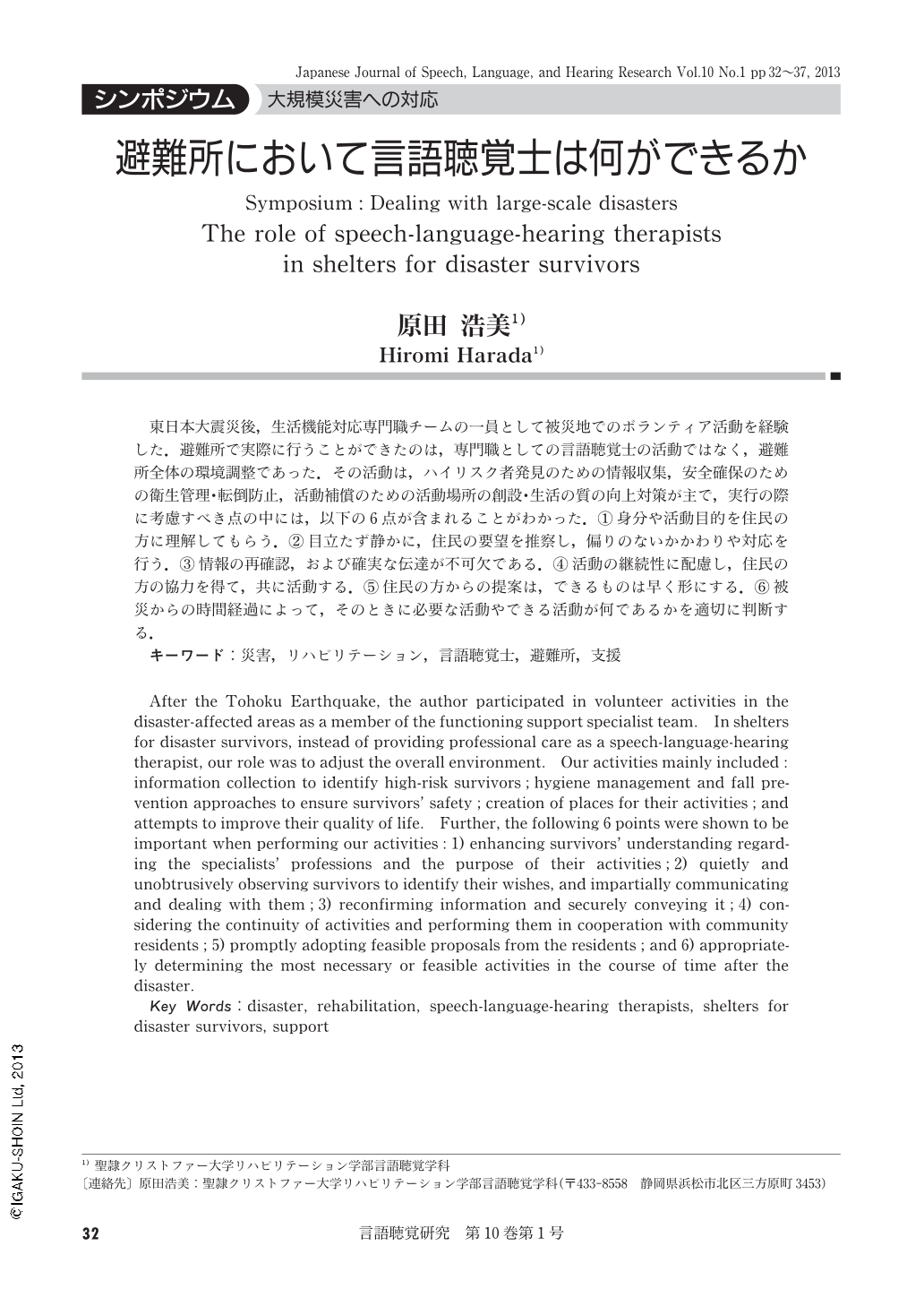
東日本大震災後,生活機能対応専門職チームの一員として被災地でのボランティア活動を経験した.避難所で実際に行うことができたのは,専門職としての言語聴覚士の活動ではなく,避難所全体の環境調整であった.その活動は,ハイリスク者発見のための情報収集,安全確保のための衛生管理・転倒防止,活動補償のための活動場所の創設・生活の質の向上対策が主で,実行の際に考慮すべき点の中には,以下の6点が含まれることがわかった.①身分や活動目的を住民の方に理解してもらう.②目立たず静かに,住民の要望を推察し,偏りのないかかわりや対応を行う.③情報の再確認,および確実な伝達が不可欠である.④活動の継続性に配慮し,住民の方の協力を得て,共に活動する.⑤住民の方からの提案は,できるものは早く形にする.⑥被災からの時間経過によって,そのときに必要な活動やできる活動が何であるかを適切に判断する.
After the Tohoku Earthquake, the author participated in volunteer activities in the disaster-affected areas as a member of the functioning support specialist team. In shelters for disaster survivors, instead of providing professional care as a speech-language-hearing therapist, our role was to adjust the overall environment. Our activities mainly included:information collection to identify high-risk survivors;hygiene management and fall prevention approaches to ensure survivors' safety;creation of places for their activities;and attempts to improve their quality of life. Further, the following 6 points were shown to be important when performing our activities:1) enhancing survivors' understanding regarding the specialists' professions and the purpose of their activities;2) quietly and unobtrusively observing survivors to identify their wishes, and impartially communicating and dealing with them;3) reconfirming information and securely conveying it;4) considering the continuity of activities and performing them in cooperation with community residents;5) promptly adopting feasible proposals from the residents;and 6) appropriately determining the most necessary or feasible activities in the course of time after the disaster.
Copyright © 2013, Japanese Association of Speech-Language-Hearing Therapists. All rights reserved.