Japanese
English
- 有料閲覧
PPV購入案内
1,320円 (1,200円+税10%) こちらは、664ページから671ページの文献です。購入には医書.jp本会員登録が必要です。
会員登録完了後に改めて上記「購入サイトへ」を選択してください。
または「購入サイトへ」選択後に「購入ログイン」、「新規会員登録」の順に進んでください。
会員登録について詳しくはをご確認ください。
- Abstract 文献概要
- 1ページ目 Look Inside
- 参考文献 Reference
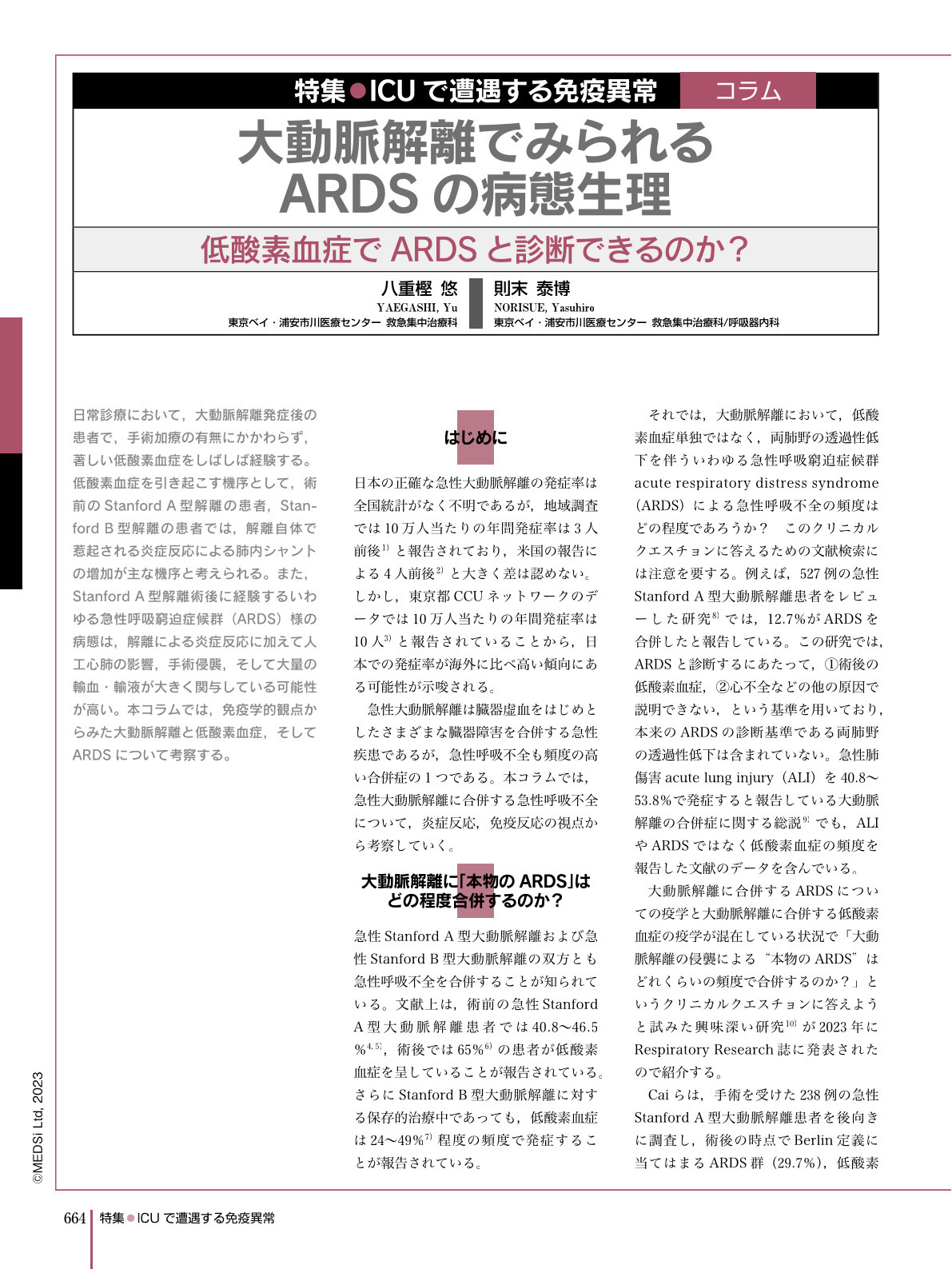
日常診療において,大動脈解離発症後の患者で,手術加療の有無にかかわらず,著しい低酸素血症をしばしば経験する。低酸素血症を引き起こす機序として,術前のStanford A型解離の患者,Stanford B型解離の患者では,解離自体で惹起される炎症反応による肺内シャントの増加が主な機序と考えられる。また,Stanford A型解離術後に経験するいわゆる急性呼吸窮迫症候群(ARDS)様の病態は,解離による炎症反応に加えて人工心肺の影響,手術侵襲,そして大量の輸血・輸液が大きく関与している可能性が高い。本コラムでは,免疫学的観点からみた大動脈解離と低酸素血症,そしてARDSについて考察する。
In daily clinical practice, patients who have experienced aortic dissection often encounter significant hypoxemia, regardless of whether or not surgical treatment is pursued. The mechanism underlying hypoxemia is thought to primarily involve an increase in intrapulmonary shunting due to inflammation triggered by the dissection itself in Stanford A-type dissection patients before surgery and Stanford B-type dissection patients after surgery. Furthermore, the so-called ARDS-like condition experienced after surgical repair of Stanford A-type dissection is believed to be strongly influenced by factors including the inflammatory response caused by the dissection, the impact of cardiopulmonary bypass, surgical trauma, and the substantial administration of blood products and fluids. This paper examines aortic dissection, hypoxemia, and ARDS from an immunological perspective.
Copyright © 2023, MEDICAL SCIENCES INTERNATIONAL, LTD. All rights reserved.