Japanese
English
- 有料閲覧
PPV購入案内
1,320円 (1,200円+税10%) こちらは、43ページから61ページの文献です。購入には医書.jp本会員登録が必要です。
会員登録完了後に改めて上記「購入サイトへ」を選択してください。
または「購入サイトへ」選択後に「購入ログイン」、「新規会員登録」の順に進んでください。
会員登録について詳しくはをご確認ください。
- Abstract 文献概要
- 1ページ目 Look Inside
- 参考文献 Reference
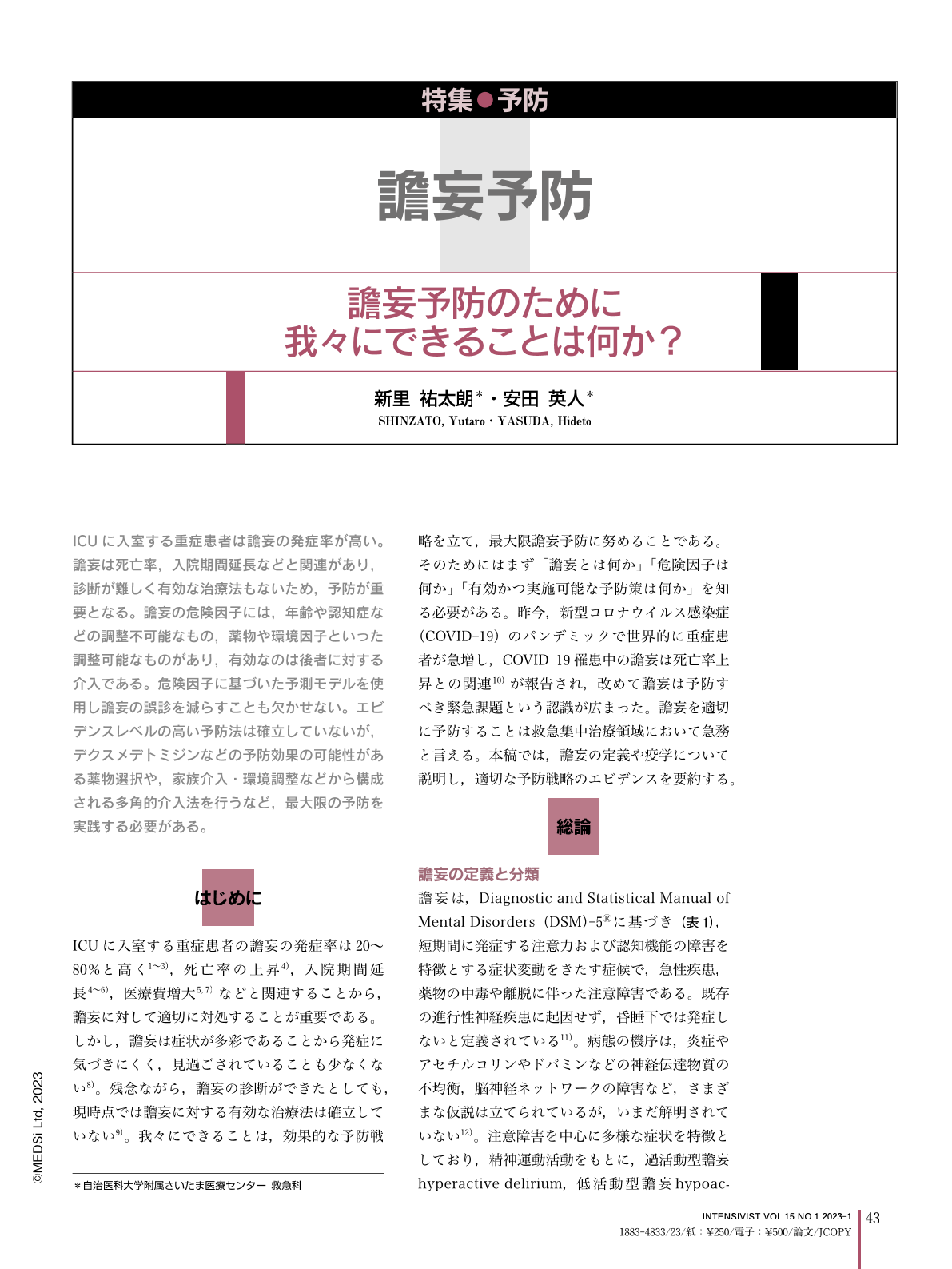
ICUに入室する重症患者は譫妄の発症率が高い。譫妄は死亡率,入院期間延長などと関連があり,診断が難しく有効な治療法もないため,予防が重要となる。譫妄の危険因子には,年齢や認知症などの調整不可能なもの,薬物や環境因子といった調整可能なものがあり,有効なのは後者に対する介入である。危険因子に基づいた予測モデルを使用し譫妄の誤診を減らすことも欠かせない。エビデンスレベルの高い予防法は確立していないが,デクスメデトミジンなどの予防効果の可能性がある薬物選択や,家族介入・環境調整などから構成される多角的介入法を行うなど,最大限の予防を実践する必要がある。
Critically ill patients admitted to the ICU have a high incidence of delirium, which is associated with mortality and prolonged hospital stay. Prevention of delirium is important because delirium is easily misdiagnosed and has no effective treatment. Risk factors for delirium include factors that cannot be modified such as age and the presence of dementia, and modifiable factors such as medications and environmental factors, with interventions for the latter being more effective. Predictive models based on risk factors are also essential to reduce the misdiagnosis of delirium. Maximum prevention must be achieved by selecting drugs with potential preventive effects, such as dexmedetomidine, and multicomponent intervention methods including family intervention and environmental adjustment, etc., despite the lack of methods for prevention with a high level of evidence.
Copyright © 2023, MEDICAL SCIENCES INTERNATIONAL, LTD. All rights reserved.