Japanese
English
- 有料閲覧
PPV購入案内
1,320円 (1,200円+税10%) こちらは、61ページから69ページの文献です。購入には医書.jp本会員登録が必要です。
会員登録完了後に改めて上記「購入サイトへ」を選択してください。
または「購入サイトへ」選択後に「購入ログイン」、「新規会員登録」の順に進んでください。
会員登録について詳しくはをご確認ください。
- Abstract 文献概要
- 1ページ目 Look Inside
- 参考文献 Reference
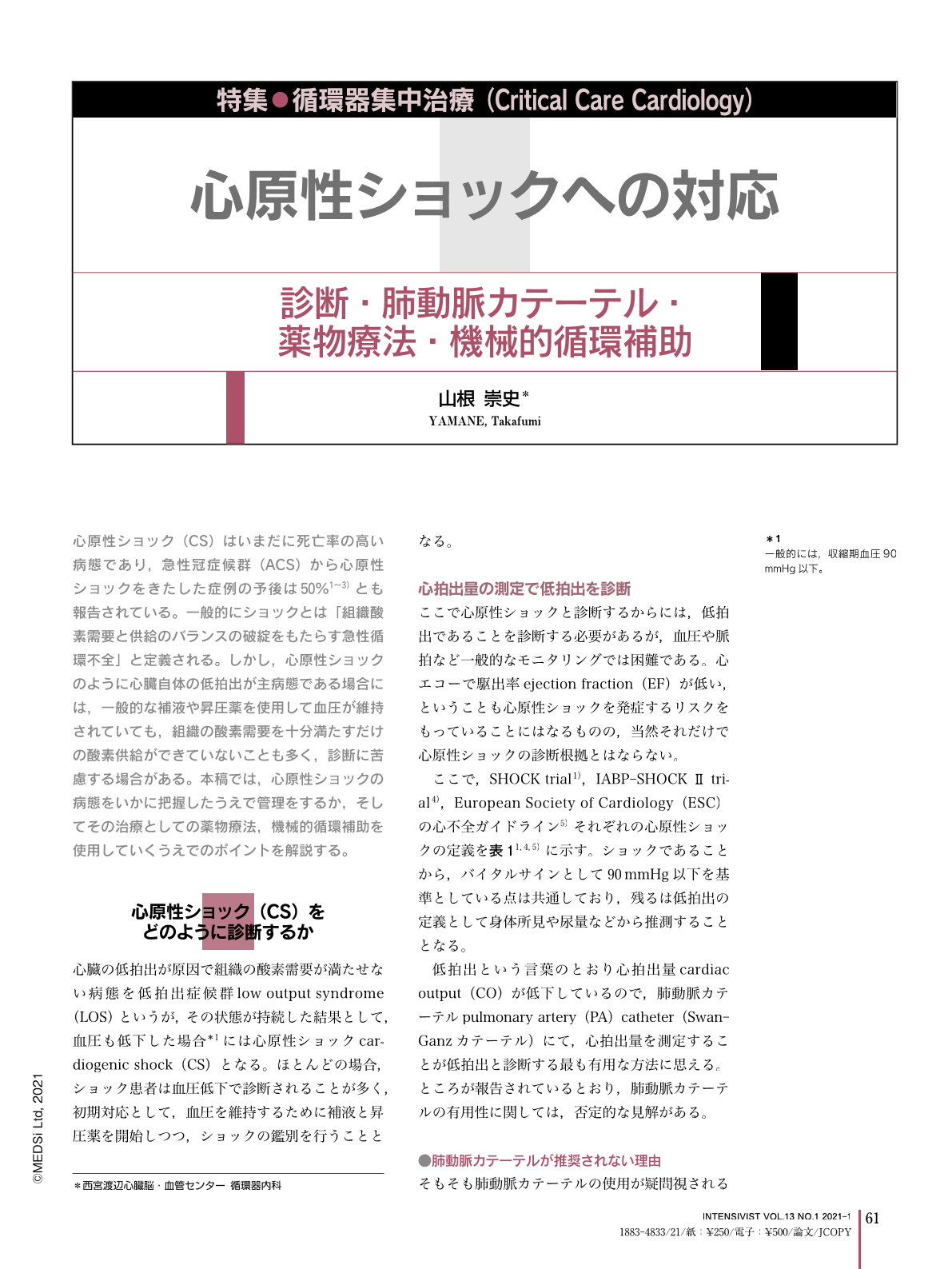
心原性ショック(CS)はいまだに死亡率の高い病態であり,急性冠症候群(ACS)から心原性ショックをきたした症例の予後は50%1〜3)とも報告されている。一般的にショックとは「組織酸素需要と供給のバランスの破綻をもたらす急性循環不全」と定義される。しかし,心原性ショックのように心臓自体の低拍出が主病態である場合には,一般的な補液や昇圧薬を使用して血圧が維持されていても,組織の酸素需要を十分満たすだけの酸素供給ができていないことも多く,診断に苦慮する場合がある。本稿では,心原性ショックの病態をいかに把握したうえで管理をするか,そしてその治療としての薬物療法,機械的循環補助を使用していくうえでのポイントを解説する。
Cardiogenic shock (CS) remains the most common cause of in-hospital mortality after acute coronary syndrome (ACS), with rates exceeding 50%. CS is the result of temporary or permanent derangements in the entire circulatory system, and left ventricular pump failure is the primary derangement in most forms of CS. To diagnose CS, a pulmonary artery catheter might be useful for hemodynamic monitoring. If it is hard to control by fluid resuscitation, inotropic agents or vasoconstrictors, we should not hesitate to introduce mechanical circulatory support.
Copyright © 2021, MEDICAL SCIENCES INTERNATIONAL, LTD. All rights reserved.