Japanese
English
- 有料閲覧
PPV購入案内
1,320円 (1,200円+税10%) こちらは、382ページから386ページの文献です。購入には医書.jp本会員登録が必要です。
会員登録完了後に改めて上記「購入サイトへ」を選択してください。
または「購入サイトへ」選択後に「購入ログイン」、「新規会員登録」の順に進んでください。
会員登録について詳しくはをご確認ください。
- Abstract 文献概要
- 1ページ目 Look Inside
- 参考文献 Reference
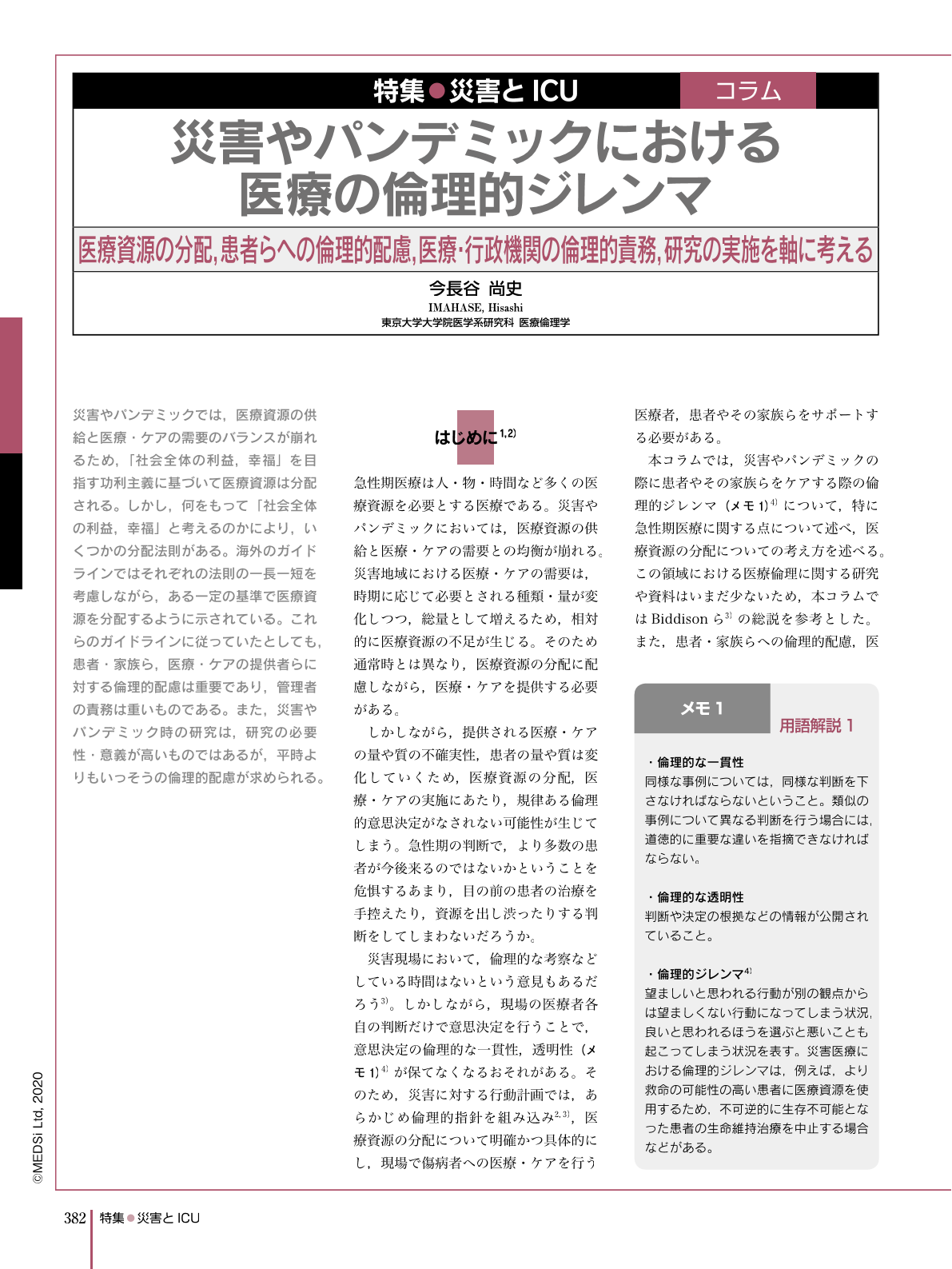
災害やパンデミックでは,医療資源の供給と医療・ケアの需要のバランスが崩れるため,「社会全体の利益,幸福」を目指す功利主義に基づいて医療資源は分配される。しかし,何をもって「社会全体の利益,幸福」と考えるのかにより,いくつかの分配法則がある。海外のガイドラインではそれぞれの法則の一長一短を考慮しながら,ある一定の基準で医療資源を分配するように示されている。これらのガイドラインに従っていたとしても,患者・家族ら,医療・ケアの提供者らに対する倫理的配慮は重要であり,管理者の責務は重いものである。また,災害やパンデミック時の研究は,研究の必要性・意義が高いものではあるが,平時よりもいっそうの倫理的配慮が求められる。
During a pandemic or disaster, the balance between the supply of medical resources and the demand for medical care is disrupted, and medical resources are distributed on the basis of utilitarianism that aims at “the benefit and happiness of the society as a whole.” However, there are some distribution rules depending on what we consider to be “the benefits and happiness of society as a whole”. Overseas guidelines state that medical resources should be distributed, taking into account the strengths and weaknesses of each rule. Even if we follow these guidelines, ethical considerations for patients, families, and providers of health care are important, and the responsibilities of managers are burdensome. Research regarding pandemics and disasters is necessary and meaningful but requires a greater consideration of ethical issues than during normal times.
Copyright © 2020, MEDICAL SCIENCES INTERNATIONAL, LTD. All rights reserved.