Japanese
English
- 有料閲覧
PPV購入案内
1,320円 (1,200円+税10%) こちらは、559ページから566ページの文献です。購入には医書.jp本会員登録が必要です。
会員登録完了後に改めて上記「購入サイトへ」を選択してください。
または「購入サイトへ」選択後に「購入ログイン」、「新規会員登録」の順に進んでください。
会員登録について詳しくはをご確認ください。
- Abstract 文献概要
- 1ページ目 Look Inside
- 参考文献 Reference
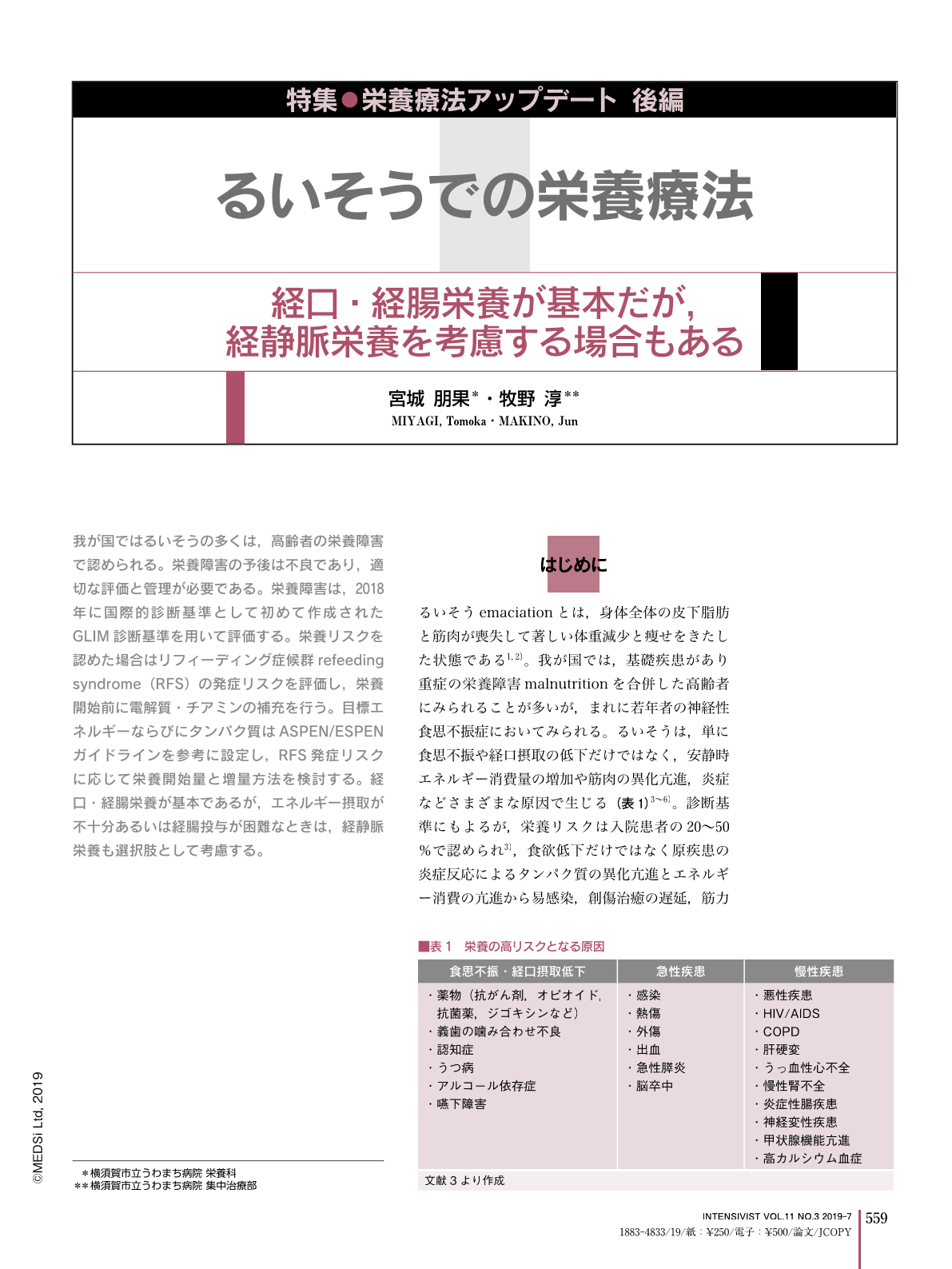
我が国ではるいそうの多くは,高齢者の栄養障害で認められる。栄養障害の予後は不良であり,適切な評価と管理が必要である。栄養障害は,2018年に国際的診断基準として初めて作成されたGLIM診断基準を用いて評価する。栄養リスクを認めた場合はリフィーディング症候群refeeding syndrome(RFS)の発症リスクを評価し,栄養開始前に電解質・チアミンの補充を行う。目標エネルギーならびにタンパク質はASPEN/ESPENガイドラインを参考に設定し,RFS発症リスクに応じて栄養開始量と増量方法を検討する。経口・経腸栄養が基本であるが,エネルギー摂取が不十分あるいは経腸投与が困難なときは,経静脈栄養も選択肢として考慮する。
The major cause of emaciation seen in Japan is malnutrition in the elderly. The prognosis for patients with malnutrition is grave, and appropriate assessment and management are essential. GLIM criteria are the first global diagnostic criteria published in 2018 to diagnose malnutrition. If the diagnosis of malnutrition is made, the risk of refeeding syndrome should be evaluated, with supplementation of electrolytes and thiamine prior to the initiation of nutritional support. The targets for energy and protein are determined according to the ASPEN or ESPEN guidelines. The initial dose and subsequent regimen would be determined based on the risk of developing refeeding syndrome. Either oral or enteral feeding should be selected first, and parenteral nutrition considered if the amount of energy provided is insufficient or enteral nutrition is contraindicated.
Copyright © 2019, MEDICAL SCIENCES INTERNATIONAL, LTD. All rights reserved.