Japanese
English
- 有料閲覧
PPV購入案内
1,320円 (1,200円+税10%) こちらは、1065ページから1073ページの文献です。購入には医書.jp本会員登録が必要です。
会員登録完了後に改めて上記「購入サイトへ」を選択してください。
または「購入サイトへ」選択後に「購入ログイン」、「新規会員登録」の順に進んでください。
会員登録について詳しくはをご確認ください。
- Abstract 文献概要
- 1ページ目 Look Inside
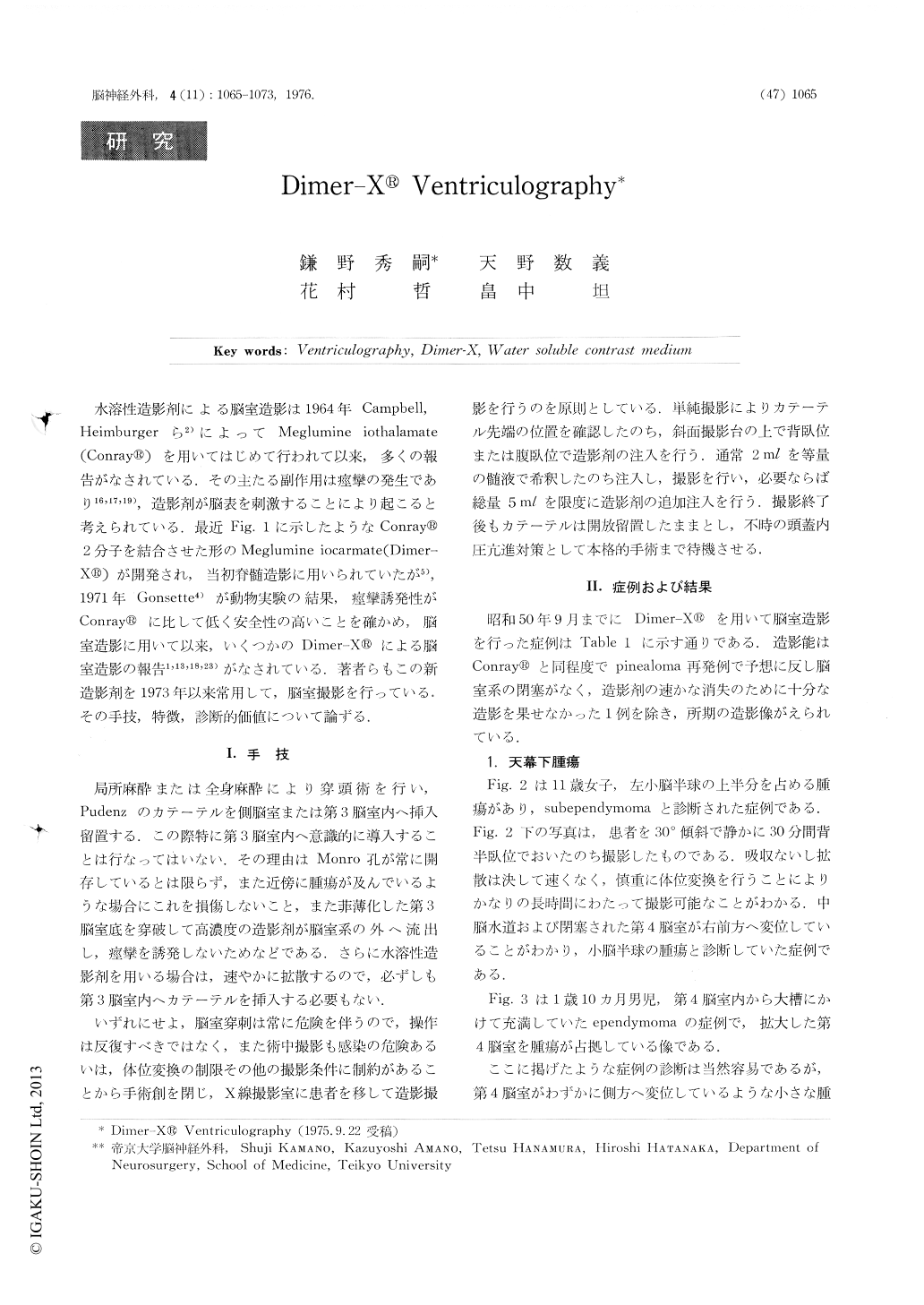
水溶性造影剤による脳室造影は1964年Campbell,Heimburgerら2)によってMeglumine iothalamate(Conray®)を用いてはじめて行われて以来,多くの報告がなされている.その主たる副作用は痙攣の発生であり16,17,19),造影剤が脳表を刺激することにより起こると考えられている.最近Fig.1に示したようなConray® 2分子を結合させた形のMeglumine iocarmate(Dimer-X®)が開発され,当初脊髄造影に用いられていたが5),1971年Gonsette4)が動物実験の結果,痙攣誘発性がConray®に比して低く安全性の高いことを確かめ,脳室造影に用いて以来,いくつかのDimer-X®による脳室造影の報告1,13,18,23)がなされている.著者らもこの新造影剤を1973年以来常用して,脳室撮影を行っている.その手技,特徴,診断的価値について論ずる.
After the first report on ventriculography with a water-soluble contrast medium, Conray®, by Campbell et al., many authors reported complications such as convulsion which are attributable to the irritating effect of this agent. On the other hand its value has been appriciated.
Recently Gonsette recommended a new water-soluble contrast medium, meglumine iocarmate (Dimer-X®), for ventriculography and reported that this new agent is less epileptogenic and less harmful. Because of these advantages, they have been performing ventriculography routinely with Dimer-X® and recognized its usefulness.
Copyright © 1976, Igaku-Shoin Ltd. All rights reserved.