Japanese
English
- 有料閲覧
PPV購入案内
1,320円 (1,200円+税10%) こちらは、1227ページから1235ページの文献です。購入には医書.jp本会員登録が必要です。
会員登録完了後に改めて上記「購入サイトへ」を選択してください。
または「購入サイトへ」選択後に「購入ログイン」、「新規会員登録」の順に進んでください。
会員登録について詳しくはをご確認ください。
- Abstract 文献概要
- 1ページ目 Look Inside
- 参考文献 Reference
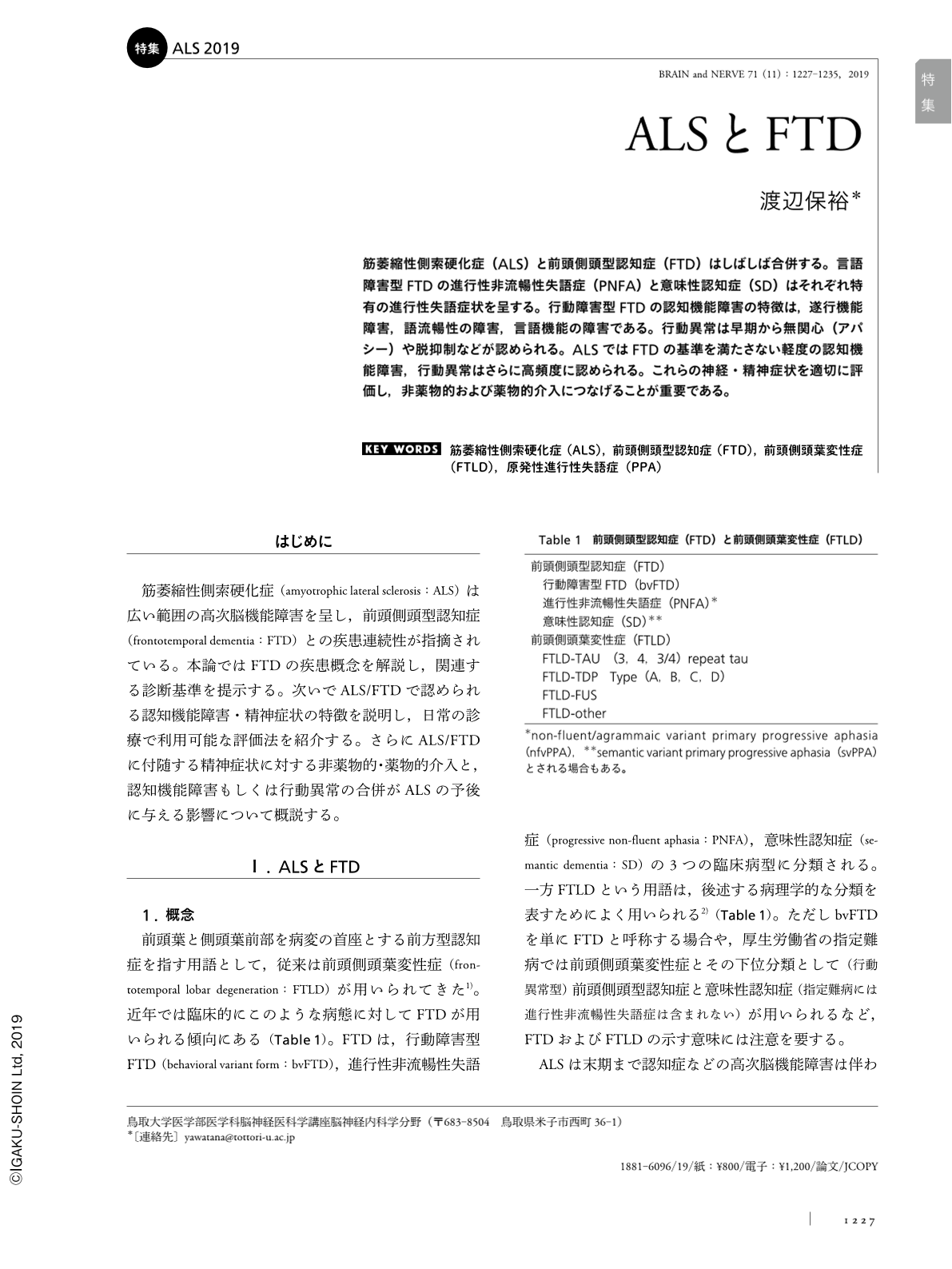
筋萎縮性側索硬化症(ALS)と前頭側頭型認知症(FTD)はしばしば合併する。言語障害型FTDの進行性非流暢性失語症(PNFA)と意味性認知症(SD)はそれぞれ特有の進行性失語症状を呈する。行動障害型FTDの認知機能障害の特徴は,遂行機能障害,語流暢性の障害,言語機能の障害である。行動異常は早期から無関心(アパシー)や脱抑制などが認められる。ALSではFTDの基準を満たさない軽度の認知機能障害,行動異常はさらに高頻度に認められる。これらの神経・精神症状を適切に評価し,非薬物的および薬物的介入につなげることが重要である。
Abstract
Amyotrophic lateral sclerosis (ALS) is often comorbid with frontotemporal dementia (FTD). Patients may exhibit language deficits as seen in progressive non-fluent aphasia (PNFA) or semantic dementia (SD). In behavioral variant FTD (bvFTD), cognitive impairments such as executive function, verbal fluency and language abnormalities are frequently seen, while apathy and disinhibition are major behavioral changes. Further, there are many ALS patients who do not fulfill the criteria for FTD but have mild cognitive and/or behavioral impairments. Appropriate evaluation of these conditions is necessary for non-pharmacological and pharmacological interventions.
Copyright © 2019, Igaku-Shoin Ltd. All rights reserved.