Japanese
English
- 有料閲覧
PPV購入案内
1,320円 (1,200円+税10%) こちらは、501ページから516ページの文献です。購入には医書.jp本会員登録が必要です。
会員登録完了後に改めて上記「購入サイトへ」を選択してください。
または「購入サイトへ」選択後に「購入ログイン」、「新規会員登録」の順に進んでください。
会員登録について詳しくはをご確認ください。
- Abstract 文献概要
- 1ページ目 Look Inside
- 参考文献 Reference
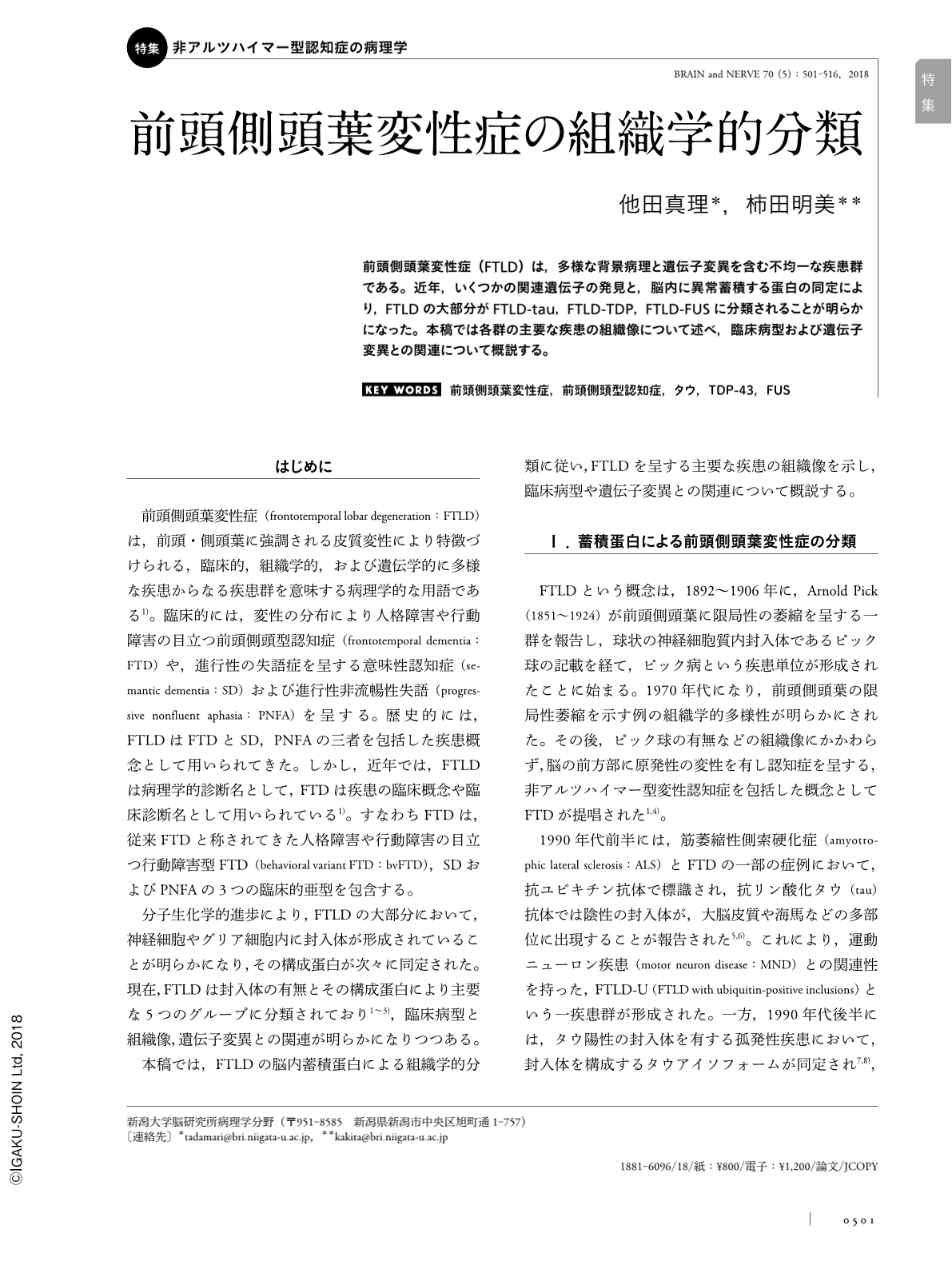
前頭側頭葉変性症(FTLD)は,多様な背景病理と遺伝子変異を含む不均一な疾患群である。近年,いくつかの関連遺伝子の発見と,脳内に異常蓄積する蛋白の同定により,FTLDの大部分がFTLD-tau,FTLD-TDP,FTLD-FUSに分類されることが明らかになった。本稿では各群の主要な疾患の組織像について述べ,臨床病型および遺伝子変異との関連について概説する。
Abstract
Frontotemporal lobar degeneration (FTLD) is a heterogeneous disease entity encompassing a wide variety of histopathological features and genetic backgrounds. The last two decades have seen the discovery of causative genes and the identification of relevant proteins. The current histopathological classification is based on the major types of protein deposition in the brain, and most FTLD cases can be placed into one of three pathological subgroups: FTLD-tau, FTLD-TDP, and FTLD-FUS. Further sub-classification within each subgroup is based on the morphology of neuronal and glial inclusions and lesion distribution. Affected patients, including some from the same subgroups, show considerable heterogeneity in their clinical presentations, suggesting that the subgroups represent a variety of well-defined clinical syndromes, including variants of frontotemporal dementia (behavioral variant frontotemporal dementia, progressive non-fluent aphasia, and semantic dementia) and motor disorders (amyotrophic lateral sclerosis, corticobasal syndrome, and supranuclear palsy syndrome). On the other hand, patients with MAPT mutations always show the FTLD-tau phenotype, whereas patients with progranulin, C9orf72, VCP or TARDBP usually present the FTLD-TDP phenotype. In this review, we describe the histopathologic features of the main FTLD subtypes and summarize the clinical presentations and genetic characteristics of affected patients.
Copyright © 2018, Igaku-Shoin Ltd. All rights reserved.