Japanese
English
- 有料閲覧
PPV購入案内
1,320円 (1,200円+税10%) こちらは、785ページから789ページの文献です。購入には医書.jp本会員登録が必要です。
会員登録完了後に改めて上記「購入サイトへ」を選択してください。
または「購入サイトへ」選択後に「購入ログイン」、「新規会員登録」の順に進んでください。
会員登録について詳しくはをご確認ください。
- Abstract 文献概要
- 1ページ目 Look Inside
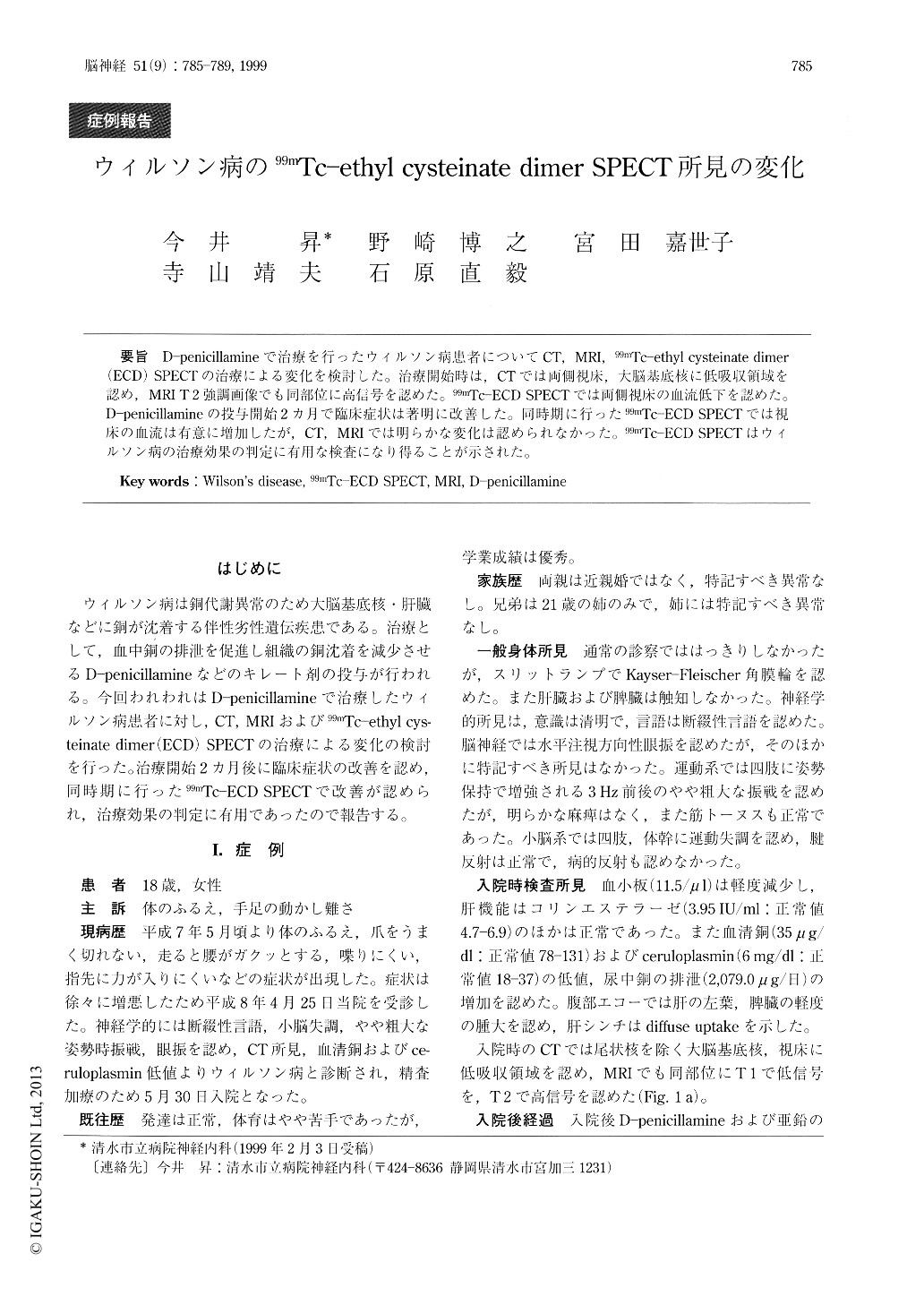
D-penicillamineで治療を行ったウィルソン病患者についてCT,MRI,99mTc-ethyl cysteinate dimer(ECD)SPECTの治療による変化を検討した。治療開始時は,CTでは両側視床,大脳基底核に低吸収領域を認め,MRI T2強調画像でも同部位に高信号を認めた。99mTc-ECD SPECTでは両側視床の血流低下を認めた。D-penicillamineの投与開始2カ月で臨床症状は著明に改善した。同時期に行った99mTc-ECD SPECTでは視床の血流は有意に増加したが,CT,MRIでは明らかな変化は認められなかった。99mTc-ECD SPECTはウィルソン病の治療効果の判定に有用な検査になり得ることが示された。
We studied short interval change of cranial com-puted tomography (CT), magnetic resonance imaging (MRI) and 99mTc-ethyl cysteinate dimer single photon emission computed tomography (99mTc-ECD SPECT) in a case of Wilson's disease. Before treatment, CT scan showed low density changes in the bilateral thalamus and basal ganglia, and MRI demonstrated high intensity in same lesions. 99mTc- ECD SPECT study revealed a hypoperfusion in bilateral thalamus. After 2 months under D-penicillamine therapy, neuro-logical findings had improvement.
Copyright © 1999, Igaku-Shoin Ltd. All rights reserved.