Japanese
English
- 有料閲覧
PPV購入案内
1,320円 (1,200円+税10%) こちらは、823ページから829ページの文献です。購入には医書.jp本会員登録が必要です。
会員登録完了後に改めて上記「購入サイトへ」を選択してください。
または「購入サイトへ」選択後に「購入ログイン」、「新規会員登録」の順に進んでください。
会員登録について詳しくはをご確認ください。
- Abstract 文献概要
- 1ページ目 Look Inside
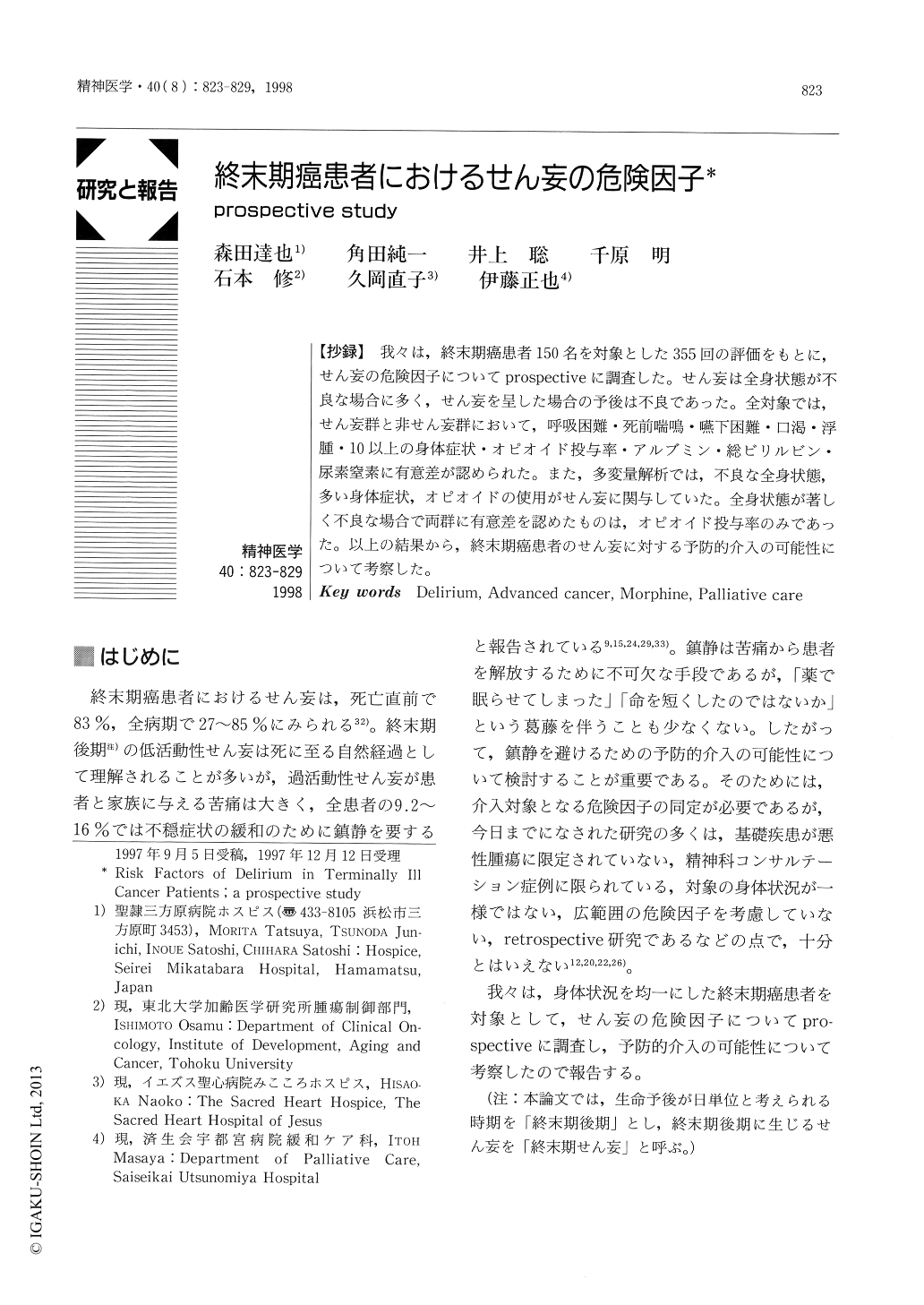
【抄録】我々は,終末期癌患者150名を対象とした355回の評価をもとに,せん妄の危険因子についてprospectiveに調査した。せん妄は全身状態が不良な場合に多く,せん妄を呈した場合の予後は不良であった。全対象では,せん妄群と非せん妄群において,呼吸困難・死前喘鳴・嚥下困難・口渇・浮腫・10以上の身体症状・オピオイド投与率・アルブミン・総ビリルビン・尿素窒素に有意差が認められた。また,多変量解析では,不良な全身状態,多い身体症状,オピオイドの使用がせん妄に関与していた。全身状態が著しく不良な場合で両群に有意差を認めたものは,オピオイド投与率のみであった。以上の結果から,終末期癌患者のせん妄に対する予防的介入の可能性について考察した。
To clarify the risk factors of delirium in terminally ill cancer patients, 355 assessments were prospectively performed on 150 patients. The frequency of delirium was significantly higher in cases with poorer performance status. The prognosis of cases with delirium was significantly worse than that of the cases without. There was significant difference between the two types of cases in the frequency of dyspnea, death rattle, dysphagia, thirst sensation, edema, more than ten physical symptoms, and opioid administration. Logistic regression analysis revealed that poor performance status, more than ten physical symptoms, and opioid administration were significantly associated with the presence of delirium. In cases with performance status from 10 to 20, only opioid administration was significantly associated with the presence of delirium. We discussed possible preventive intervention for terminal delirium.
Copyright © 1998, Igaku-Shoin Ltd. All rights reserved.