Japanese
English
- 有料閲覧
PPV購入案内
1,320円 (1,200円+税10%) こちらは、451ページから461ページの文献です。購入には医書.jp本会員登録が必要です。
会員登録完了後に改めて上記「購入サイトへ」を選択してください。
または「購入サイトへ」選択後に「購入ログイン」、「新規会員登録」の順に進んでください。
会員登録について詳しくはをご確認ください。
- Abstract 文献概要
- 1ページ目 Look Inside
- 参考文献 Reference
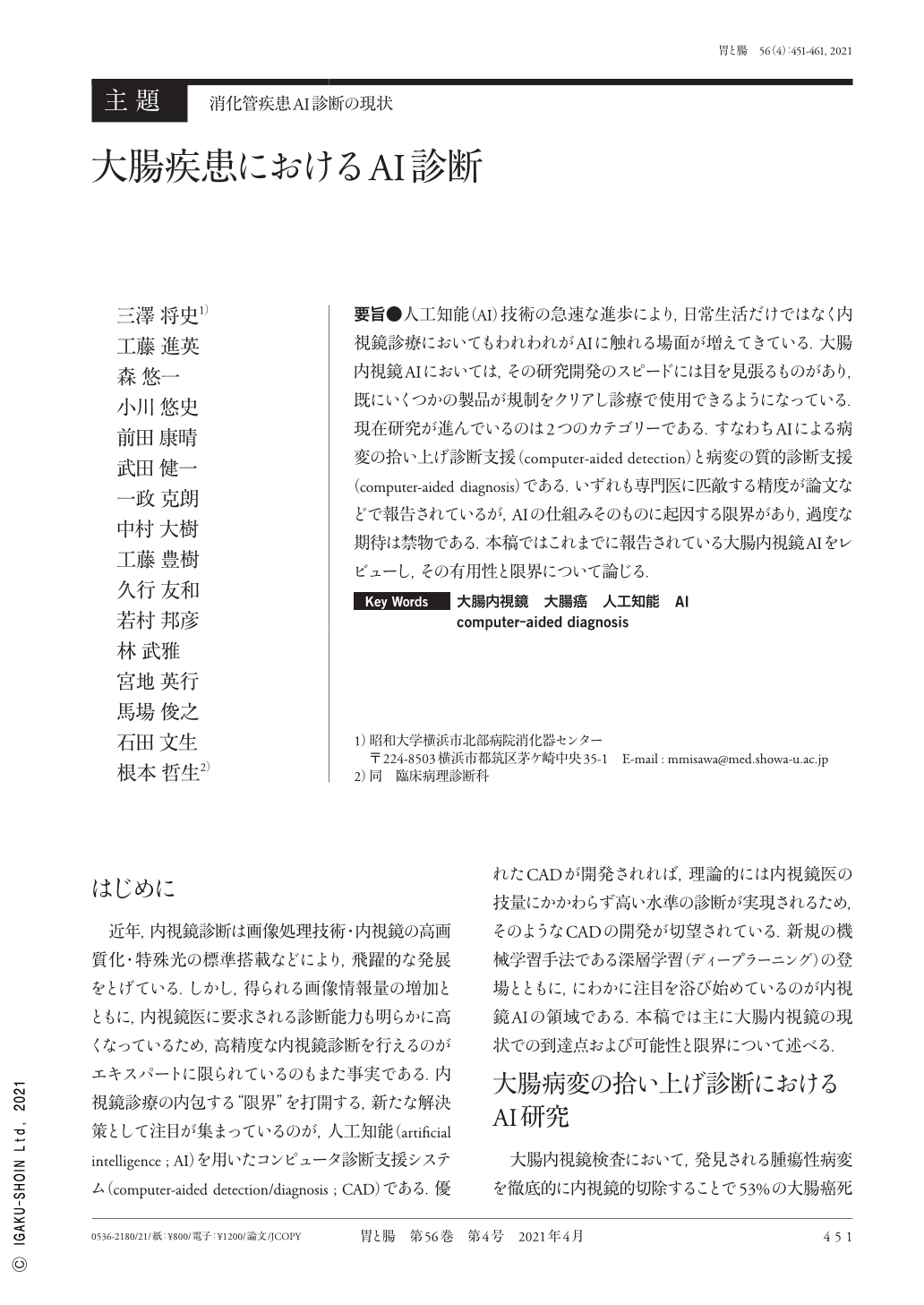
要旨●人工知能(AI)技術の急速な進歩により,日常生活だけではなく内視鏡診療においてもわれわれがAIに触れる場面が増えてきている.大腸内視鏡AIにおいては,その研究開発のスピードには目を見張るものがあり,既にいくつかの製品が規制をクリアし診療で使用できるようになっている.現在研究が進んでいるのは2つのカテゴリーである.すなわちAIによる病変の拾い上げ診断支援(computer-aided detection)と病変の質的診断支援(computer-aided diagnosis)である.いずれも専門医に匹敵する精度が論文などで報告されているが,AIの仕組みそのものに起因する限界があり,過度な期待は禁物である.本稿ではこれまでに報告されている大腸内視鏡AIをレビューし,その有用性と限界について論じる.
With the rapid advancement of AI(artificial intelligence), the world is now encountering the wide dissemination of AI not only into the daily life but also into clinical practice. Regulatory bodies have approved some AI systems for use in colonoscopy, and these are currently available in the medical marketplace. Two main research avenues exist on the use of AI in colonoscopy ; first computer-aided detection can help increase detection rates, and second, computer-aided diagnosis can support performing accurate optical biopsies. Some researchers have reported that both are as accurate as the work done by expert endoscopists ; however, machine learning is not perfect and hence needs attention. In this article, we discuss the current status and limitations of using AI in colonoscopy.
Copyright © 2021, Igaku-Shoin Ltd. All rights reserved.