Japanese
English
- 有料閲覧
PPV購入案内
1,320円 (1,200円+税10%) こちらは、1535ページから1543ページの文献です。購入には医書.jp本会員登録が必要です。
会員登録完了後に改めて上記「購入サイトへ」を選択してください。
または「購入サイトへ」選択後に「購入ログイン」、「新規会員登録」の順に進んでください。
会員登録について詳しくはをご確認ください。
- Abstract 文献概要
- 1ページ目 Look Inside
- 参考文献 Reference
- サイト内被引用 Cited by
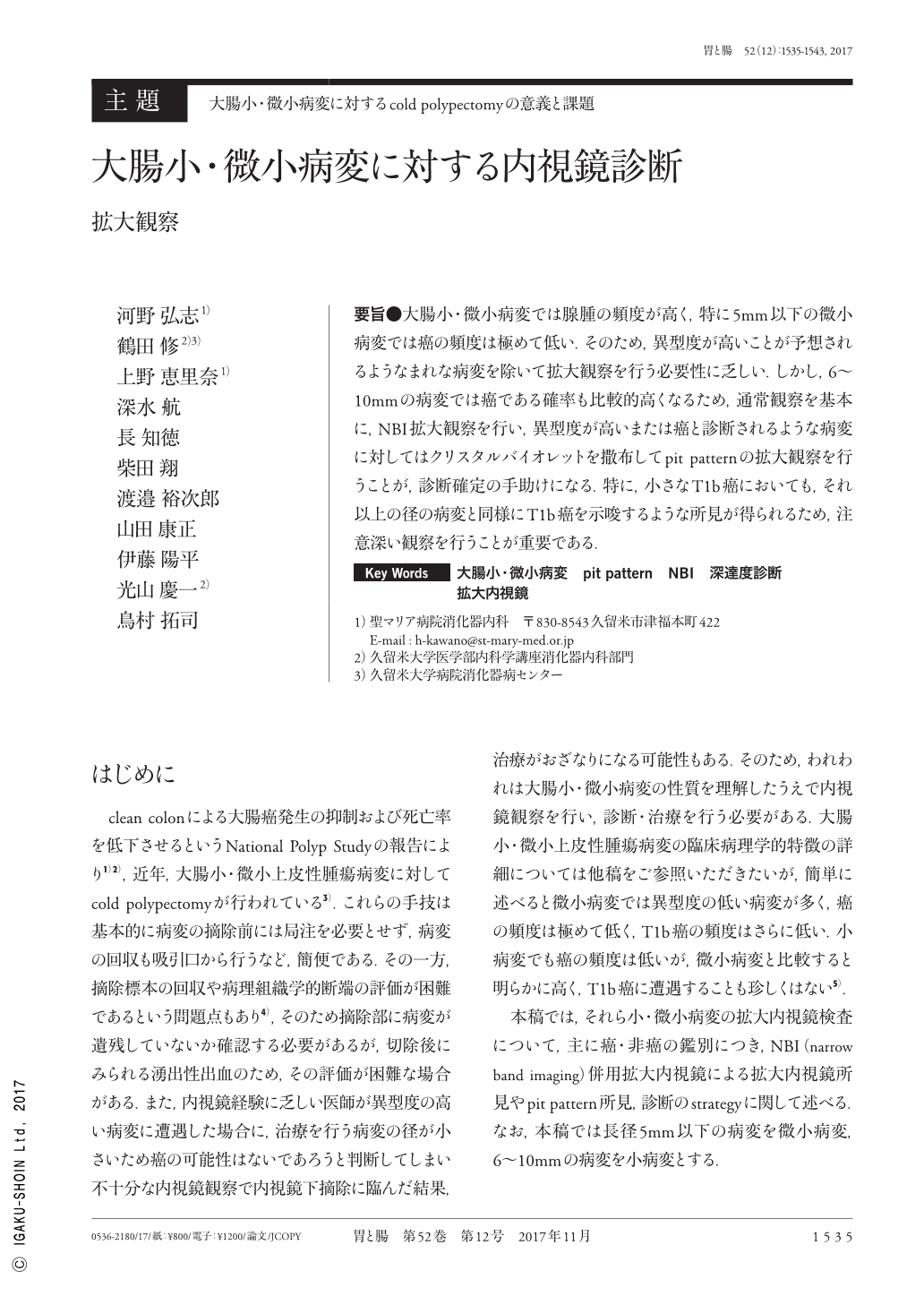
要旨●大腸小・微小病変では腺腫の頻度が高く,特に5mm以下の微小病変では癌の頻度は極めて低い.そのため,異型度が高いことが予想されるようなまれな病変を除いて拡大観察を行う必要性に乏しい.しかし,6〜10mmの病変では癌である確率も比較的高くなるため,通常観察を基本に,NBI拡大観察を行い,異型度が高いまたは癌と診断されるような病変に対してはクリスタルバイオレットを撒布してpit patternの拡大観察を行うことが,診断確定の手助けになる.特に,小さなT1b癌においても,それ以上の径の病変と同様にT1b癌を示唆するような所見が得られるため,注意深い観察を行うことが重要である.
Minute(≦5mm in size)epithelial neoplastic lesions display a high incidence of adenoma and a low incidence of carcinoma. Therefore, magnifying endoscopic observation by narrow band imaging(NBI)need to be performed only for those lesions suspected of being caused by high-grade adenoma or carcinoma, identified by conventional endoscopy. However, small(6-10mm)epithelial neoplastic lesions have a high incidence of carcinoma and low incidence of adenoma compared to minute lesions. Thus, it is necessary to perform magnifying endoscopic observation using NBI for the lesions suspected of being caused by carcinoma and observe the pit patterns in the lesions by crystal violet staining.
Copyright © 2017, Igaku-Shoin Ltd. All rights reserved.