Japanese
English
- 有料閲覧
PPV購入案内
1,320円 (1,200円+税10%) こちらは、38ページから42ページの文献です。購入には医書.jp本会員登録が必要です。
会員登録完了後に改めて上記「購入サイトへ」を選択してください。
または「購入サイトへ」選択後に「購入ログイン」、「新規会員登録」の順に進んでください。
会員登録について詳しくはをご確認ください。
- Abstract 文献概要
- 1ページ目 Look Inside
- 参考文献 Reference
- サイト内被引用 Cited by
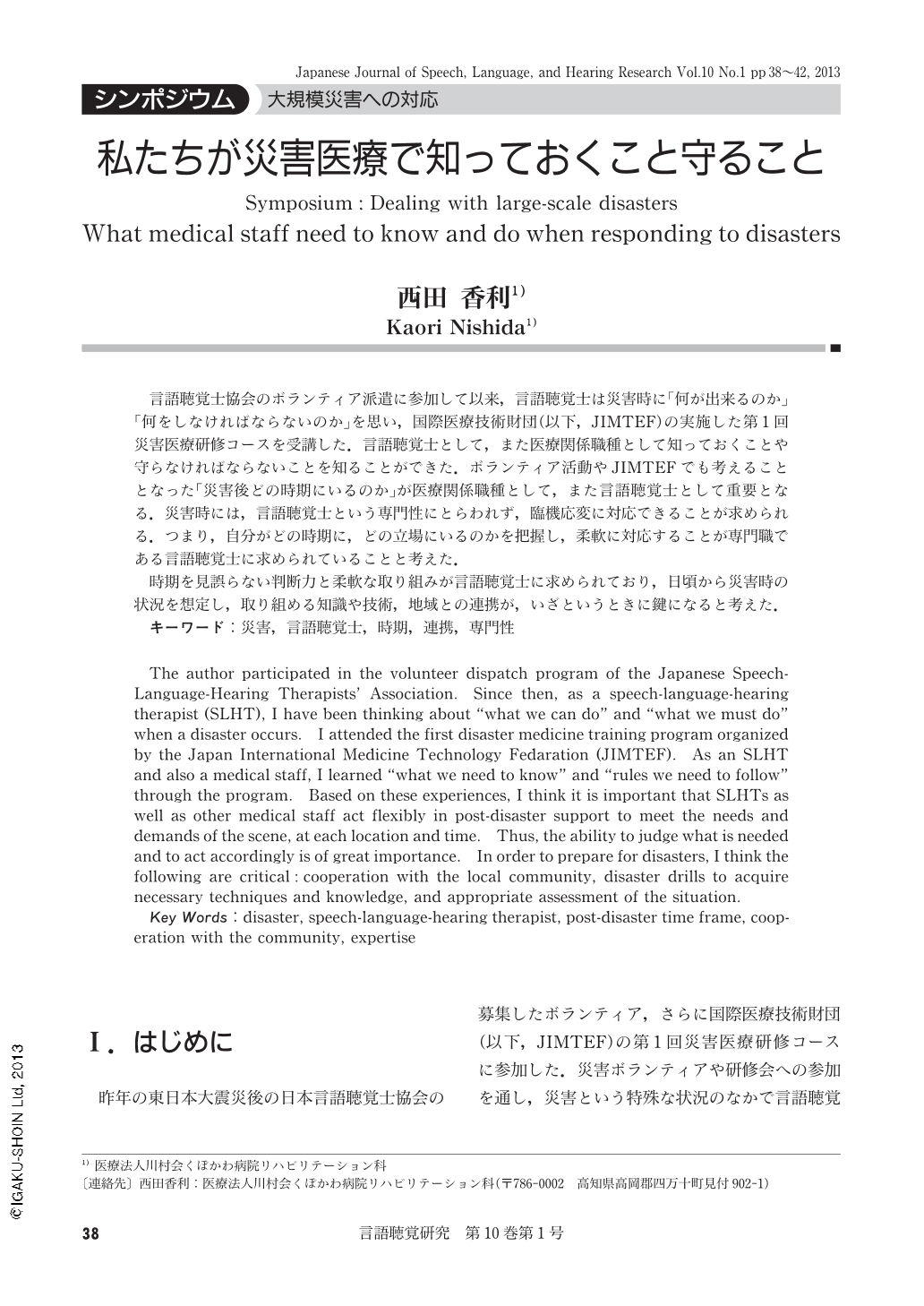
言語聴覚士協会のボランティア派遣に参加して以来,言語聴覚士は災害時に「何が出来るのか」「何をしなければならないのか」を思い,国際医療技術財団(以下,JIMTEF)の実施した第1回災害医療研修コースを受講した.言語聴覚士として,また医療関係職種として知っておくことや守らなければならないことを知ることができた.ボランティア活動やJIMTEFでも考えることとなった「災害後どの時期にいるのか」が医療関係職種として,また言語聴覚士として重要となる.災害時には,言語聴覚士という専門性にとらわれず,臨機応変に対応できることが求められる.つまり,自分がどの時期に,どの立場にいるのかを把握し,柔軟に対応することが専門職である言語聴覚士に求められていることと考えた.
時期を見誤らない判断力と柔軟な取り組みが言語聴覚士に求められており,日頃から災害時の状況を想定し,取り組める知識や技術,地域との連携が,いざというときに鍵になると考えた.
The author participated in the volunteer dispatch program of the Japanese Speech-Language-Hearing Therapists' Association. Since then, as a speech-language-hearing therapist (SLHT), I have been thinking about "what we can do" and "what we must do" when a disaster occurs. I attended the first disaster medicine training program organized by the Japan International Medicine Technology Fedaration (JIMTEF). As an SLHT and also a medical staff, I learned "what we need to know" and "rules we need to follow" through the program. Based on these experiences, I think it is important that SLHTs as well as other medical staff act flexibly in post-disaster support to meet the needs and demands of the scene, at each location and time. Thus, the ability to judge what is needed and to act accordingly is of great importance. In order to prepare for disasters, I think the following are critical:cooperation with the local community, disaster drills to acquire necessary techniques and knowledge, and appropriate assessment of the situation.
Copyright © 2013, Japanese Association of Speech-Language-Hearing Therapists. All rights reserved.