Japanese
English
- 有料閲覧
PPV購入案内
1,320円 (1,200円+税10%) こちらは、569ページから585ページの文献です。購入には医書.jp本会員登録が必要です。
会員登録完了後に改めて上記「購入サイトへ」を選択してください。
または「購入サイトへ」選択後に「購入ログイン」、「新規会員登録」の順に進んでください。
会員登録について詳しくはをご確認ください。
- Abstract 文献概要
- 1ページ目 Look Inside
- 参考文献 Reference
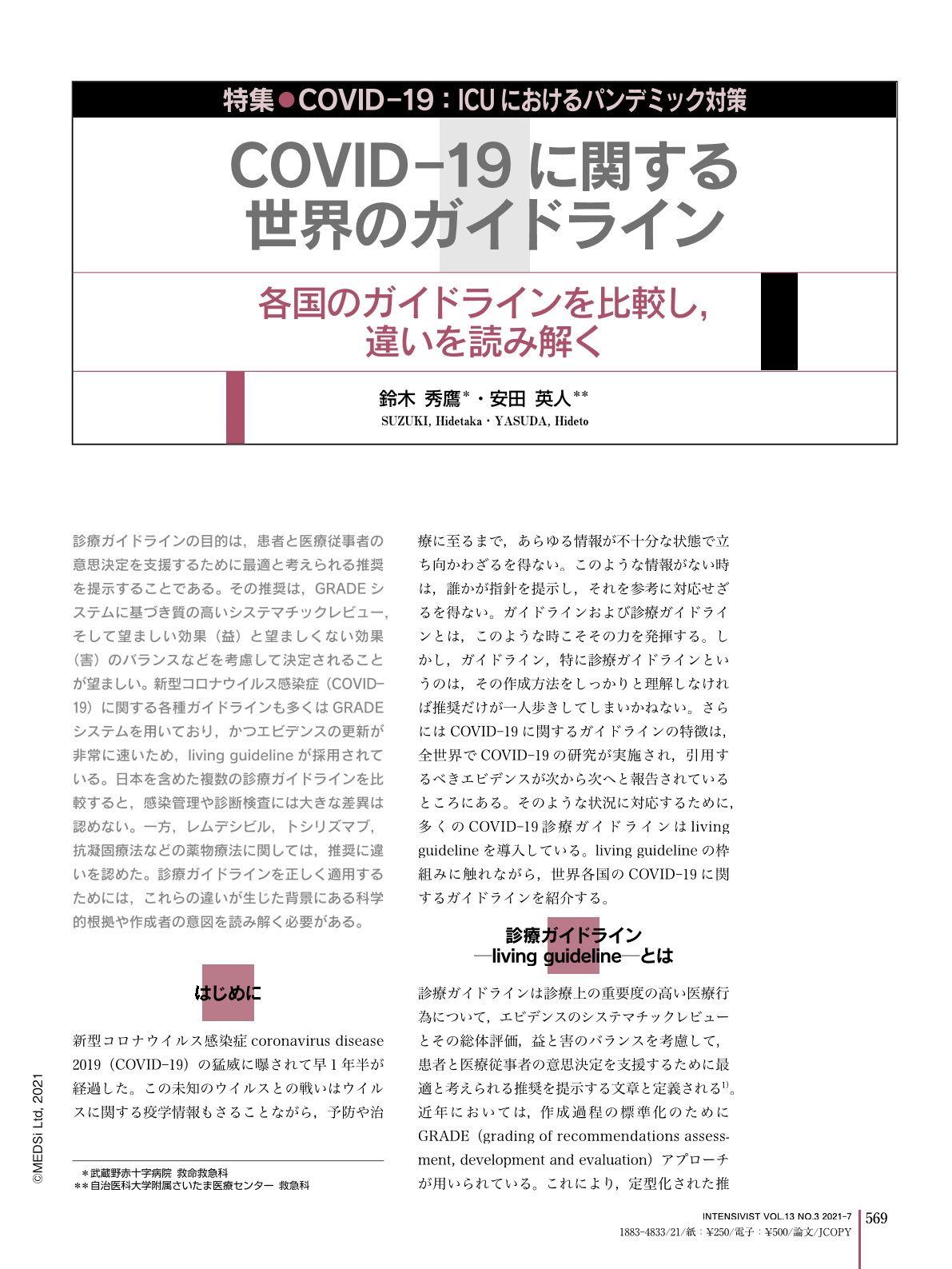
診療ガイドラインの目的は,患者と医療従事者の意思決定を支援するために最適と考えられる推奨を提示することである。その推奨は,GRADEシステムに基づき質の高いシステマチックレビュー,そして望ましい効果(益)と望ましくない効果(害)のバランスなどを考慮して決定されることが望ましい。新型コロナウイルス感染症(COVID-19)に関する各種ガイドラインも多くはGRADEシステムを用いており,かつエビデンスの更新が非常に速いため,living guidelineが採用されている。日本を含めた複数の診療ガイドラインを比較すると,感染管理や診断検査には大きな差異は認めない。一方,レムデシビル,トシリズマブ,抗凝固療法などの薬物療法に関しては,推奨に違いを認めた。診療ガイドラインを正しく適用するためには,これらの違いが生じた背景にある科学的根拠や作成者の意図を読み解く必要がある。
The purpose of a clinical practice guideline is to provide recommendations that are considered optimal to support the decision-making process of patients and health care providers.
The recommendations should be based on the GRADE system, a high quality systematic review, and a balance between desirable and undesirable effects.
Many guidelines on COVID-19 also use the GRADE system, and because the evidence is updated very rapidly, living guideline has been adopted.
Comparing several guidelines, including those in Japan, there are no major differences in infection control and diagnostic tests, but there are many differences in recommendations for pharmacotherapy such as Remdesivir, tocilizumab, and anticoagulation.
In order to correctly apply the guidelines to COVID-19 patients, it is necessary to interpret the scientific evidence behind these differences and the intentions of the authors.
Copyright © 2021, MEDICAL SCIENCES INTERNATIONAL, LTD. All rights reserved.