Japanese
English
- 有料閲覧
PPV購入案内
1,320円 (1,200円+税10%) こちらは、11ページから17ページの文献です。購入には医書.jp本会員登録が必要です。
会員登録完了後に改めて上記「購入サイトへ」を選択してください。
または「購入サイトへ」選択後に「購入ログイン」、「新規会員登録」の順に進んでください。
会員登録について詳しくはをご確認ください。
- Abstract 文献概要
- 1ページ目 Look Inside
- 参考文献 Reference
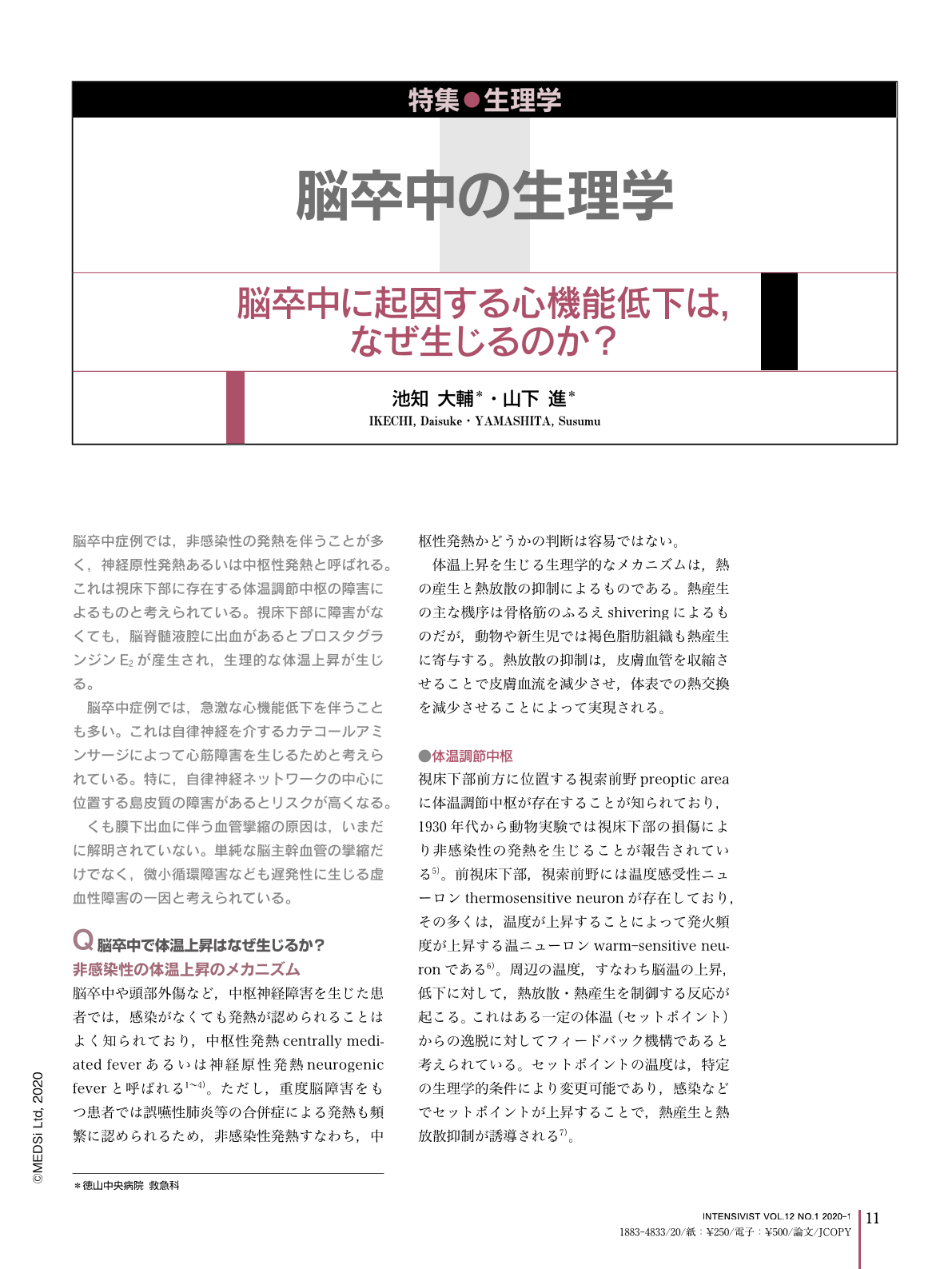
脳卒中症例では,非感染性の発熱を伴うことが多く,神経原性発熱あるいは中枢性発熱と呼ばれる。これは視床下部に存在する体温調節中枢の障害によるものと考えられている。視床下部に障害がなくても,脳脊髄液腔に出血があるとプロスタグランジンE2が産生され,生理的な体温上昇が生じる。
脳卒中症例では,急激な心機能低下を伴うことも多い。これは自律神経を介するカテコールアミンサージによって心筋障害を生じるためと考えられている。特に,自律神経ネットワークの中心に位置する島皮質の障害があるとリスクが高くなる。
くも膜下出血に伴う血管攣縮の原因は,いまだに解明されていない。単純な脳主幹血管の攣縮だけでなく,微小循環障害なども遅発性に生じる虚血性障害の一因と考えられている。
Fever in patients after a stroke without infection is called neurogenic fever or centrally mediated fever, and is often observed. Injury of the thermoregulatory center in the hypothalamus raises the body temperature. Hemorrhage in the cerebrospinal fluid space leads to production of prostaglandin E2 which causes a physiological temperature increase. Acute cardiac dysfunction in patients after stroke is also often observed. Abnormal reactions of the autonomic nerves and catecholamine surges can cause myocardial damage. The risk of myocardial damage is high if the insular cortex was damaged. The pathophysiological mechanisms of vasospasm with subarachnoid hemorrhage have not yet been elucidated. Delayed cerebral ischemia is caused not only by major cerebrovascular spasm, but also by microcirculatory disorders and other factors.
Copyright © 2020, MEDICAL SCIENCES INTERNATIONAL, LTD. All rights reserved.