Japanese
English
- 有料閲覧
PPV購入案内
1,320円 (1,200円+税10%) こちらは、856ページから859ページの文献です。購入には医書.jp本会員登録が必要です。
会員登録完了後に改めて上記「購入サイトへ」を選択してください。
または「購入サイトへ」選択後に「購入ログイン」、「新規会員登録」の順に進んでください。
会員登録について詳しくはをご確認ください。
- Abstract 文献概要
- 1ページ目 Look Inside
- 参考文献 Reference
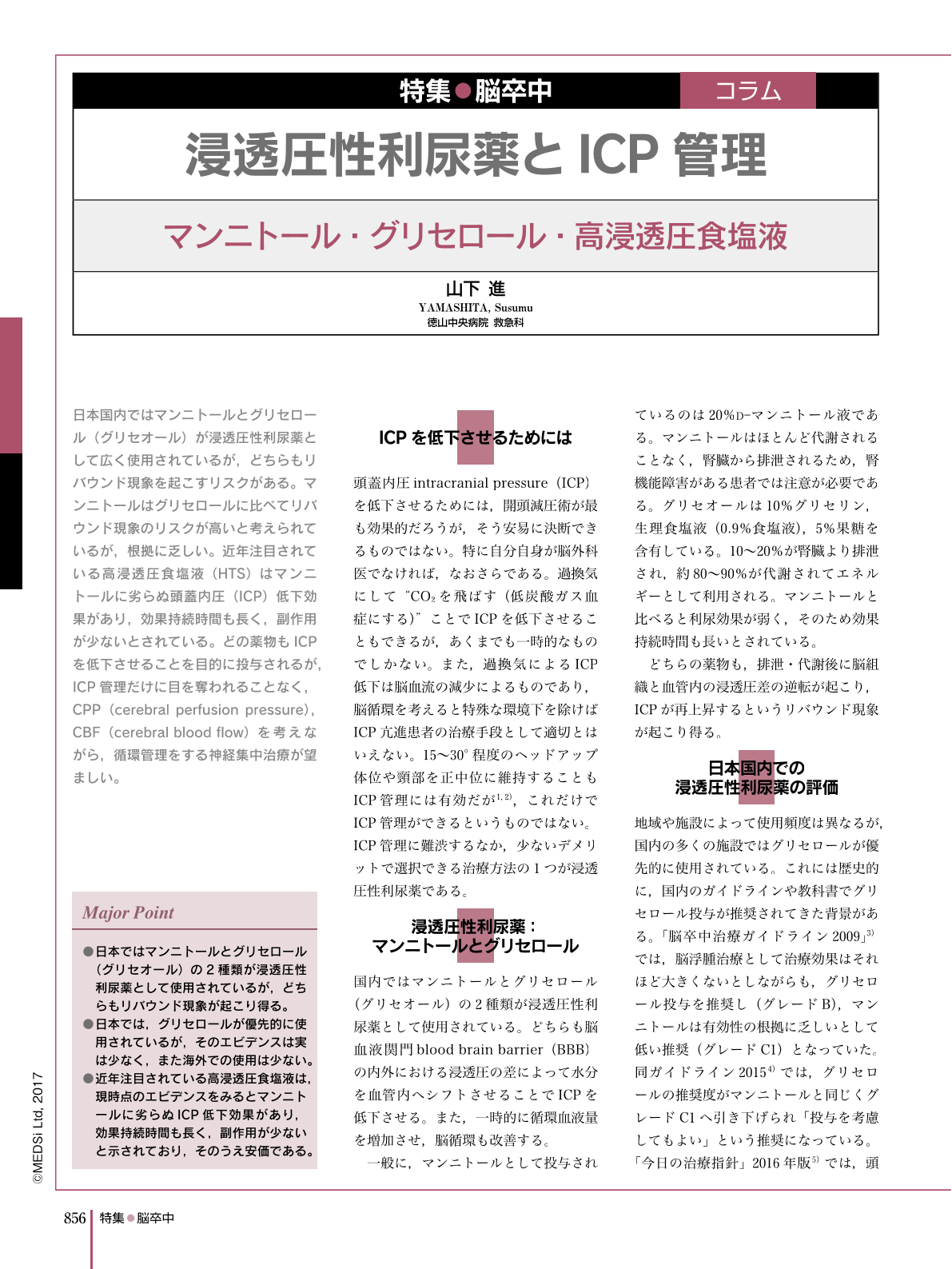
日本国内ではマンニトールとグリセロール(グリセオール)が浸透圧性利尿薬として広く使用されているが,どちらもリバウンド現象を起こすリスクがある。マンニトールはグリセロールに比べてリバウンド現象のリスクが高いと考えられているが,根拠に乏しい。近年注目されている高浸透圧食塩液(HTS)はマンニトールに劣らぬ頭蓋内圧(ICP)低下効果があり,効果持続時間も長く,副作用が少ないとされている。どの薬物もICPを低下させることを目的に投与されるが,ICP管理だけに目を奪われることなく,CPP(cerebral perfusion pressure),CBF(cerebral blood flow)を考えながら,循環管理をする神経集中治療が望ましい。
Major Point
●日本ではマンニトールとグリセロール(グリセオール)の2種類が浸透圧性利尿薬として使用されているが,どちらもリバウンド現象が起こり得る。
●日本では,グリセロールが優先的に使用されているが,そのエビデンスは実は少なく,また海外での使用は少ない。
●近年注目されている高浸透圧食塩液は,現時点のエビデンスをみるとマンニトールに劣らぬICP低下効果があり,効果持続時間も長く,副作用が少ないと示されており,そのうえ安価である。
Osmotic diuretics including mannitol and glycerol are widely used to control intracranial pressure (ICP) in Japan. A major adverse effect of osmotic diuretics is a rebound phenomenon (a paradoxical rise in ICP). In Japan, glycerol is more commonly used than mannitol based on the idea that the risk for rebound is higher with mannitol. In western countries, however, the use of mannitol is far more common, probably due to its pharmacological efficacy and the fact that there is no inferiority of mannitol compared with glycerol in terms of rebound. Hypertonic saline (HTS) is another osmotic agent used to control ICP. In Japan, the use of HTS is not yet common, but it remains promising since the beneficial effect on increased ICP lasts longer and rebound is less common with HTS than with mannitol. Although osmotic therapy is widely accepted for the management of ICP, no reliable data show that ICP-oriented care improves patient outcomes. To improve the outcomes of patients with increased ICP, hemodynamic parameters including cerebral perfusion pressure and cerebral blood flow should also be considered.
Copyright © 2017, MEDICAL SCIENCES INTERNATIONAL, LTD. All rights reserved.