Japanese
English
- 有料閲覧
PPV購入案内
1,320円 (1,200円+税10%) こちらは、533ページから543ページの文献です。購入には医書.jp本会員登録が必要です。
会員登録完了後に改めて上記「購入サイトへ」を選択してください。
または「購入サイトへ」選択後に「購入ログイン」、「新規会員登録」の順に進んでください。
会員登録について詳しくはをご確認ください。
- Abstract 文献概要
- 1ページ目 Look Inside
- 参考文献 Reference
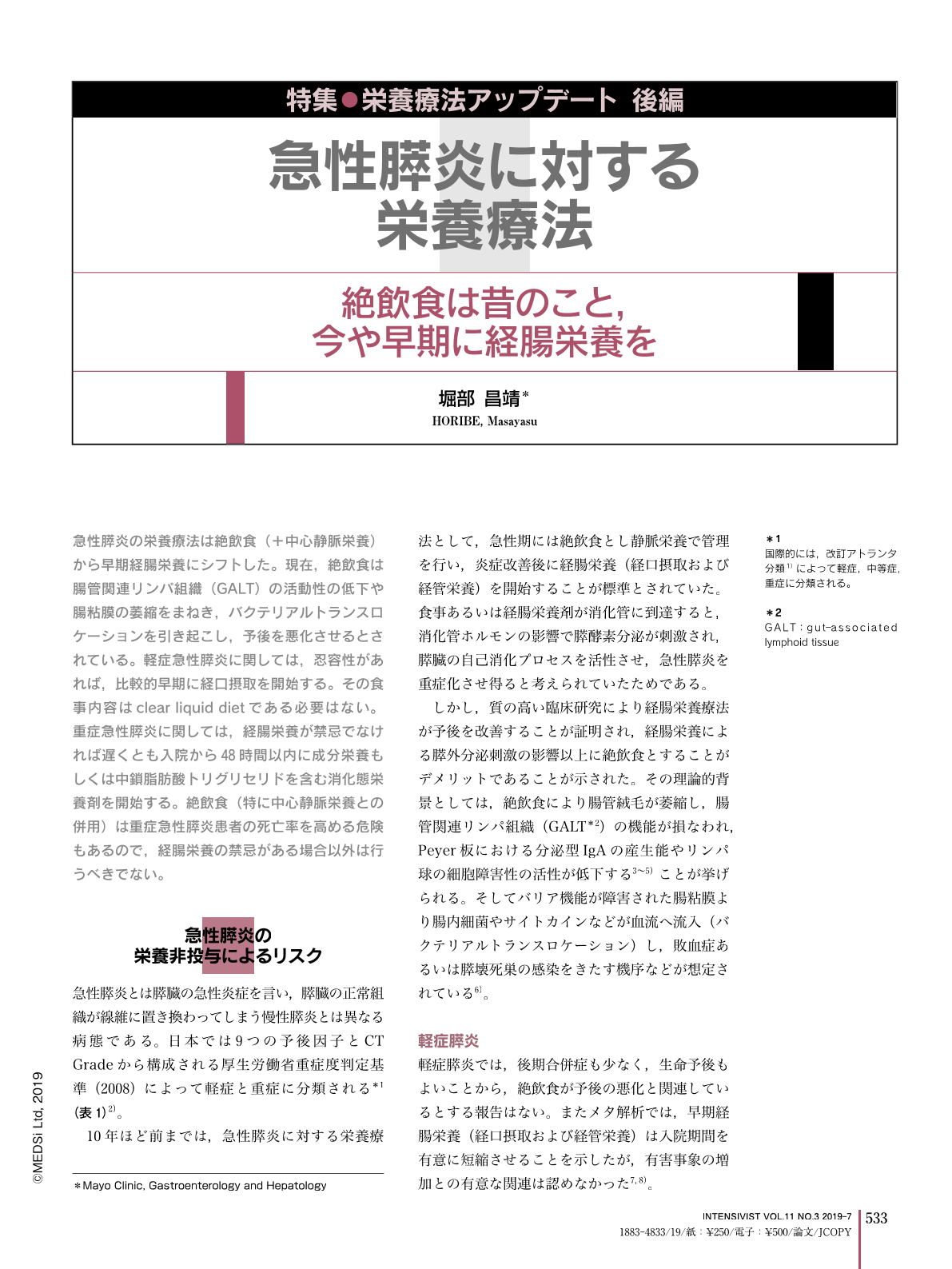
急性膵炎の栄養療法は絶飲食(+中心静脈栄養)から早期経腸栄養にシフトした。現在,絶飲食は腸管関連リンパ組織(GALT)の活動性の低下や腸粘膜の萎縮をまねき,バクテリアルトランスロケーションを引き起こし,予後を悪化させるとされている。軽症急性膵炎に関しては,忍容性があれば,比較的早期に経口摂取を開始する。その食事内容はclear liquid dietである必要はない。重症急性膵炎に関しては,経腸栄養が禁忌でなければ遅くとも入院から48時間以内に成分栄養もしくは中鎖脂肪酸トリグリセリドを含む消化態栄養剤を開始する。絶飲食(特に中心静脈栄養との併用)は重症急性膵炎患者の死亡率を高める危険もあるので,経腸栄養の禁忌がある場合以外は行うべきでない。
Nutritional therapy in acute pancreatitis has shifted from nil per os to early enteral nutrition. Recent studies have found that nil per os can worsen the prognosis in acute pancreatitis by causing bacterial translocation via intestinal mucosa atrophy and decreased gut-associated lymphoid tissue (GALT) activity. Oral food intake should be started in patients with mild acute pancreatitis if they are able to tolerate it. The diet need not consist of a clear liquid. In patients with severe acute pancreatitis, an elementaldiet or oligomeric formula which includes medium-chain triglycerides (MCT) should be started at the latest within 48 hours of hospitalization. Nil per os, especially in combination with central venous nutrition, should not be used in severe acute pancreatitis except in cases for which enteral nutrition is contraindicated due to increased risk of mortality.
Copyright © 2019, MEDICAL SCIENCES INTERNATIONAL, LTD. All rights reserved.