Japanese
English
- 有料閲覧
PPV購入案内
1,320円 (1,200円+税10%) こちらは、199ページから213ページの文献です。購入には医書.jp本会員登録が必要です。
会員登録完了後に改めて上記「購入サイトへ」を選択してください。
または「購入サイトへ」選択後に「購入ログイン」、「新規会員登録」の順に進んでください。
会員登録について詳しくはをご確認ください。
- Abstract 文献概要
- 1ページ目 Look Inside
- 参考文献 Reference
- サイト内被引用 Cited by
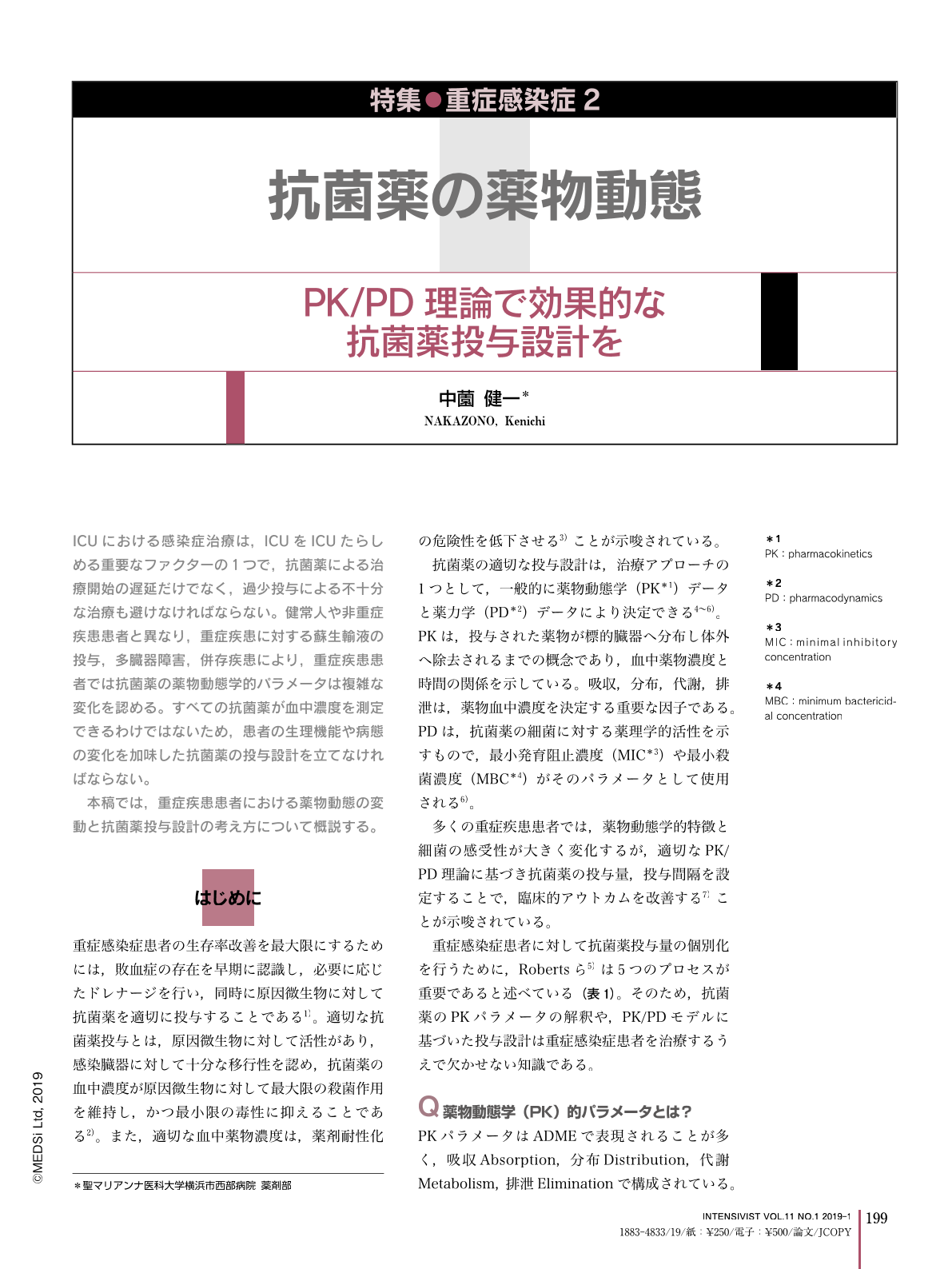
ICUにおける感染症治療は,ICUをICUたらしめる重要なファクターの1つで,抗菌薬による治療開始の遅延だけでなく,過少投与による不十分な治療も避けなければならない。健常人や非重症疾患患者と異なり,重症疾患に対する蘇生輸液の投与,多臓器障害,併存疾患により,重症疾患患者では抗菌薬の薬物動態学的パラメータは複雑な変化を認める。すべての抗菌薬が血中濃度を測定できるわけではないため,患者の生理機能や病態の変化を加味した抗菌薬の投与設計を立てなければならない。
本稿では,重症疾患患者における薬物動態の変動と抗菌薬投与設計の考え方について概説する。
Treating infections is one of the most important elements of critical care. Avoiding a delay in initiating antimicrobial therapy is of the utmost importance. The optimal dosing of antimicrobial agents and avoiding sub-therapeutic concentrations are just as important. Pharmacokinetic parameters of antimicrobial agents in the treatment of critically ill patients are influenced by multiple factors, including fluid resuscitation, the presence of multiple organ dysfunction and/or comorbidities. Measurement of serum concentrations is not routinely available for all antimicrobial agents. Therefore, optimal dosing should be guided by pathophysiology and the patient's individual physiologic status. This review article describes pharmacokinetics considerations in critically ill patients and the process for an individualized optimal antimicrobial dosing strategy.
Copyright © 2019, MEDICAL SCIENCES INTERNATIONAL, LTD. All rights reserved.