Japanese
English
- 有料閲覧
PPV購入案内
2,200円 (2,000円+税10%) こちらは、931ページから937ページの文献です。購入には医書.jp本会員登録が必要です。
会員登録完了後に改めて上記「購入サイトへ」を選択してください。
または「購入サイトへ」選択後に「購入ログイン」、「新規会員登録」の順に進んでください。
会員登録について詳しくはをご確認ください。
- Abstract 文献概要
- 1ページ目 Look Inside
- 参考文献 Reference
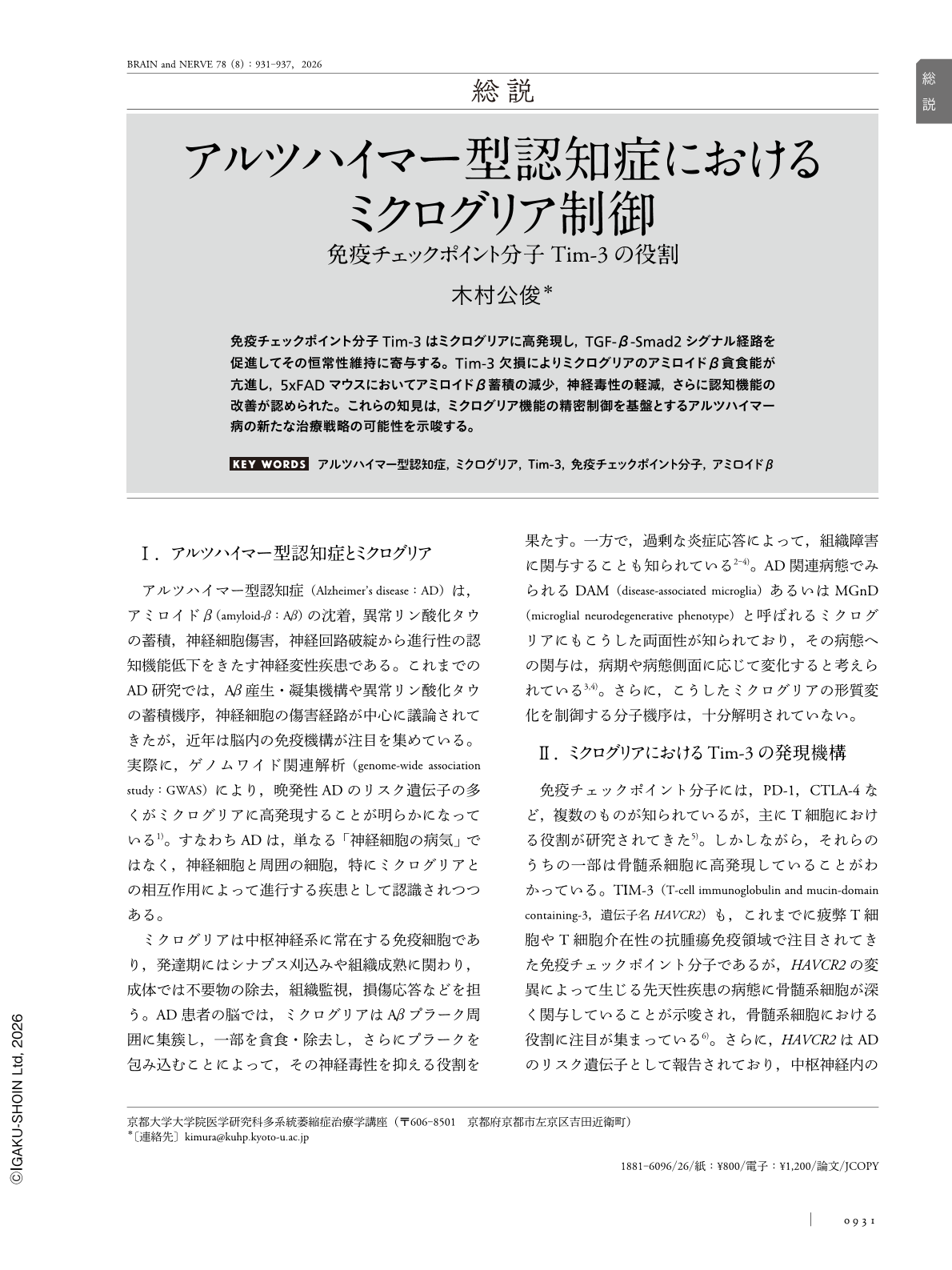
免疫チェックポイント分子Tim-3はミクログリアに高発現し,TGF-β-Smad2シグナル経路を促進してその恒常性維持に寄与する。Tim-3欠損によりミクログリアのアミロイドβ貪食能が亢進し,5xFADマウスにおいてアミロイドβ蓄積の減少,神経毒性の軽減,さらに認知機能の改善が認められた。これらの知見は,ミクログリア機能の精密制御を基盤とするアルツハイマー病の新たな治療戦略の可能性を示唆する。
Abstract
Microglia are resident immune cells of the central nervous system and play a central role in the pathogenesis of Alzheimer's disease (AD). Emerging evidence indicates that their functional state critically influences amyloid-β (Aβ) clearance, neuroinflammation, and disease progression. Tim-3, an immune checkpoint molecule, is highly expressed in microglia and functions as a key regulator of microglial homeostasis through the transforming growth factor-β (TGF-β)-Smad2 signaling pathway. Microglia-specific deletion of Tim-3 enhances phagocytic activity. Moreover, microglia-specific Tim-3 deficiency results in reduced Aβ deposition, decreased neurotoxicity, and improved cognitive performance in the 5xFAD mouse model of AD. These effects are not mediated by changes in Aβ production but rather by enhanced microglial clearance and remodeling of Aβ plaques into less toxic forms. Furthermore, single-cell analyses reveal that Tim-3 deficiency promotes a microglial state characterized by increased phagocytic capacity and reduced pro-inflammatory signaling. These findings suggest that Tim-3 acts as a functional checkpoint that limits beneficial microglial responses in AD and that targeting Tim-3 may therefore represent a promising therapeutic strategy for reprogramming microglia and improving disease outcomes.
Copyright © 2026, Igaku-Shoin Ltd. All rights reserved.