Japanese
English
- 有料閲覧
PPV購入案内
1,320円 (1,200円+税10%) こちらは、1053ページから1058ページの文献です。購入には医書.jp本会員登録が必要です。
会員登録完了後に改めて上記「購入サイトへ」を選択してください。
または「購入サイトへ」選択後に「購入ログイン」、「新規会員登録」の順に進んでください。
会員登録について詳しくはをご確認ください。
- Abstract 文献概要
- 1ページ目 Look Inside
- 参考文献 Reference
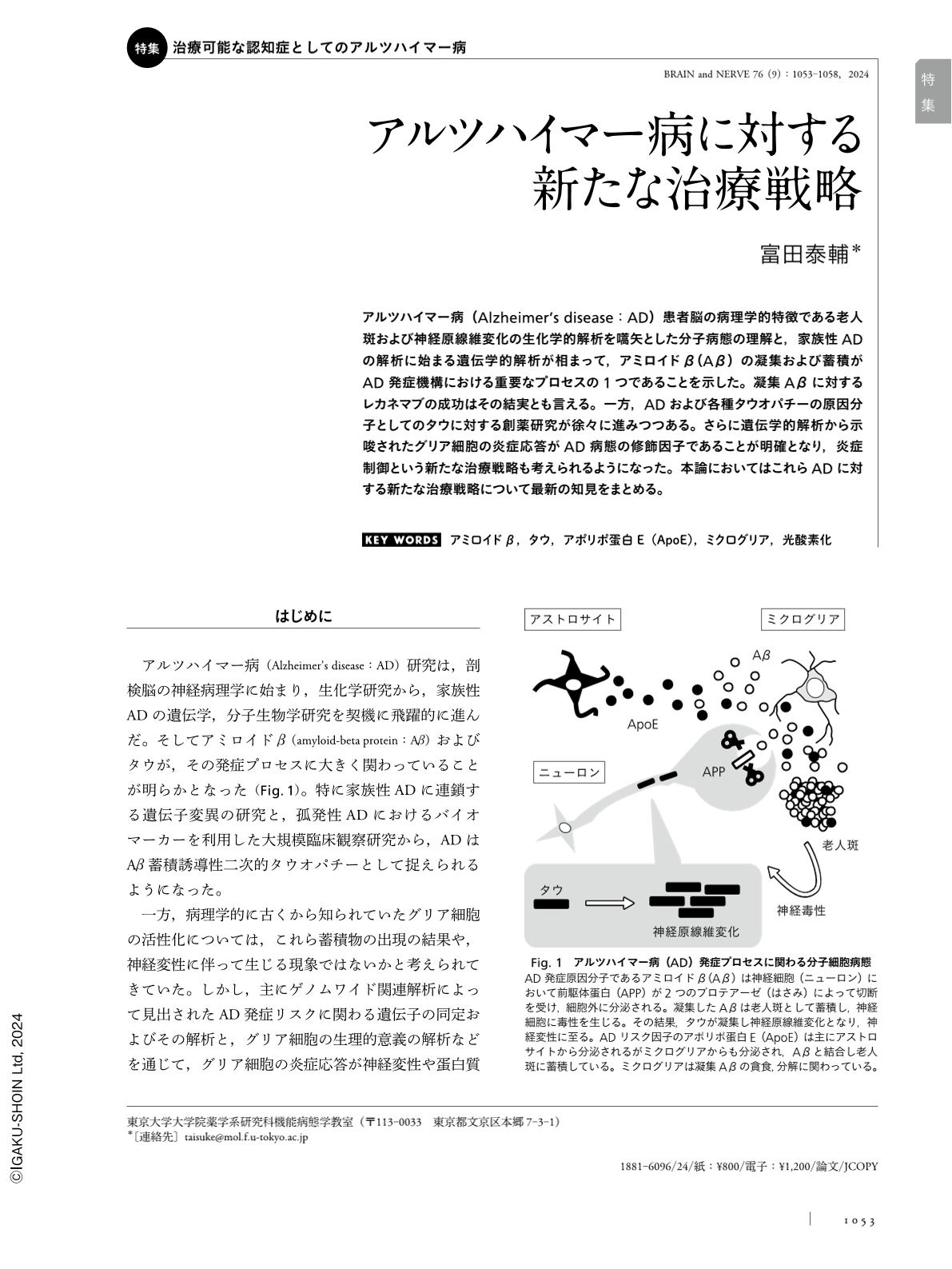
アルツハイマー病(Alzheimer's disease:AD)患者脳の病理学的特徴である老人斑および神経原線維変化の生化学的解析を嚆矢とした分子病態の理解と,家族性ADの解析に始まる遺伝学的解析が相まって,アミロイドβ(Aβ)の凝集および蓄積がAD発症機構における重要なプロセスの1つであることを示した。凝集Aβに対するレカネマブの成功はその結実とも言える。一方,ADおよび各種タウオパチーの原因分子としてのタウに対する創薬研究が徐々に進みつつある。さらに遺伝学的解析から示唆されたグリア細胞の炎症応答がAD病態の修飾因子であることが明確となり,炎症制御という新たな治療戦略も考えられるようになった。本論においてはこれらADに対する新たな治療戦略について最新の知見をまとめる。
Abstract
The molecular pathogenesis of Alzheimer's disease (AD) has been elucidated through the biochemical analysis of senile plaques, neurofibrillary tangles, and pathological features of the brains of patients with AD. Genetic analysis, initiated with familial AD investigation, has revealed that Aβ aggregation and accumulation are crucial processes in AD pathogenesis. The success of lecanemab against aggregated Aβ is the result of these efforts. Meanwhile, research on tau as a causative molecule in AD and various other tauopathies is advancing gradually. Furthermore, genetic analysis has revealed that the inflammatory response of glial cells modifies AD pathophysiology; a novel therapeutic strategy for inflammation control is thus currently under consideration. This article summarizes the latest discoveries related to these new therapeutic strategies for AD.
Copyright © 2024, Igaku-Shoin Ltd. All rights reserved.