Japanese
English
- 有料閲覧
PPV購入案内
1,320円 (1,200円+税10%) こちらは、1345ページから1349ページの文献です。購入には医書.jp本会員登録が必要です。
会員登録完了後に改めて上記「購入サイトへ」を選択してください。
または「購入サイトへ」選択後に「購入ログイン」、「新規会員登録」の順に進んでください。
会員登録について詳しくはをご確認ください。
- Abstract 文献概要
- 1ページ目 Look Inside
- 参考文献 Reference
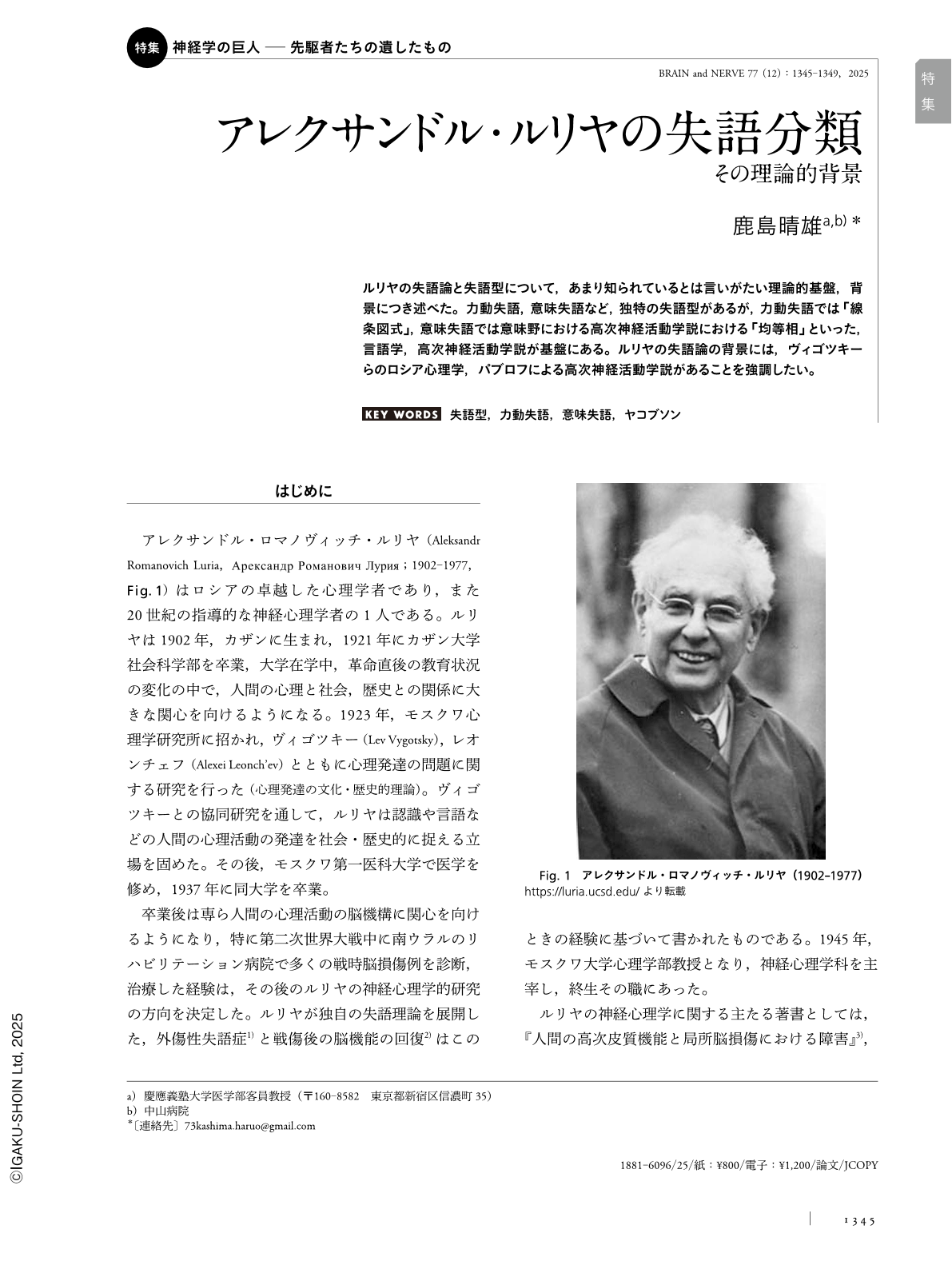
ルリヤの失語論と失語型について,あまり知られているとは言いがたい理論的基盤,背景につき述べた。力動失語,意味失語など,独特の失語型があるが,力動失語では「線条図式」,意味失語では意味野における高次神経活動学説における「均等相」といった,言語学,高次神経活動学説が基盤にある。ルリヤの失語論の背景には,ヴィゴツキーらのロシア心理学,パブロフによる高次神経活動学説があることを強調したい。
Abstract
This article highlights the little-known theoretical foundations and background of Luria's theory of aphasia and the various aphasia types. Certain aphasia types, such as dynamic aphasia and semantic aphasia, are unique. Dynamic aphasia is based on the linguistic theory of “linear schema,” while semantic aphasia is based on the theory of higher neural activity in the semantic field, known as the “equal phase.” I would like to emphasize that Luria's theory of aphasia draws on the Russian psychology of Vygotsky and others, as well as Pavlov's theory of higher neural activity.
Copyright © 2025, Igaku-Shoin Ltd. All rights reserved.