Japanese
English
- 有料閲覧
PPV購入案内
1,320円 (1,200円+税10%) こちらは、369ページから376ページの文献です。購入には医書.jp本会員登録が必要です。
会員登録完了後に改めて上記「購入サイトへ」を選択してください。
または「購入サイトへ」選択後に「購入ログイン」、「新規会員登録」の順に進んでください。
会員登録について詳しくはをご確認ください。
- Abstract 文献概要
- 1ページ目 Look Inside
- 参考文献 Reference
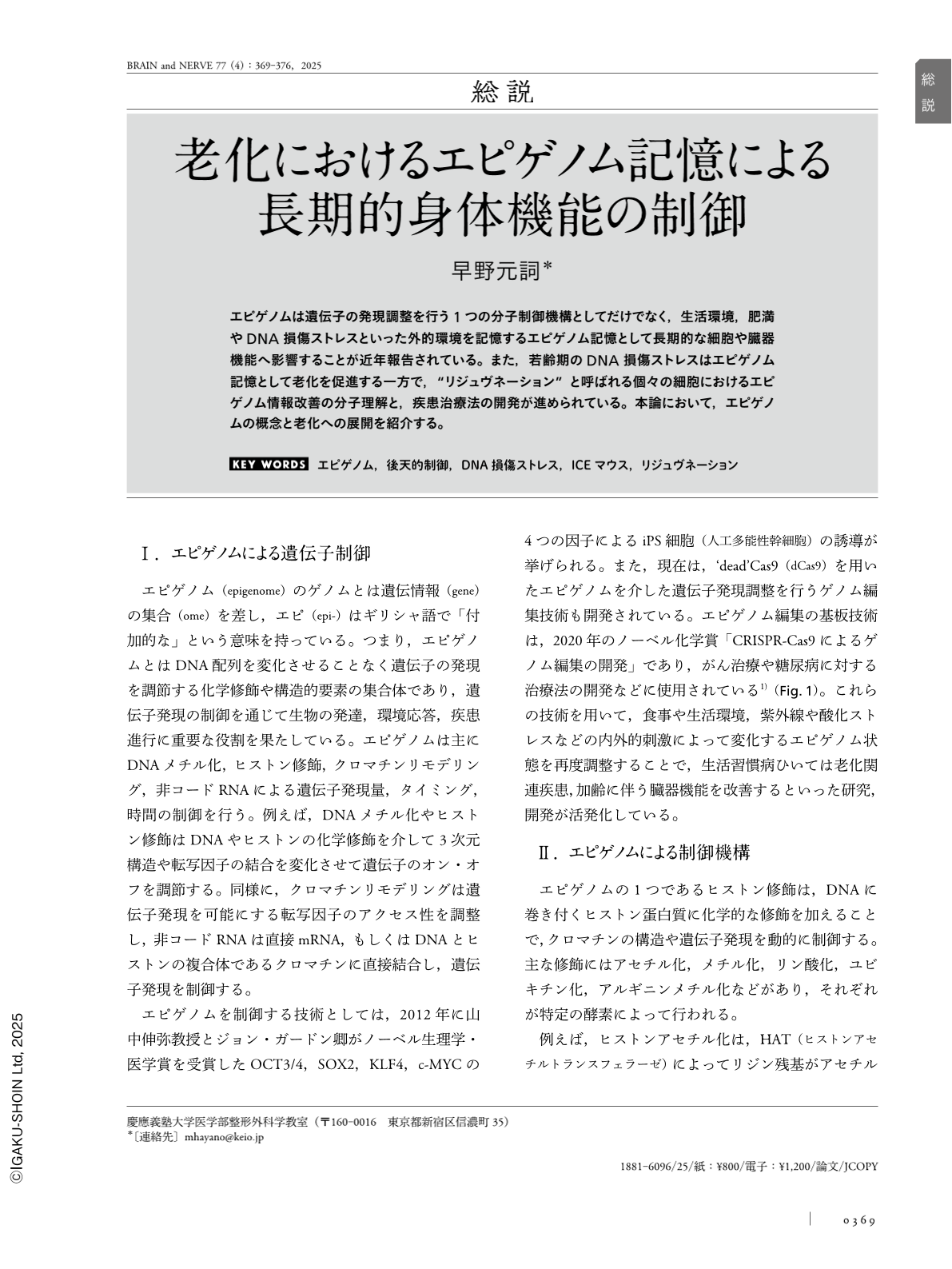
エピゲノムは遺伝子の発現調整を行う1つの分子制御機構としてだけでなく,生活環境,肥満やDNA損傷ストレスといった外的環境を記憶するエピゲノム記憶として長期的な細胞や臓器機能へ影響することが近年報告されている。また,若齢期のDNA損傷ストレスはエピゲノム記憶として老化を促進する一方で,“リジュヴネーション”と呼ばれる個々の細胞におけるエピゲノム情報改善の分子理解と,疾患治療法の開発が進められている。本論において,エピゲノムの概念と老化への展開を紹介する。
Abstract
The epigenome, a dynamic regulator of gene expression, has emerged as a key mediator of long-term cellular and organ functions. Beyond its classical role in gene regulation, the epigenome serves as a molecular “memory”, capturing external environmental influences, such as lifestyle factors, obesity, and stress-induced DNA damage. Epigenomic memory can imprint persistent changes in cellular identity and functionality, thereby influencing aging and the onset of age-related diseases. Recent studies have revealed that early-life stress-induced DNA damage can accelerate aging by establishing epigenomic memory. However, strategies aimed at “rejuvenation”, the targeted resetting of epigenomic information, are gaining traction for their potential to reverse aging phenotypes and treat diseases. This review explores the concept of the epigenome as a memory system, its role in aging, and emerging therapeutic approaches to rejuvenation.
Copyright © 2025, Igaku-Shoin Ltd. All rights reserved.