Japanese
English
- 有料閲覧
PPV購入案内
1,320円 (1,200円+税10%) こちらは、623ページから631ページの文献です。購入には医書.jp本会員登録が必要です。
会員登録完了後に改めて上記「購入サイトへ」を選択してください。
または「購入サイトへ」選択後に「購入ログイン」、「新規会員登録」の順に進んでください。
会員登録について詳しくはをご確認ください。
- Abstract 文献概要
- 1ページ目 Look Inside
- 参考文献 Reference
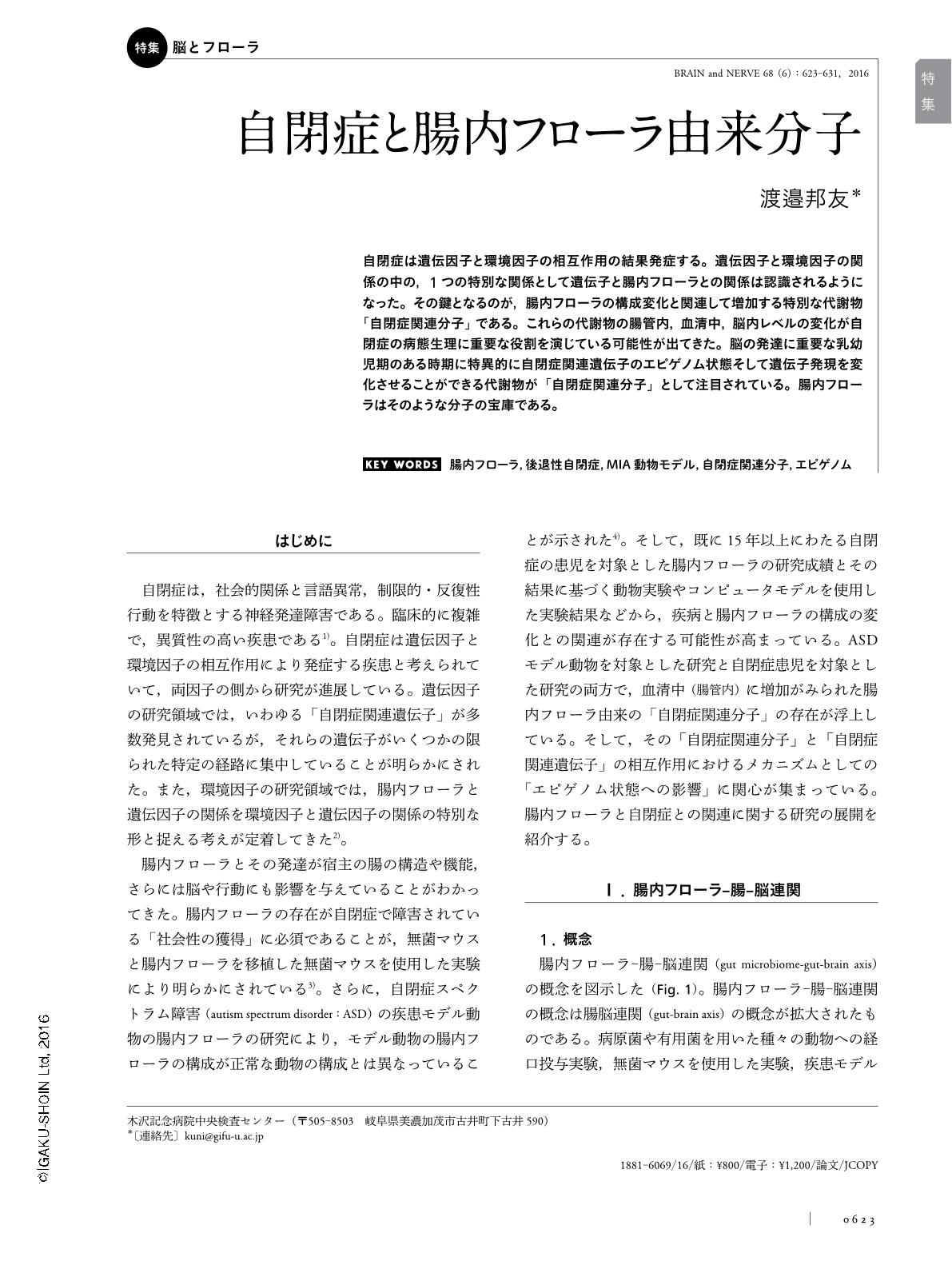
自閉症は遺伝因子と環境因子の相互作用の結果発症する。遺伝因子と環境因子の関係の中の,1つの特別な関係として遺伝子と腸内フローラとの関係は認識されるようになった。その鍵となるのが,腸内フローラの構成変化と関連して増加する特別な代謝物「自閉症関連分子」である。これらの代謝物の腸管内,血清中,脳内レベルの変化が自閉症の病態生理に重要な役割を演じている可能性が出てきた。脳の発達に重要な乳幼児期のある時期に特異的に自閉症関連遺伝子のエピゲノム状態そして遺伝子発現を変化させることができる代謝物が「自閉症関連分子」として注目されている。腸内フローラはそのような分子の宝庫である。
Abstract
Gene-microbiota interactions are now proposed to be a special case of gene-environmental interaction. Preclinical and clinical data summarized in this article reveal that a specific serum metabolite, associated with alterations in gut microbiome composition, might have an emerging role in the onset and pathogenesis of autism. Altered level of this specified metabolite may induce perturbations in the epigenome and modulate the expression of key disease susceptible genes in neurons and their associated cells during critical periods of neurodevelopment. The gut microbiota itself is now regarded as a reservoir for environmental epigenetic factors.
Copyright © 2016, Igaku-Shoin Ltd. All rights reserved.