Japanese
English
- 有料閲覧
PPV購入案内
1,320円 (1,200円+税10%) こちらは、157ページから163ページの文献です。購入には医書.jp本会員登録が必要です。
会員登録完了後に改めて上記「購入サイトへ」を選択してください。
または「購入サイトへ」選択後に「購入ログイン」、「新規会員登録」の順に進んでください。
会員登録について詳しくはをご確認ください。
- Abstract 文献概要
- 1ページ目 Look Inside
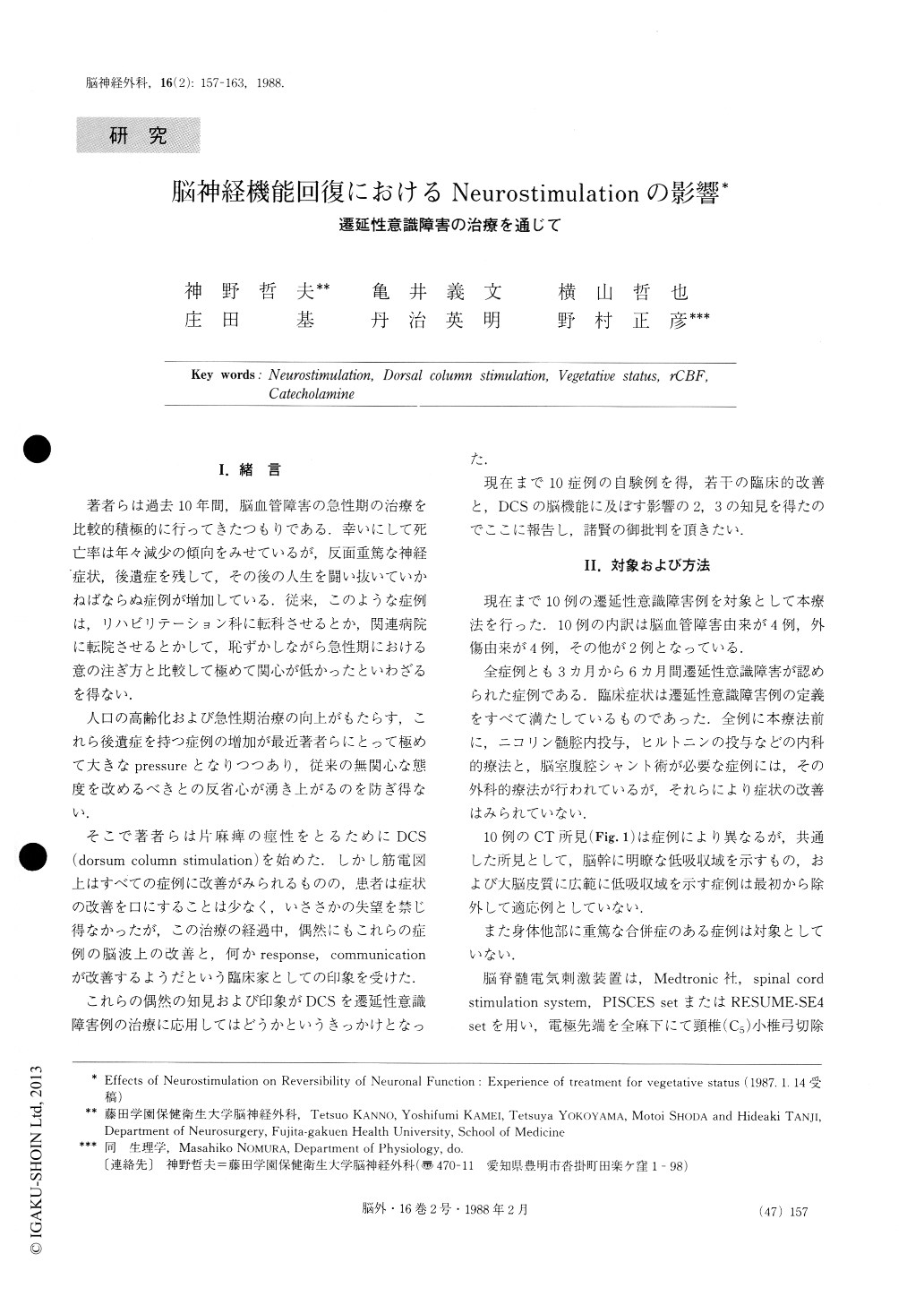
I.緒言
著者らは過去10年間,脳血管障害の急性期の治療を比較的積極的に行ってきたつもりである.幸いにして死亡率は年々減少の傾向をみせているが,反面重篤な神経症状,後遺症を残して,その後の人生を闘い抜いていかねばならぬ症例が増加している.従来,このような症例は,リハビリテーション科に転科させるとか,関連病院に転院させるとかして,恥ずかしながら急性期における意の注ぎ方と比較して極めて関心が低かったといわざるを得ない.
人口の高齢化および急性期治療の向上がもたらす,これら後遺症を持つ症例の増加が最近著者らにとって極めて大きなpressureとなりつつあり,従来の無関心な態度を改めるべきとの反省心が湧き上がるのを防ぎ得ない.
Developements in the diagnostic procedures, micro-surgical techniques, intensive care, and the social rescue system have lowered the mortality in cerebrovascular diseases, head injuries and other emergencies of neurol-ogy and neurosurgery. However, this decreased mortal-ity has given rise to a new social and medical problem i.e. vegetative status, which is an increase in the num-ber of people who live on with mild or severe residual neurological deficits.
During the last two years, we have used dorsal column stimulation (DCS) for improving spasticity ofhemiplegics.
Copyright © 1988, Igaku-Shoin Ltd. All rights reserved.