Japanese
English
- 有料閲覧
PPV購入案内
1,320円 (1,200円+税10%) こちらは、669ページから676ページの文献です。購入には医書.jp本会員登録が必要です。
会員登録完了後に改めて上記「購入サイトへ」を選択してください。
または「購入サイトへ」選択後に「購入ログイン」、「新規会員登録」の順に進んでください。
会員登録について詳しくはをご確認ください。
- Abstract 文献概要
- 1ページ目 Look Inside
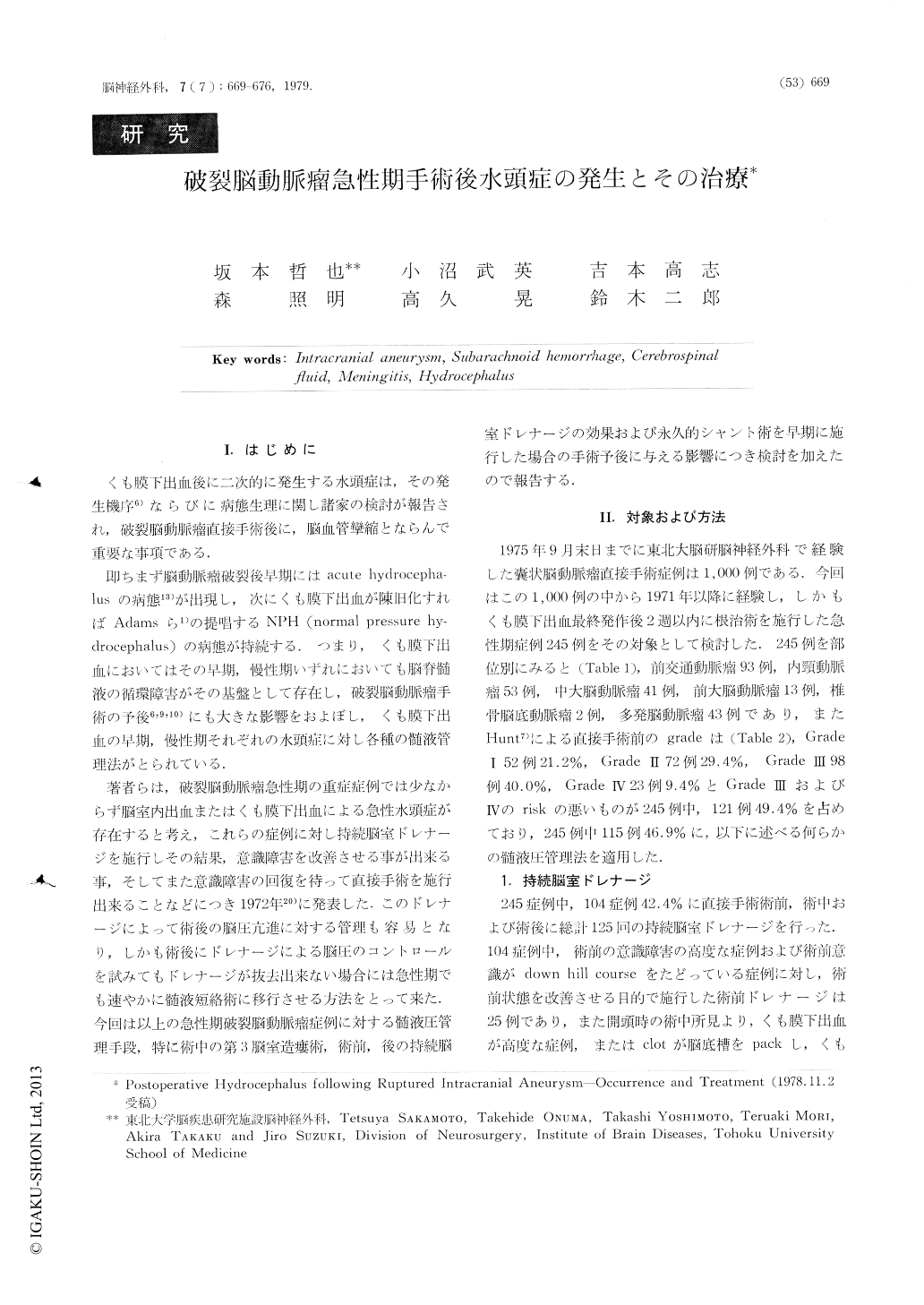
I.はじめに
くも膜下出血後に二次的に発生する水頭症は,その発生機序6)ならびに病態生理に関し諸家の検討が報告され,破裂脳動脈瘤直接手術後に,脳血管攣縮とならんで重要な事項である.
即ちまず脳動脈瘤破裂後早期にはacute hydrocephalusの病態13)が出現し,次にくも膜下出血が陳旧化すればAdamsら1)の提唱するNPH (normal pressure hydrocephalus)の病態が持続する.つまり,くも膜下出血においてはその早期,慢性期いずれにおいても脳脊髄液の循環障害がその基盤として存在し,破裂脳動脈瘤手術の予後6,9,10)にも大きな影響をおよぼし,くも膜下出血の早期,慢性期それぞれの水頭症に対し各種の髄液管理法がとられている.
The direct operations were performed in 245 cases in the acute stage of the ruptured cerebral aneurysm, and some therapeutic treatments for hydrocephalus such as continuous ventricular drainage, ventricluo-peritoneal (-auricular) shunting operation, and the third ventriculostomv were tried.
1) The continuous ventricular drainage was performed before the direct operations in 25 cases because of clouding of consciousness or downhill course, and it was found to be effective in 17 cases of them. Those whose state of consciousness was not changed by the drainage bad poor prognosis.
Copyright © 1979, Igaku-Shoin Ltd. All rights reserved.