Japanese
English
- 有料閲覧
PPV購入案内
1,320円 (1,200円+税10%) こちらは、56ページから67ページの文献です。購入には医書.jp本会員登録が必要です。
会員登録完了後に改めて上記「購入サイトへ」を選択してください。
または「購入サイトへ」選択後に「購入ログイン」、「新規会員登録」の順に進んでください。
会員登録について詳しくはをご確認ください。
- Abstract 文献概要
- 1ページ目 Look Inside
I.進行性ミオクローヌスてんかんの疾病分類からみたDRPLAの位置づけ
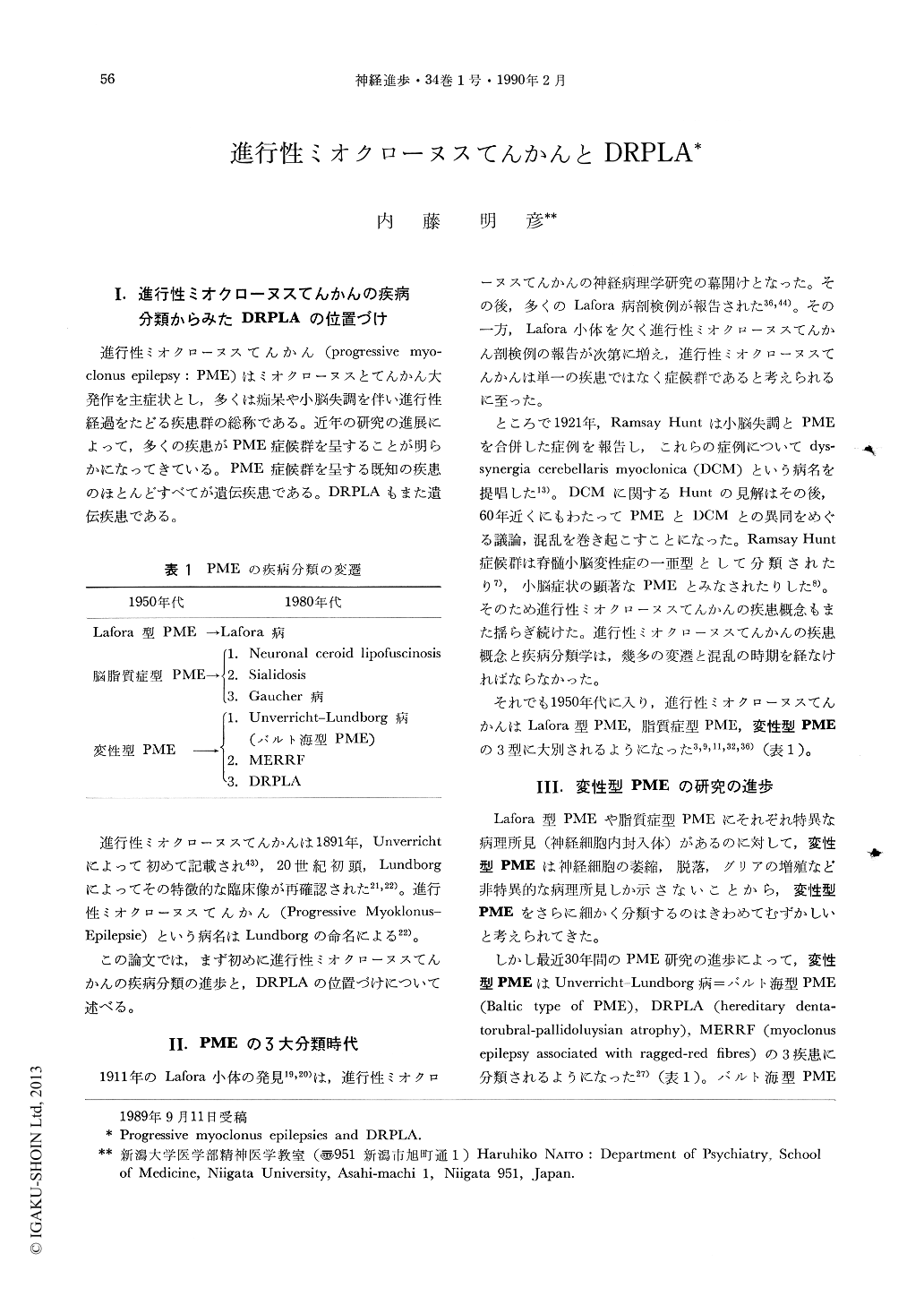
進行性ミオクローヌスてんかん(progressive myoclonus epilepsy:PME)はミオクローヌスとてんかん大発作を主症状とし,多くは痴呆や小脳失調を伴い進行性経過をたどる疾患群の総称である。近年の研究の進展によって,多くの疾患がPME症候群を呈することが明らかになってきている。PME症候群を呈する既知の疾患のほとんどすべてが遺伝疾患である。DRPLAもまた遺伝疾患である。
進行性ミオクローヌスてんかんは1891年,Unverrichtによって初めて記載され43),20世紀初頭,Lundborgによってその特徴的な臨床像が再確認された21,22)。進行性ミオクローヌスてんかん(Progressive Myoklonus-Epilepsie)という病名はLundborgの命名による22)。
The Progressive Myoclonus Epilepsies (PMEs) are a group of rare genetic disorders characterised by myoclonus, epileptic seizures and progressive neurological deterioration, particularly dementia and ataxia. A large number of specific diseases can cause the PME syndrome.
Reviewing literatures, in the 1950's PME syndrome was categorized into 3 major groupes, Lafora disease, lipidosis type, and degenerative type, on the basis of neuropathological findings. However, the nosological concept of the degenerative type of PME has not been clear because of the lack of distinct pathological hallmarks such as Lafora bodies or lipid inclusions, and the cases reported as such have shown only neuronal abiotrophic or nonspecific changes involving diverse portions of the central nervous system.
Copyright © 1990, Igaku-Shoin Ltd. All rights reserved.