Japanese
English
- 有料閲覧
PPV購入案内
1,320円 (1,200円+税10%) こちらは、475ページから482ページの文献です。購入には医書.jp本会員登録が必要です。
会員登録完了後に改めて上記「購入サイトへ」を選択してください。
または「購入サイトへ」選択後に「購入ログイン」、「新規会員登録」の順に進んでください。
会員登録について詳しくはをご確認ください。
- Abstract 文献概要
- 1ページ目 Look Inside
- 参考文献 Reference
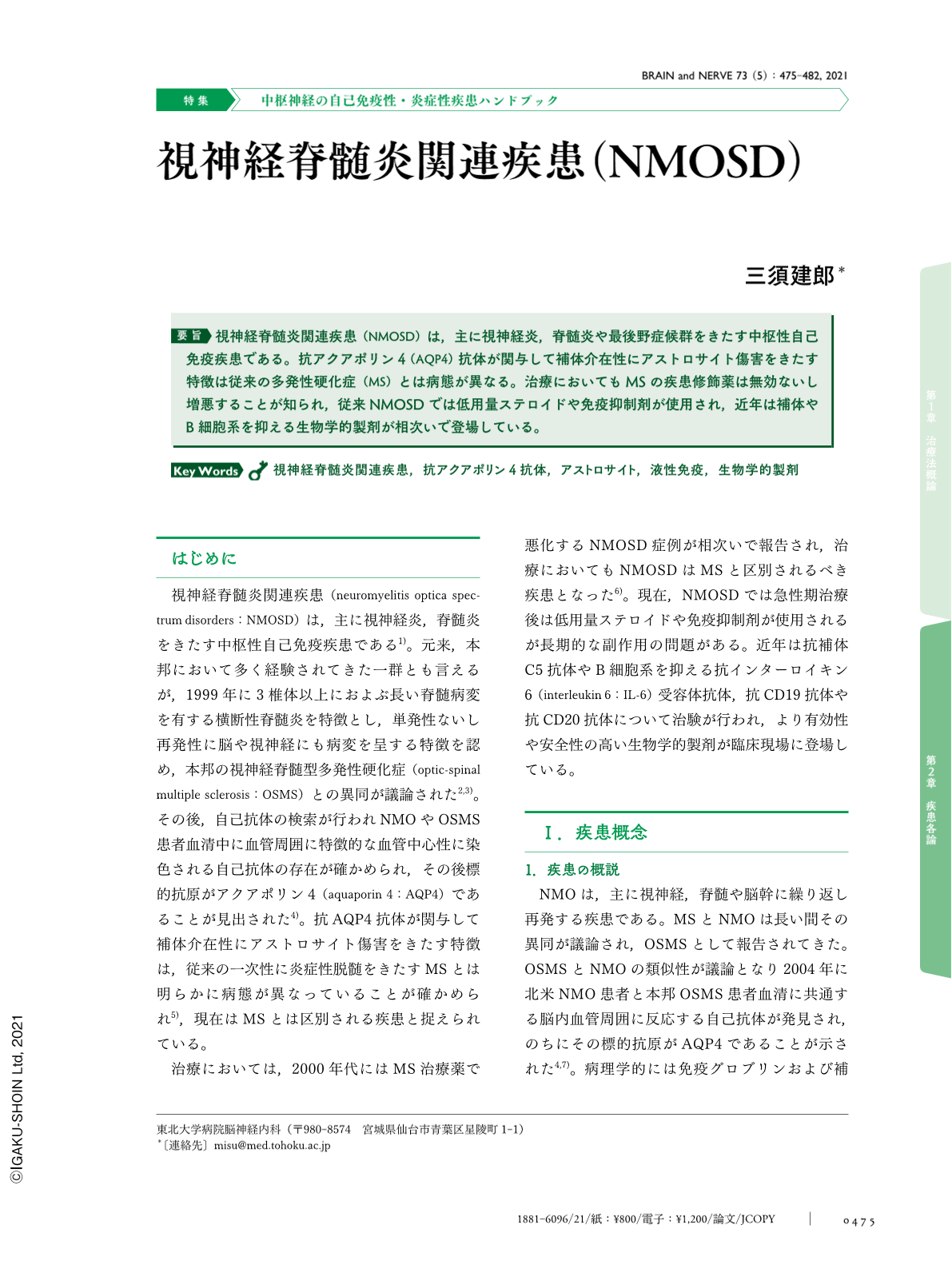
視神経脊髄炎関連疾患(NMOSD)は,主に視神経炎,脊髄炎や最後野症候群をきたす中枢性自己免疫疾患である。抗アクアポリン4(AQP4)抗体が関与して補体介在性にアストロサイト傷害をきたす特徴は従来の多発性硬化症(MS)とは病態が異なる。治療においてもMSの疾患修飾薬は無効ないし増悪することが知られ,従来NMOSDでは低用量ステロイドや免疫抑制剤が使用され,近年は補体やB細胞系を抑える生物学的製剤が相次いで登場している。
Abstract
Neuromyelitis optica spectrum disorder (NMOSD) is an autoimmune disorder primarily associated with optic neuritis, myelitis or area postrema syndrome. Several lines of evidence suggest that NMOSD is a humoral immune disease mainly caused by aquaporin-4 antibody and related complement-dependent cytotoxicity against astrocytes. Therefore, NMOSD is distinct from multiple sclerosis (MS). In the diagnosis of NMOSD, it is recommended to examine by high-sensitive cell-based assay targeting against M23-AQP4 but we always have to be careful for the possibility of false negative or false positive result due to each assay. To prevent relapse of the disease, it is best to avoid disease-modifying drugs used for treatment of MS because of possible acute exacerbation of the disease activity. Usually, it is recommended to start treatment with administration of oral steroids and then gradually move to immunosuppressants. However, side effects of such treatments need to be evaluated. Currently, there are additional options for therapy with biopharmaceutical agents such as eculizumab, satralizumab, rituximab, or inebilizumab to prevent relapse of the disease. These new options can clearly exceed or surpass the usual treatments and should be considered positively in aggressive cases of NMOSD.
Copyright © 2021, Igaku-Shoin Ltd. All rights reserved.