Japanese
English
- 有料閲覧
PPV購入案内
1,320円 (1,200円+税10%) こちらは、773ページから781ページの文献です。購入には医書.jp本会員登録が必要です。
会員登録完了後に改めて上記「購入サイトへ」を選択してください。
または「購入サイトへ」選択後に「購入ログイン」、「新規会員登録」の順に進んでください。
会員登録について詳しくはをご確認ください。
- Abstract 文献概要
- 1ページ目 Look Inside
- 参考文献 Reference
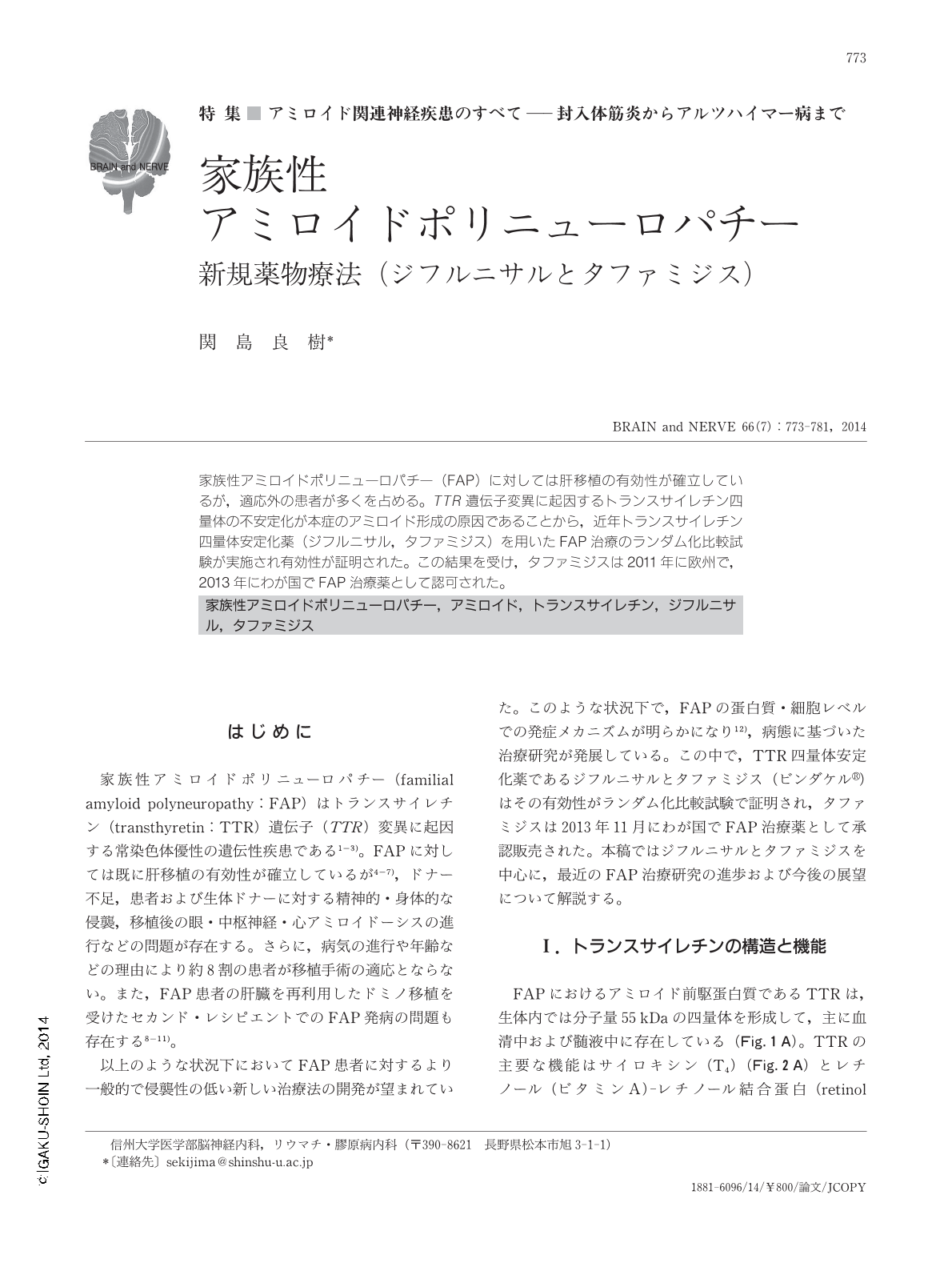
家族性アミロイドポリニューロパチー(FAP)に対しては肝移植の有効性が確立しているが,適応外の患者が多くを占める。TTR遺伝子変異に起因するトランスサイレチン四量体の不安定化が本症のアミロイド形成の原因であることから,近年トランスサイレチン四量体安定化薬(ジフルニサル,タファミジス)を用いたFAP治療のランダム化比較試験が実施され有効性が証明された。この結果を受け,タファミジスは2011年に欧州で,2013年にわが国でFAP治療薬として認可された。
Abstract
Familial amyloid polyneuropathy (FAP) is an autosomal dominant genetic disorder with systemic deposition of amyloid fibrils, and is characterized by progressive sensory, motor, and autonomic polyneuropathy. FAP was considered a rare endemic disease; however, its worldwide incidence is much higher than previously recognized. Until recently, liver transplantation was the only effective treatment for FAP. However, liver transplantation has a number of limitations, including a shortage of donors and a requirement for surgery for both the recipient and living donor. Furthermore, a large number of the patients are not good transplant candidates because of their age and/or advanced disease status. Recently, the clinical effects of two transthyretin tetramer stabilizers, diflunisal and tafamidis, were demonstrated in randomized clinical trials, and tafamidis was approved for the treatment of FAP in European countries in 2011 and Japan in 2013.
Copyright © 2014, Igaku-Shoin Ltd. All rights reserved.