Japanese
English
- 有料閲覧
PPV購入案内
1,320円 (1,200円+税10%) こちらは、731ページから737ページの文献です。購入には医書.jp本会員登録が必要です。
会員登録完了後に改めて上記「購入サイトへ」を選択してください。
または「購入サイトへ」選択後に「購入ログイン」、「新規会員登録」の順に進んでください。
会員登録について詳しくはをご確認ください。
- Abstract 文献概要
- 1ページ目 Look Inside
- 参考文献 Reference
はじめに
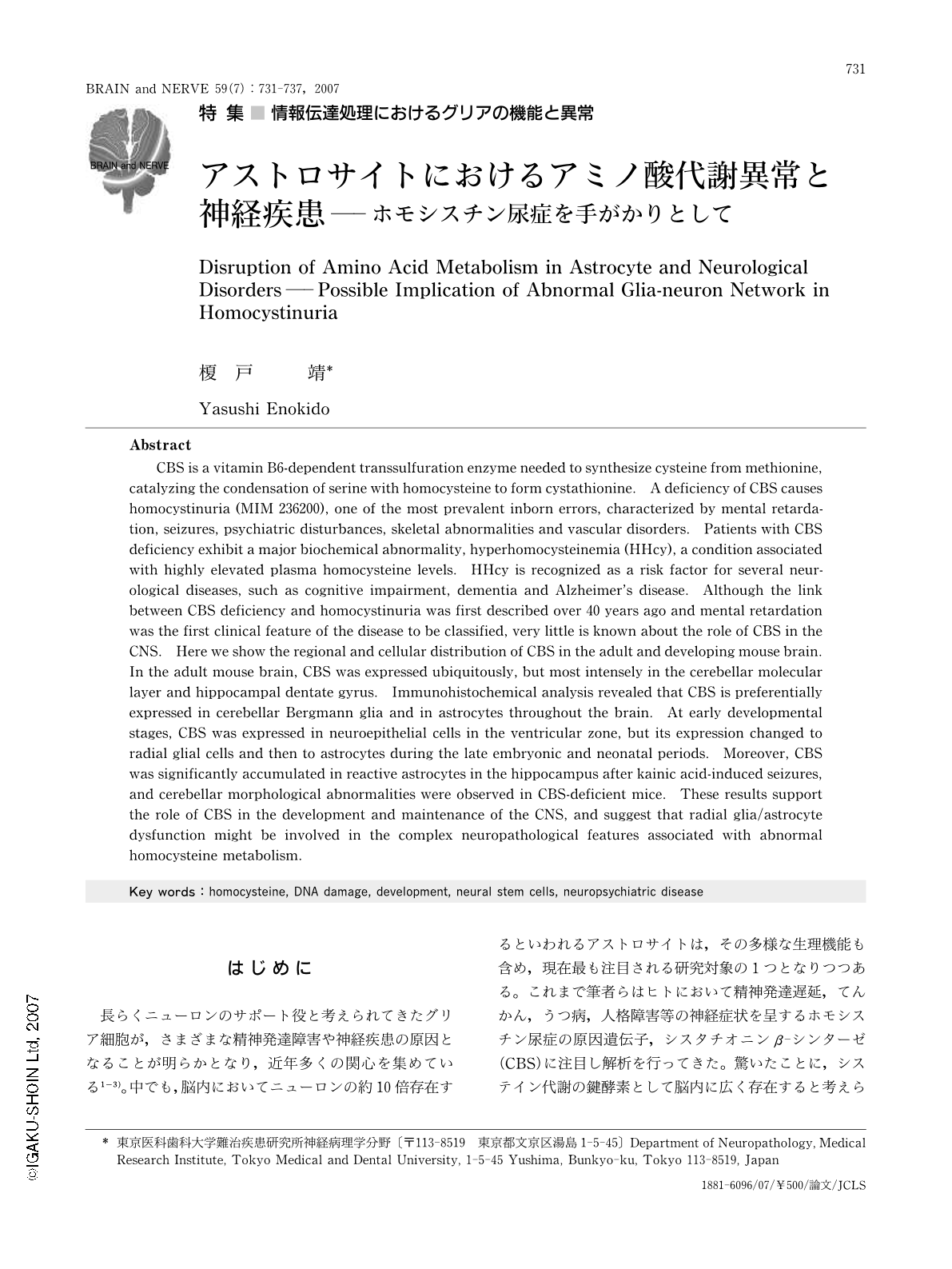
長らくニューロンのサポート役と考えられてきたグリア細胞が,さまざまな精神発達障害や神経疾患の原因となることが明らかとなり,近年多くの関心を集めている1-3)。中でも,脳内においてニューロンの約10倍存在するといわれるアストロサイトは,その多様な生理機能も含め,現在最も注目される研究対象の1つとなりつつある。これまで筆者らはヒトにおいて精神発達遅延,てんかん,うつ病,人格障害等の神経症状を呈するホモシスチン尿症の原因遺伝子,シスタチオニンβ-シンターゼ(CBS)に注目し解析を行ってきた。驚いたことに,システイン代謝の鍵酵素として脳内に広く存在すると考えられていたCBSは,発生の早い段階からラジアルグリア/アストロサイト系譜細胞で特異的に存在していることが明らかとなった。これらの結果は,アストロサイトにおけるアミノ酸代謝が脳神経系の正常発達,および高次脳機能維持にとって必須の役割を演じていることを意味するだけでなく,これまでほとんど知られていなかったアストロサイト機能障害に端を発する,“アストロサイト病”の病態メカニズムを解明するうえでも極めて重要な知見となることが期待される。
Abstract
CBS is a vitamin B6-dependent transsulfuration enzyme needed to synthesize cysteine from methionine, catalyzing the condensation of serine with homocysteine to form cystathionine. A deficiency of CBS causes homocystinuria (MIM 236200), one of the most prevalent inborn errors, characterized by mental retardation, seizures, psychiatric disturbances, skeletal abnormalities and vascular disorders. Patients with CBS deficiency exhibit a major biochemical abnormality, hyperhomocysteinemia (HHcy), a condition associated with highly elevated plasma homocysteine levels. HHcy is recognized as a risk factor for several neurological diseases, such as cognitive impairment, dementia and Alzheimer's disease. Although the link between CBS deficiency and homocystinuria was first described over 40 years ago and mental retardation was the first clinical feature of the disease to be classified, very little is known about the role of CBS in the CNS. Here we show the regional and cellular distribution of CBS in the adult and developing mouse brain. In the adult mouse brain, CBS was expressed ubiquitously, but most intensely in the cerebellar molecular layer and hippocampal dentate gyrus. Immunohistochemical analysis revealed that CBS is preferentially expressed in cerebellar Bergmann glia and in astrocytes throughout the brain. At early developmental stages, CBS was expressed in neuroepithelial cells in the ventricular zone, but its expression changed to radial glial cells and then to astrocytes during the late embryonic and neonatal periods. Moreover, CBS was significantly accumulated in reactive astrocytes in the hippocampus after kainic acid-induced seizures, and cerebellar morphological abnormalities were observed in CBS-deficient mice. These results support the role of CBS in the development and maintenance of the CNS, and suggest that radial glia/astrocyte dysfunction might be involved in the complex neuropathological features associated with abnormal homocysteine metabolism.
Copyright © 2007, Igaku-Shoin Ltd. All rights reserved.