Japanese
English
- 有料閲覧
PPV購入案内
1,320円 (1,200円+税10%) こちらは、527ページから529ページの文献です。購入には医書.jp本会員登録が必要です。
会員登録完了後に改めて上記「購入サイトへ」を選択してください。
または「購入サイトへ」選択後に「購入ログイン」、「新規会員登録」の順に進んでください。
会員登録について詳しくはをご確認ください。
- Abstract 文献概要
- 1ページ目 Look Inside
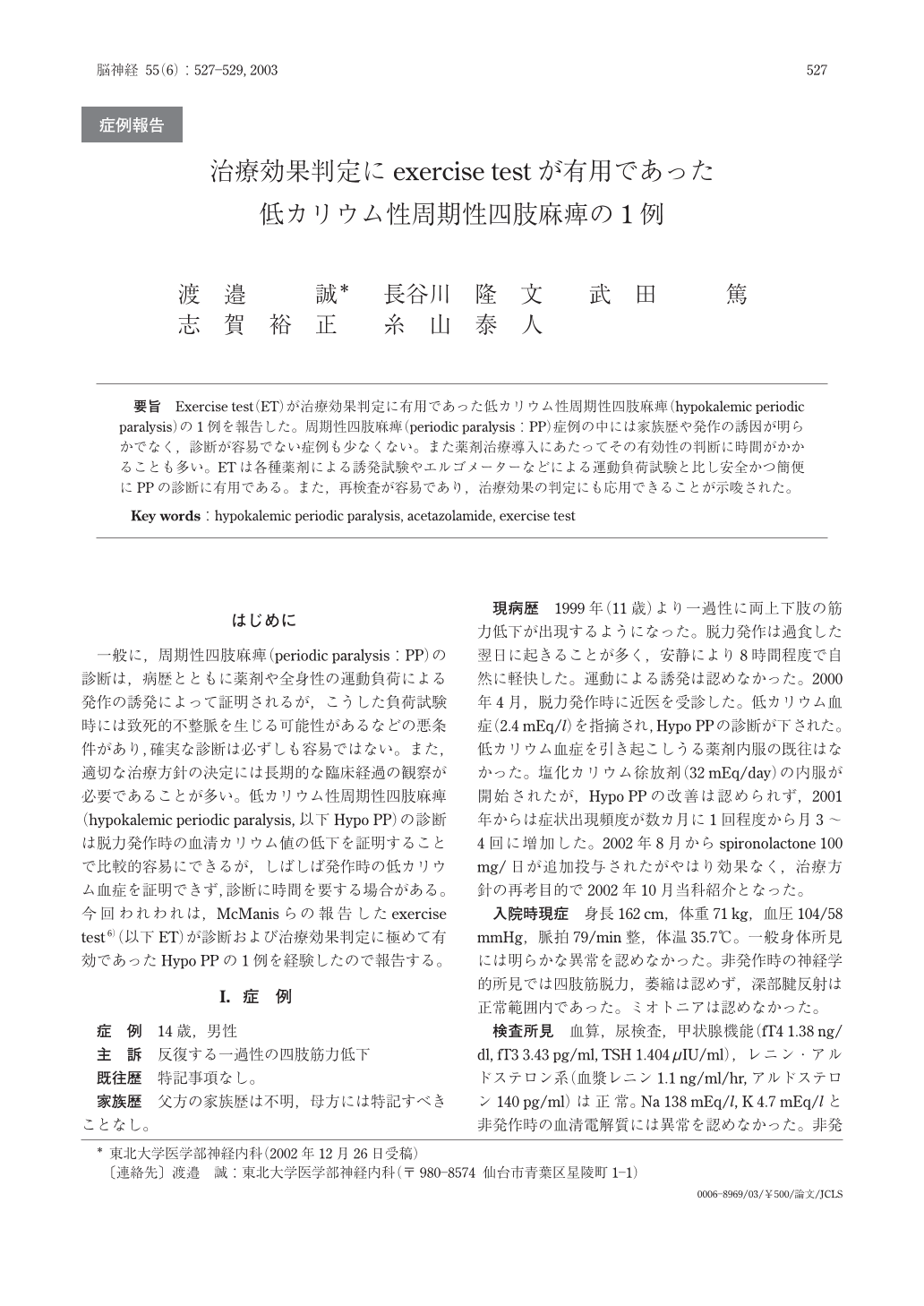
要旨 Exercise test(ET)が治療効果判定に有用であった低カリウム性周期性四肢麻痺(hypokalemic periodic paralysis)の1例を報告した。周期性四肢麻痺(periodic paralysis:PP)症例の中には家族歴や発作の誘因が明らかでなく,診断が容易でない症例も少なくない。また薬剤治療導入にあたってその有効性の判断に時間がかかることも多い。ETは各種薬剤による誘発試験やエルゴメーターなどによる運動負荷試験と比し安全かつ簡便にPPの診断に有用である。また,再検査が容易であり,治療効果の判定にも応用できることが示唆された。
We report a 14-year-old male with hypokalemic periodic paralysis. He noticed periodic paralysis at the age of 11. Any complication did not accompany the symptom. At the age of 12, hypokalemia was found during an episode of paralysis, and he was diagnosed as hypokalemic periodic paralysis. The frequency of paralytic attack increased around April 2000. Although long-acting oral potassium(32 mEq/day)was administered, it did not give favorable effect. Therapeutic spironolactone trial also failed. After the reconfirmation of the diagnosis of periodic paralysis by an exercise test, oral acetazolamide(750mg/day)was started. In subsequent exercise test, the increment of the CMAP amplitude of abductor digiti minimi during exercise became smaller and the decrement of CMAP amplitude after exercise disappeared thereafter, which was assumed to be related with clinical improvement. The noninvasive exercise test is useful not only to diagnose periodic paralysis but also to evaluate therapeutic efficacy.
Copyright © 2003, Igaku-Shoin Ltd. All rights reserved.