Japanese
English
- 有料閲覧
PPV購入案内
1,320円 (1,200円+税10%) こちらは、726ページから736ページの文献です。購入には医書.jp本会員登録が必要です。
会員登録完了後に改めて上記「購入サイトへ」を選択してください。
または「購入サイトへ」選択後に「購入ログイン」、「新規会員登録」の順に進んでください。
会員登録について詳しくはをご確認ください。
- Abstract 文献概要
- 1ページ目 Look Inside
- 参考文献 Reference
- サイト内被引用 Cited by
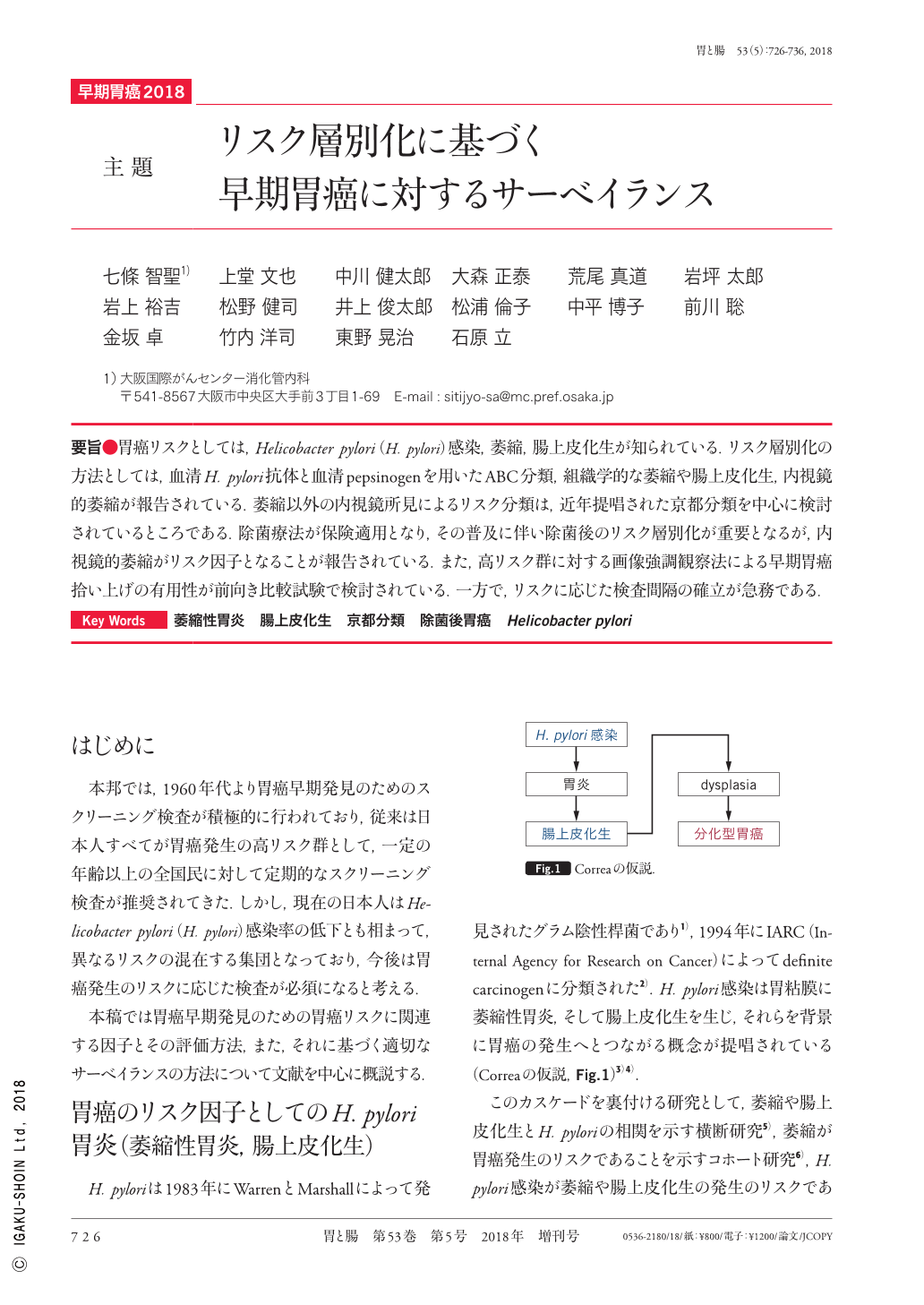
要旨●胃癌リスクとしては,Helicobacter pylori(H. pylori)感染,萎縮,腸上皮化生が知られている.リスク層別化の方法としては,血清H. pylori抗体と血清pepsinogenを用いたABC分類,組織学的な萎縮や腸上皮化生,内視鏡的萎縮が報告されている.萎縮以外の内視鏡所見によるリスク分類は,近年提唱された京都分類を中心に検討されているところである.除菌療法が保険適用となり,その普及に伴い除菌後のリスク層別化が重要となるが,内視鏡的萎縮がリスク因子となることが報告されている.また,高リスク群に対する画像強調観察法による早期胃癌拾い上げの有用性が前向き比較試験で検討されている.一方で,リスクに応じた検査間隔の確立が急務である.
H. pylori(Helicobacter pylori)infection, atrophy, and IM(intestinal metaplasia)are well-known risk factors of gastric cancer. The methods of ABC classification using H. pylori antibody and pepsinogen, histologic atrophy and IM, and endoscopic atrophy are currently in use for risk stratification. Recently, the Kyoto classification of gastritis has been advocated, and its usefulness is presently under investigation. Severe endoscopic atrophy is a good predictor of gastric cancer development after H. pylori eradication therapy, which drastically prevails by national insurance coverage. The efficacy of image-enhanced endoscopy for gastric cancer detection is under consideration at the moment. In addition, it is desirable that an adequate surveillance interval be established according to the stratified risk.
Copyright © 2018, Igaku-Shoin Ltd. All rights reserved.