Japanese
English
- 有料閲覧
PPV購入案内
1,650円 (1,500円+税10%) こちらは、649ページから657ページの文献です。購入には医書.jp本会員登録が必要です。
会員登録完了後に改めて上記「購入サイトへ」を選択してください。
または「購入サイトへ」選択後に「購入ログイン」、「新規会員登録」の順に進んでください。
会員登録について詳しくはをご確認ください。
- Abstract 文献概要
- 1ページ目 Look Inside
- 参考文献 Reference
- サイト内被引用 Cited by
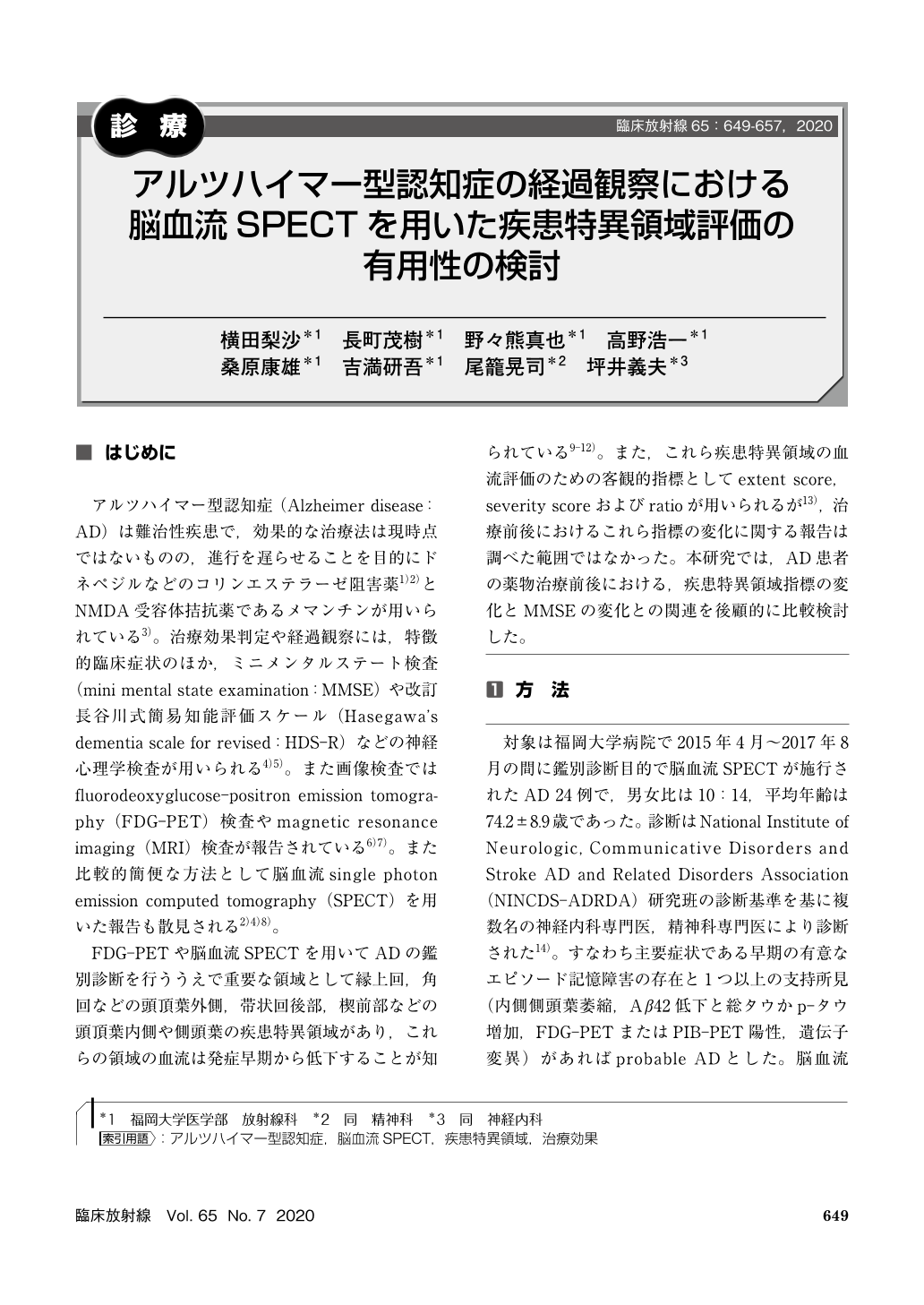
アルツハイマー型認知症(Alzheimer disease:AD)は難治性疾患で,効果的な治療法は現時点ではないものの,進行を遅らせることを目的にドネペジルなどのコリンエステラーゼ阻害薬1)2)とNMDA受容体拮抗薬であるメマンチンが用いられている3)。治療効果判定や経過観察には,特徴的臨床症状のほか,ミニメンタルステート検査(mini mental state examination:MMSE)や改訂長谷川式簡易知能評価スケール(Hasegawa’s dementia scale for revised:HDS-R)などの神経心理学検査が用いられる4)5)。また画像検査ではfluorodeoxyglucose-positron emission tomography(FDG-PET)検査やmagnetic resonance imaging(MRI)検査が報告されている6)7)。また比較的簡便な方法として脳血流single photon emission computed tomography(SPECT)を用いた報告も散見される2)4)8)。
We investigated the usefulness of regional cerebral blood flow(rCBF)SPECT analysis in disease specific areas including precuneus and posterior cingulate in monitoring the therapeutic effect in patients with Alzheimer’s disease(AD). Twenty-four AD patients were divided into two groups according to the change of MMSE before and after therapy, namely the responder group and the non-responder group. The most patients who showed marked deterioration of disease specific areas of rCBF SPECT were in the non-responder group. The assessment of rCBF in disease specific areas will be useful objective method in monitoring AD patients.
Copyright © 2020, KANEHARA SHUPPAN Co.LTD. All rights reserved.