Japanese
English
- 有料閲覧
PPV購入案内
1,320円 (1,200円+税10%) こちらは、617ページから625ページの文献です。購入には医書.jp本会員登録が必要です。
会員登録完了後に改めて上記「購入サイトへ」を選択してください。
または「購入サイトへ」選択後に「購入ログイン」、「新規会員登録」の順に進んでください。
会員登録について詳しくはをご確認ください。
- Abstract 文献概要
- 1ページ目 Look Inside
- 参考文献 Reference
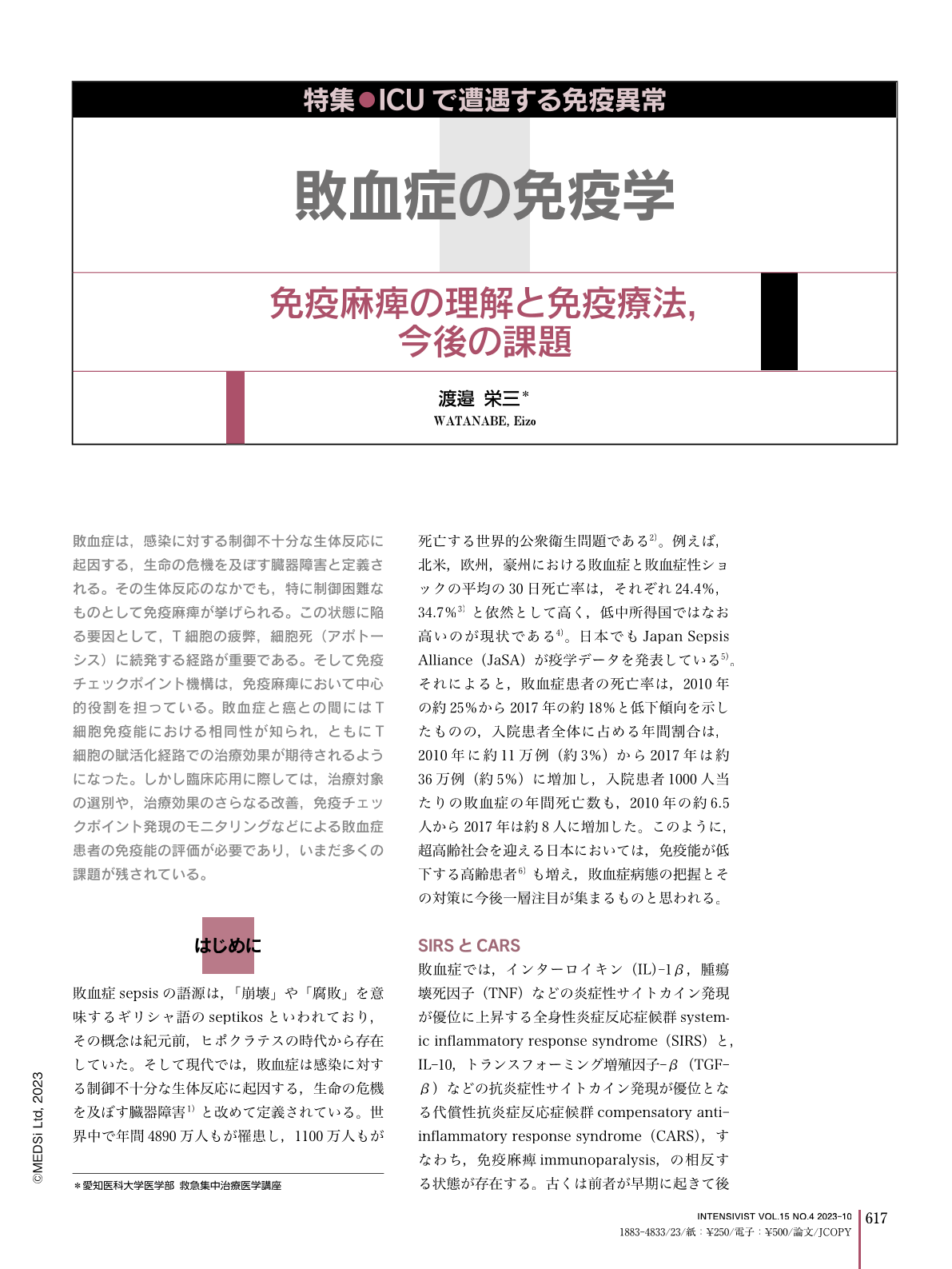
敗血症は,感染に対する制御不十分な生体反応に起因する,生命の危機を及ぼす臓器障害と定義される。その生体反応のなかでも,特に制御困難なものとして免疫麻痺が挙げられる。この状態に陥る要因として,T細胞の疲弊,細胞死(アポトーシス)に続発する経路が重要である。そして免疫チェックポイント機構は,免疫麻痺において中心的役割を担っている。敗血症と癌との間にはT細胞免疫能における相同性が知られ,ともにT細胞の賦活化経路での治療効果が期待されるようになった。しかし臨床応用に際しては,治療対象の選別や,治療効果のさらなる改善,免疫チェックポイント発現のモニタリングなどによる敗血症患者の免疫能の評価が必要であり,いまだ多くの課題が残されている。
Sepsis is a life-threatening organ dysfunction caused by a dysregulated host response to infection. Multiple organ failure resulting from sepsis is due to the cumulative dysfunction of cells constituting individual organs. Immunoparalysis in the subacute phase of sepsis is a harmful host response that is challenging to address. In particular, T cell exhaustion leading to apoptosis is recognized as the pivotal pathway of immunoparalysis related to the immune checkpoint mechanism. The immune checkpoint plays a significant pathological role in immunoparalysis, not only in cancer but also in sepsis. Positive co-stimulatory pathways in T cells permit the effector T cells to expand, resist sepsis-induced apoptosis, and clear pathogens. PD-1 activates inhibitory pathways on T cells and broadly enhances immunosuppressive signals across the innate and adaptive immune systems. To counter this immunoparalysis, checkpoint blockade has garnered attention in clinical research on sepsis. It is essential to overcome the lack of scientific data on therapeutic efficacy, criteria for patient inclusion, and immune monitoring methodologies to realize immunotherapy for sepsis in the critical-care setting.
Copyright © 2023, MEDICAL SCIENCES INTERNATIONAL, LTD. All rights reserved.