Japanese
English
- 有料閲覧
PPV購入案内
1,320円 (1,200円+税10%) こちらは、775ページから779ページの文献です。購入には医書.jp本会員登録が必要です。
会員登録完了後に改めて上記「購入サイトへ」を選択してください。
または「購入サイトへ」選択後に「購入ログイン」、「新規会員登録」の順に進んでください。
会員登録について詳しくはをご確認ください。
- Abstract 文献概要
- 1ページ目 Look Inside
- 参考文献 Reference
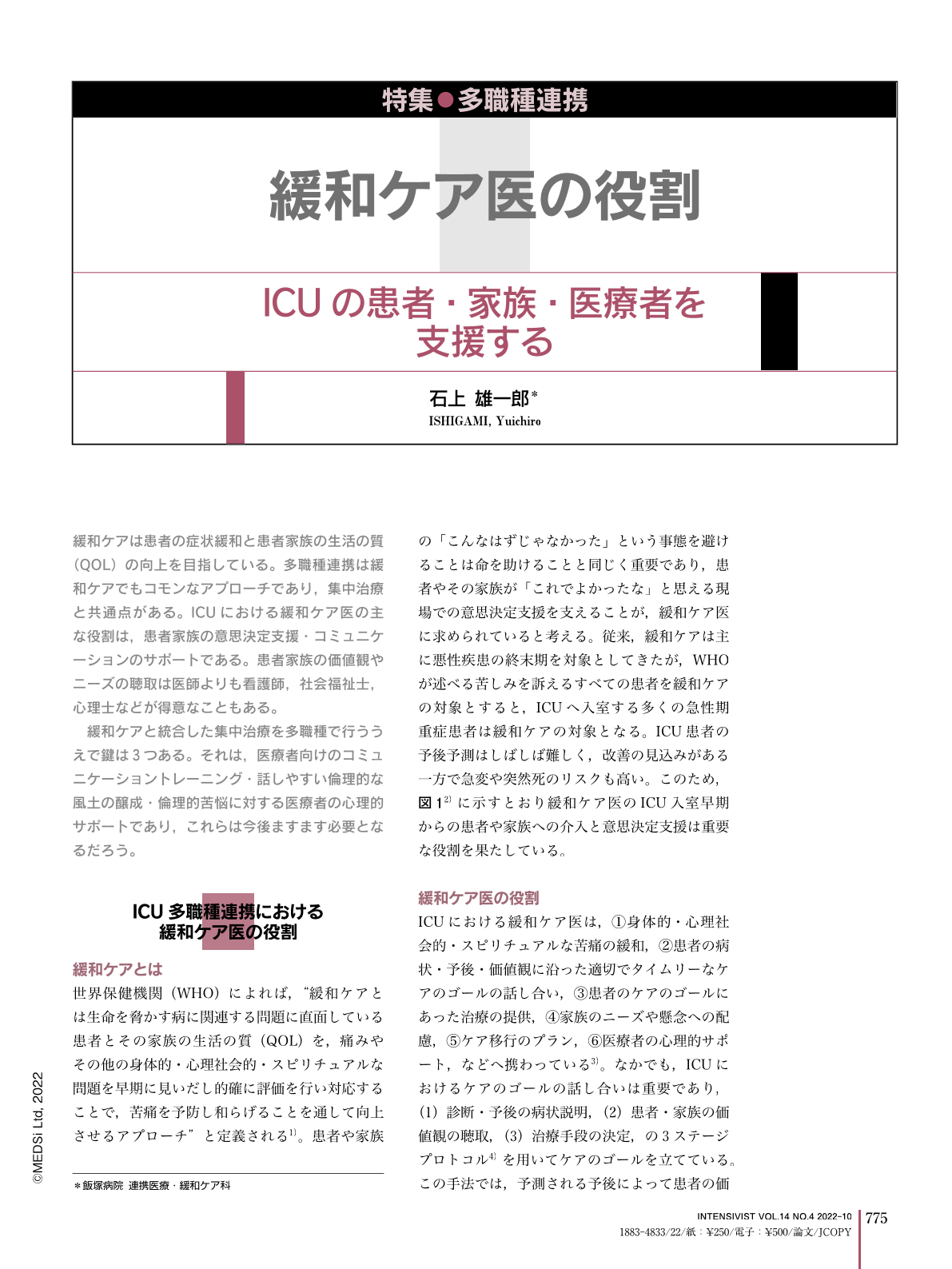
緩和ケアは患者の症状緩和と患者家族の生活の質(QOL)の向上を目指している。多職種連携は緩和ケアでもコモンなアプローチであり,集中治療と共通点がある。ICUにおける緩和ケア医の主な役割は,患者家族の意思決定支援・コミュニケーションのサポートである。患者家族の価値観やニーズの聴取は医師よりも看護師,社会福祉士,心理士などが得意なこともある。
緩和ケアと統合した集中治療を多職種で行ううえで鍵は3つある。それは,医療者向けのコミュニケーショントレーニング・話しやすい倫理的な風土の醸成・倫理的苦悩に対する医療者の心理的サポートであり,これらは今後ますます必要となるだろう。
Palliative care aims to palliate symptoms and improve the quality of life of patients and their families. Multidisciplinary collaboration is a common approach in palliative care and has something in common with intensive care. The main role of the palliative care physician in the ICU is to support decision-making and communication with the patient's family. In some cases, nurses, social workers, psychologists, etc. are better at listening to the values and needs of the patient's family than physicians. There are three key elements in the multidisciplinary approach to ICU integrated with palliative care. Communication training for medical staff, fostering an ethical climate in which it is easy to talk, and psychological support for moral distress will be necessary in the future.
Copyright © 2022, MEDICAL SCIENCES INTERNATIONAL, LTD. All rights reserved.