Japanese
English
- 有料閲覧
PPV購入案内
1,320円 (1,200円+税10%) こちらは、725ページから728ページの文献です。購入には医書.jp本会員登録が必要です。
会員登録完了後に改めて上記「購入サイトへ」を選択してください。
または「購入サイトへ」選択後に「購入ログイン」、「新規会員登録」の順に進んでください。
会員登録について詳しくはをご確認ください。
- Abstract 文献概要
- 1ページ目 Look Inside
- 参考文献 Reference
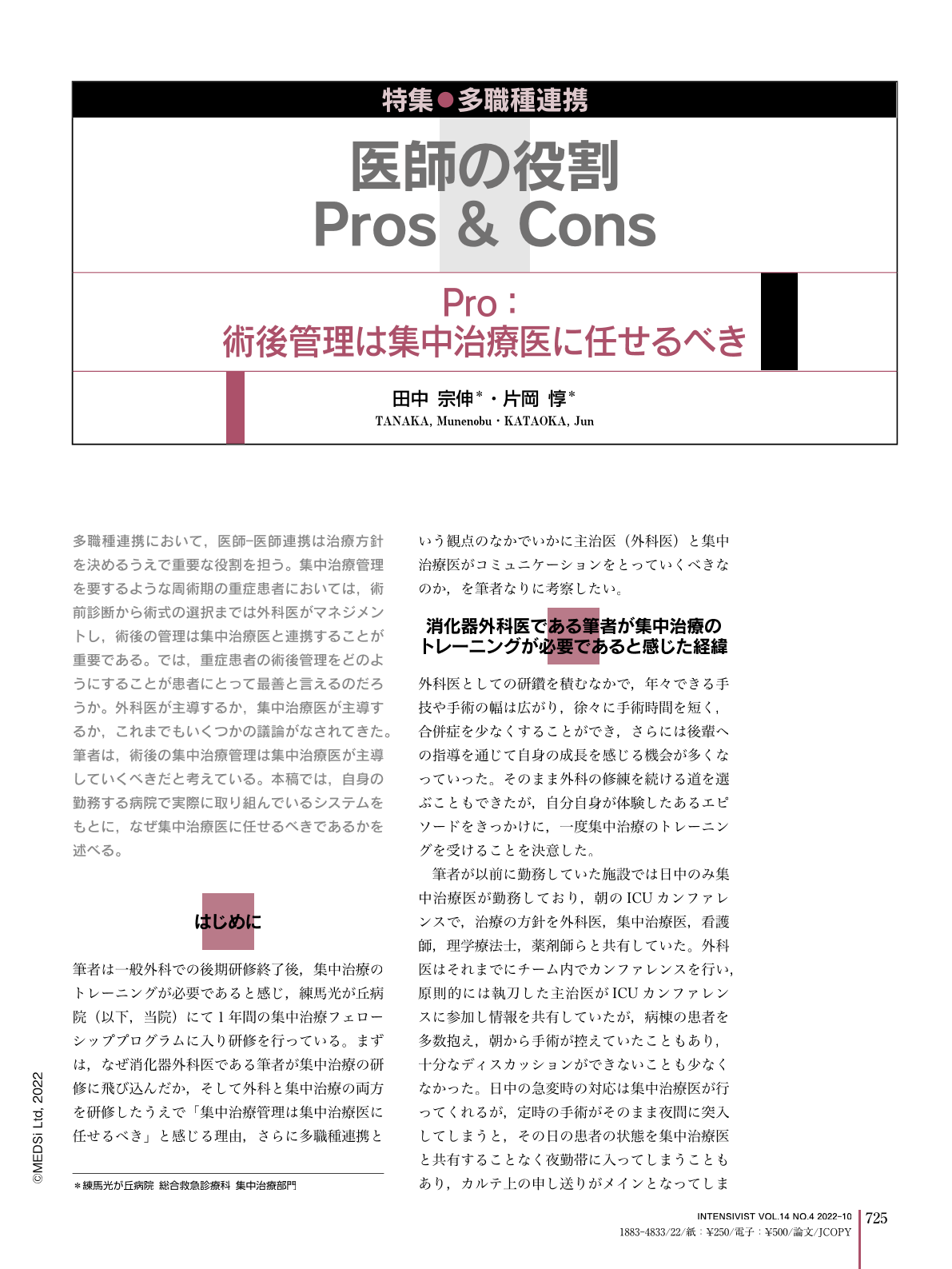
多職種連携において,医師-医師連携は治療方針を決めるうえで重要な役割を担う。集中治療管理を要するような周術期の重症患者においては,術前診断から術式の選択までは外科医がマネジメントし,術後の管理は集中治療医と連携することが重要である。では,重症患者の術後管理をどのようにすることが患者にとって最善と言えるのだろうか。外科医が主導するか,集中治療医が主導するか,これまでもいくつかの議論がなされてきた。筆者は,術後の集中治療管理は集中治療医が主導していくべきだと考えている。本稿では,自身の勤務する病院で実際に取り組んでいるシステムをもとに,なぜ集中治療医に任せるべきであるかを述べる。
In the context of interprofessional collaboration, physician-physician coordination plays an important role in determining the course of treatment. In the case of critically ill surgical patients who require intensive care management, it is important that surgeons manage the patient from the preoperative period to selection of the surgical technique and collaborate with intensivists on postoperative management. What is the best approach to postoperative management of critically ill patients? There has been some debate as to whether surgeons or intensivists should take the lead. I believe that postoperative intensive care management should be led by intensivists. I will refer to the system that is in place at the hospital where I work and explain why postoperative management should be left to intensivists.
Copyright © 2022, MEDICAL SCIENCES INTERNATIONAL, LTD. All rights reserved.