Japanese
English
- 有料閲覧
PPV購入案内
1,320円 (1,200円+税10%) こちらは、406ページから410ページの文献です。購入には医書.jp本会員登録が必要です。
会員登録完了後に改めて上記「購入サイトへ」を選択してください。
または「購入サイトへ」選択後に「購入ログイン」、「新規会員登録」の順に進んでください。
会員登録について詳しくはをご確認ください。
- Abstract 文献概要
- 1ページ目 Look Inside
- 参考文献 Reference
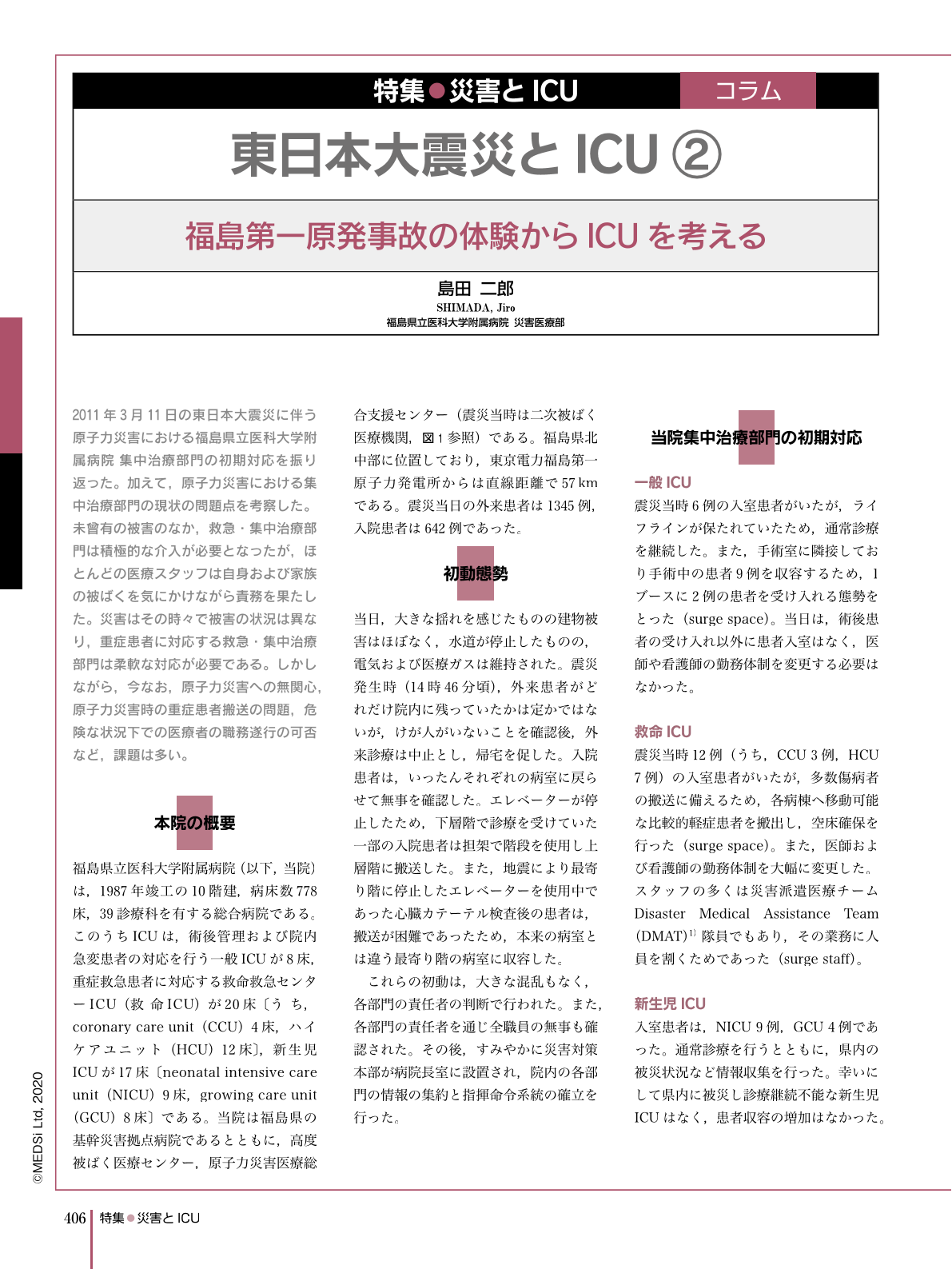
2011年3月11日の東日本大震災に伴う原子力災害における福島県立医科大学附属病院 集中治療部門の初期対応を振り返った。加えて,原子力災害における集中治療部門の現状の問題点を考察した。未曾有の被害のなか,救急・集中治療部門は積極的な介入が必要となったが,ほとんどの医療スタッフは自身および家族の被ばくを気にかけながら責務を果たした。災害はその時々で被害の状況は異なり,重症患者に対応する救急・集中治療部門は柔軟な対応が必要である。しかしながら,今なお,原子力災害への無関心,原子力災害時の重症患者搬送の問題,危険な状況下での医療者の職務遂行の可否など,課題は多い。
We review the initial response of our intensive care unit after the nuclear disaster which followed the Great East Japan Earthquake. We discuss the current problems of the intensive care unit in the event of a nuclear catastrophe. Amid unprecedented damage, the emergency and intensive care units needed to provide active intervention. Most medical staff fulfilled their responsibilities while being concerned about their own and their family's exposure. Disasters vary from time to time, and emergency and intensive care departments dealing with severely ill patients need to be flexible. However, there are still many issues, such as indifference to nuclear disasters, the problem of transporting critically ill patients during atomic emergencies, and whether medical professionals can perform their duties in dangerous situations.
Copyright © 2020, MEDICAL SCIENCES INTERNATIONAL, LTD. All rights reserved.