Japanese
English
- 有料閲覧
PPV購入案内
1,320円 (1,200円+税10%) こちらは、255ページから265ページの文献です。購入には医書.jp本会員登録が必要です。
会員登録完了後に改めて上記「購入サイトへ」を選択してください。
または「購入サイトへ」選択後に「購入ログイン」、「新規会員登録」の順に進んでください。
会員登録について詳しくはをご確認ください。
- Abstract 文献概要
- 1ページ目 Look Inside
- 参考文献 Reference
- サイト内被引用 Cited by
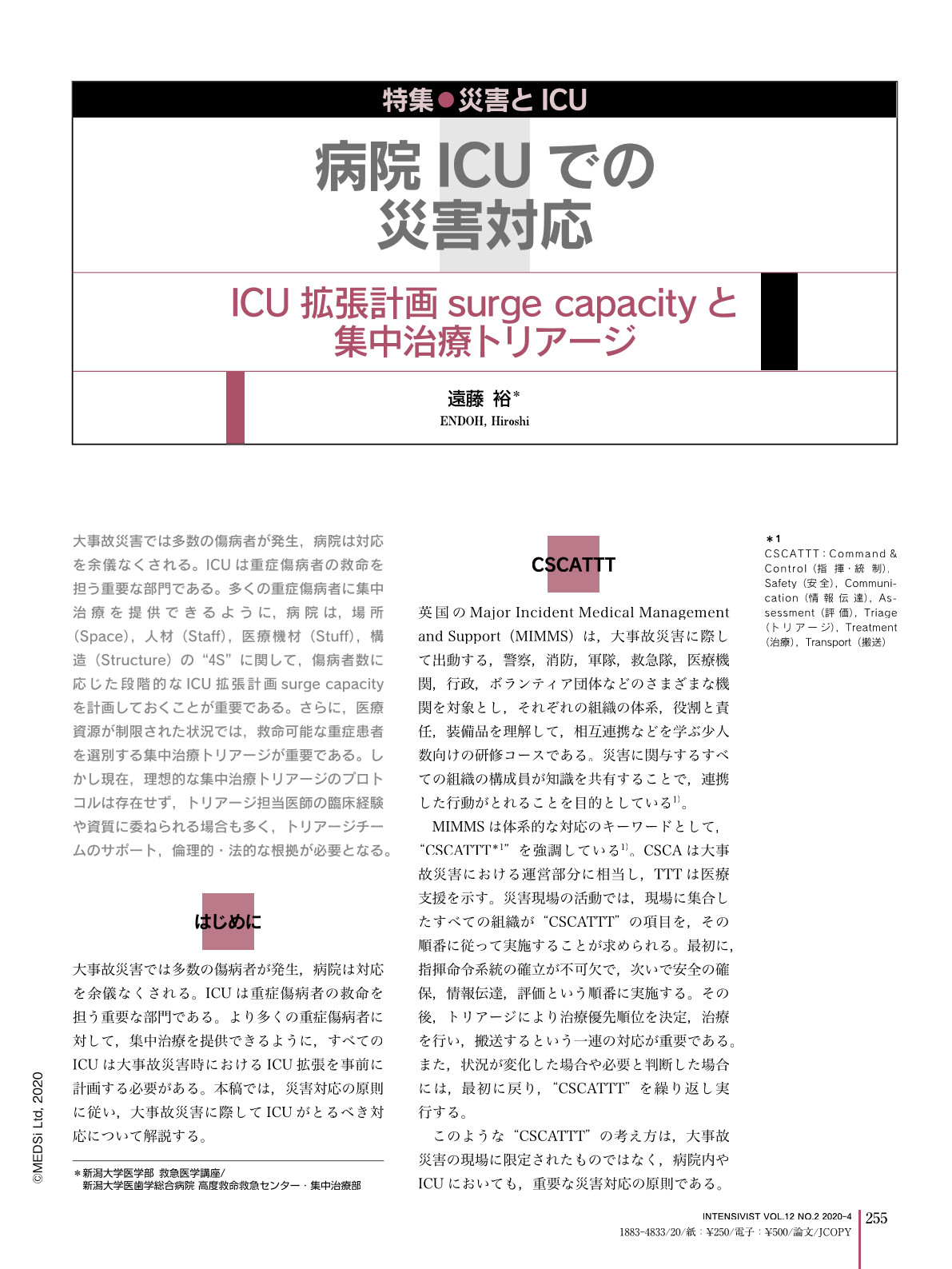
大事故災害では多数の傷病者が発生,病院は対応を余儀なくされる。ICUは重症傷病者の救命を担う重要な部門である。多くの重症傷病者に集中治療を提供できるように,病院は,場所(Space),人材(Staff),医療機材(Stuff),構造(Structure)の“4S”に関して,傷病者数に応じた段階的なICU拡張計画surge capacityを計画しておくことが重要である。さらに,医療資源が制限された状況では,救命可能な重症患者を選別する集中治療トリアージが重要である。しかし現在,理想的な集中治療トリアージのプロトコルは存在せず,トリアージ担当医師の臨床経験や資質に委ねられる場合も多く,トリアージチームのサポート,倫理的・法的な根拠が必要となる。
An intensive care unit (ICU) plays a crucial role in saving critically ill patients during major incidents or disasters. Surge capacity in critical care refers to the ability of an ICU to rapidly expand care to as many as needed. The major components of surge capacity are space, staff, stuff, and structure(“4S”) Each ICU should plan surge capacity with regard to 4S in advance. Despite implementing responses to surge capacity, large numbers of critically ill patients may overwhelm available resources. In addition to surge capacity, critical care triage, including both prioritizing patients for care and rationing scarce resources, will be required. However, no ideal critical triage protocol exists in critical care. The triage decision is sometimes dependent on experience and personality of the triage officer, requiring support by a triage team within legal and ethical frameworks.
Copyright © 2020, MEDICAL SCIENCES INTERNATIONAL, LTD. All rights reserved.